

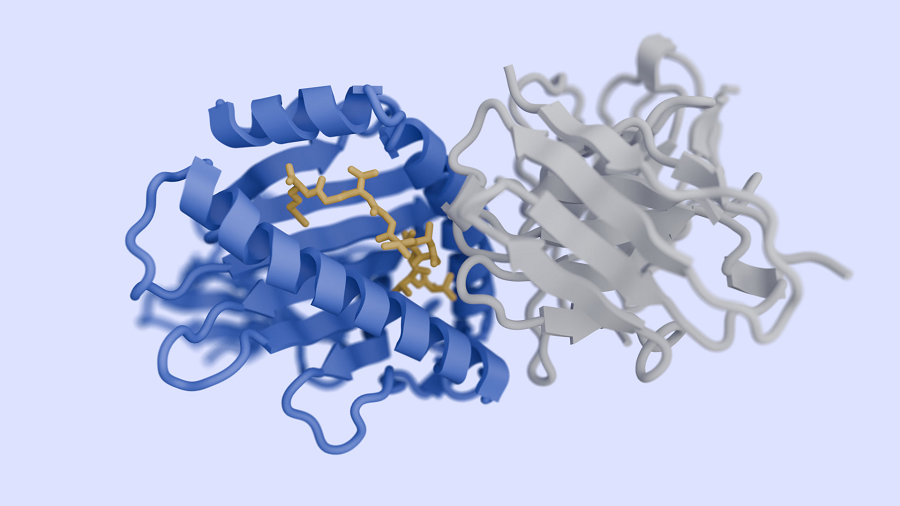
Chai Discovery Inc., a startup using artificial intelligence to accelerate drug development, announced today that it has closed a $130 million funding round led by Oak HC/FT and General Catalyst.
The two investment firms were joined by more than half a dozen other backers. The consortium included OpenAI Group PBC and Thrive Capital, one of the largest investors in developer ChatGPT. Chai Discovery is now valued at $1.3 billion.
The investment comes about six months after the company introduced Chai-2, a multimodal AI model optimized for medical research. It is designed to help scientists develop new drugs more quickly by automating some of the manual work involved in the process. The algorithm can provide a “100x improvement over previous calculation methods” in certain areas, the company claims.
Many drugs are based on molecules called mAbs. These are large proteins that attach to a specific section of a virus or pathogenic bacteria and neutralize it. According to Chai Discovery, competitors’ AI models often do not design whole proteins, but only protein fragments, which are of limited utility. Chai-2, on the other hand, can generate full-length mAb antibodies.
The company says the model can also generate other molecules with potential therapeutic applications. He is able to design nanobodies, which are antibodies derived from llamas and alpacas, as well as miniproteins. These are proteins that are a fraction of the size of mAbs.
An antibody can only neutralize pathogenic viruses or bacteria after successfully binding to their surface. As a result, so-called binding affinity is one of the main factors evaluated by scientists when developing new drugs. However, that’s not the only consideration: Researchers also take into account details like an antibody’s manufacturability, safety, and stability. Chai says its AI can take these factors into account more effectively than other models.
One contributor to Chai-2’s performance is that it evaluates antibodies with a high degree of granularity. According to Chai Discovery, the model “reasons about structures on a sub-angstrom scale.” An angstrom is a unit of measurement that corresponds to one ten billionth of a meter, or a little more than the length of a hydrogen atom.
The company tested Chai-2’s capabilities by asking it to design a set of antibodies with potential therapeutic applications. From there, he evaluated the antibodies against four criteria that determine whether a molecule could be turned into a drug. It indicates that 89% of the designs suggested by Chai-2 contained either only one problem or none at all.
“What looked like five-year problems just a few months ago are now solved in a matter of weeks,” said Josh Meier, founder and CEO of Chai Discovery. “Our latest models can design molecules with properties we would expect from real drugs and tackle difficult targets that have been out of reach.”
The company will use its newly raised capital to support its research and commercialization efforts.
Picture: Chai Discovery
Support our mission of keeping content open and free by engaging with the CUBE community. Join the trusted network of CUBE alumniwhere technology leaders connect, share information and create opportunities.
- Over 15 million viewers of theCUBE videosfueling conversations about AI, cloud, cybersecurity and more
- More than 11.4,000 CUBE alumni — Connect with 11,400+ technology and business leaders shaping the future through a unique network of trust.
About SiliconANGLE media
Founded by technology visionaries John Furrier and Dave Vellante, SiliconANGLE Media has built a vibrant ecosystem of industry-leading digital media brands that reach more than 15 million elite technology professionals. Our new proprietary theCUBE AI Video Cloud innovates audience engagement, leveraging the CUBEai.com neural network to help technology companies make data-driven decisions and stay at the forefront of industry conversations.