

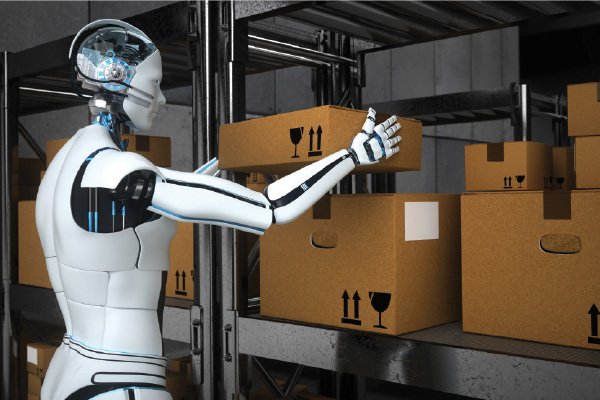
“By 2040, humanoid robots could outnumber humans. » This may sound like a science fiction movie, but it’s actually a prediction Elon Musk made at a recent conference on the future of artificial intelligence (AI). As AI improves at a rate of 10x each year, businesses are rapidly approaching a major turning point.
In the world of supply chains, this raises an important question: are we ready for this change? Humanoid robots may still seem a long way off, but they are already being tested in warehouses, supply chains and in manufacturing plants. General-purpose humanoids like Agility Robotics’ Digit and Sanctuary AI’s Phoenix* are progressing through testing and proof-of-concept phases.
Notably, companies like Amazon and Tesla have even started integrating them into their operations to handle repetitive tasks or lift heavy objects.
It is undeniable that humanoid robots are still in their infancy. Current use is limited and development costs remain high. But their potential is undeniable because they offer additional automation options to alleviate labor shortages, improve efficiency and reduce costs in ways that established robots cannot.
What’s driving the push for humanoid robots?
1. AI to change the game: Artificial intelligence is the main enabler of humanoid robots. Thanks to advances in generative AI, these robots can engage in more natural interactions using simple language. Even more impressive, AI allows them to learn new tasks and adapt to changing workflows without the need for constant reprogramming. This means that a single humanoid robot could perform various tasks, such as sorting, selecting and moving goods.
Designed to operate in dynamic environments, humanoids will interact seamlessly with machines, automation tools like AGVs (automated guided vehicles), and human workers. By leveraging digital twins and physics-based virtual environments (offered, for example, by NVIDIA), organizations can train AI models of humanoid robots and simulate warehouse workflows to ensure operations run smoothly as humanoid robots are introduced to real-world tasks.
2. Automate where it wasn’t possible before: Unlike traditional robots, humanoids are specifically designed for human workspaces. This makes them ideal for roles that were previously too complex or expensive to automate. In distribution centers, for example, where oversized items or complex order picking tasks require human intervention, humanoids could work alongside human employees.
3. Address labor shortages: The warehousing and logistics sectors are grappling with persistent labor shortages. Descartes Research reveals that 76% of supply chain and logistics operations are experiencing labor shortages, affecting everything from distribution to logistics service providers. Humanoid robots can help fill these gaps by performing physically demanding tasks, such as moving heavy pallets or repetitive tasks.
They are especially useful during busy holiday periods, when businesses need additional workers. This flexibility is particularly valuable in environments such as cold storage or warehouses without air conditioning. Gartner notably predicts that by 2030, 80% of people will use intelligent robots daily, compared to less than 10% today.
4. Improve workplace safety: Humanoids may be well suited to tasks that pose risks to human workers, such as lifting heavy objects or working in hazardous conditions. They can work long hours without interruption, minimizing human errors and the risk of injury. The goal is to create a hybrid workforce where humans and robots complement each other to optimize safety, reduce errors, and reduce liability risks for employers.
5. Cost reduction: At $30,000 to $150,000 each, humanoids are still not a bargain. However, they are becoming increasingly cost-effective as the costs of training AI components and models decrease, and the price is expected to settle between $50,000 and $60,000 once humanoids are produced at scale. But who said logistics managers had to buy them? Robot-as-a-Service (RaaS) options will allow them to be rented for as little as $30 per hour.
Preparing for humanoid robots in warehouses
As technology continues to evolve, supply chain managers can take steps now to ensure a smooth transition to humanoid robots:
1. Identify areas to automate: Focus on operations where humanoid robots can provide the most value, especially in tandem with existing automation like AGVs and AMRs (autonomous mobile robots), cobot arms, automated storage solutions and industrial robots with maximum efficiency and collaboration. Look for repetitive or physically demanding warehouse tasks that slow down operations or increase the risk of injury.
2. Simulate future use cases: Create a high-fidelity physics simulation virtual environment and start training humanoids for future tasks and use cases. This simulation will measure their effectiveness and capture their return on investment, while training their future brains (AI) for real-world roles.
3. Invest in workforce training: To get the most out of humanoid robots, you need engineers and operators who know how to integrate, maintain and repair them. Since these robots won’t be fully autonomous for some time, upskilling your workforce is essential. If your organization wants to pilot or deploy humanoid robots, it’s important to focus on training your engineers to manage these advanced systems. By updating your team’s skills, you will ensure that they can work effectively with humanoid robots in your operations.
4. Augmentation operations: Update your processes to support automation and robotics across your organization. Focus on preparing your teams for these changes with change management practices to ensure they accept and work effectively with new technologies. Having clear, standard practices will help everyone collaborate and perform better together.
5. Upgrade technology infrastructure: Make sure your technology and data infrastructure can support humanoids. As these robots will need to work with various automation tools, it is essential to have a robust platform that can orchestrate all operations together. Evaluate your warehouse management software and other systems to determine what adjustments are necessary for successful integration.
6. Establish an ecosystem of strategic partners: Clearly understand how humanoids can benefit your operations. Form partnerships with emerging humanoid suppliers and integrators and engage with universities on research and development initiatives. This collaboration can help you explore the current capabilities of humanoid robots and visualize future possibilities. Forward-thinking organizations might also consider creating an internal team to test and pilot humanoid robots within their facilities.
What’s next?
Although humanoid robots are not yet a complete solution to supply chain challenges, they hold great promise. They can improve flexibility and efficiency in sectors facing labor shortages and rising costs.
By filling these shortages and working in unsafe conditions, humanoid robots present valuable opportunities for those willing to invest in workforce development, improve their technology, run pilot programs, and consider new leasing options.
And if current trends are any indication, the future of humanoid robots looks bright: the global market for humanoid robots, valued at $2.43 billion in 2023, is expected to reach $66 billion by 2032, a 26-fold increase. This growth will be driven by robots’ ability to enhance human capabilities rather than replace them.
Accenture’s strategic investment*
