

When architects design a commercial building, they typically contract the design to a specialist consulting firm to plan the heating and cooling, mechanical, electrical, and plumbing systems. These consultants have been using computer-aided design software for some time, but it is still a laborious process that can take a qualified building engineer weeks to complete.
Today, a Swedish startup called Endra uses AI to automate this mechanical, electrical, and plumbing (MEP) design process. Nicolas Lindgrenco-founder and CEO of the company, says its software can reduce the time it takes to design a code-compliant electrical system for a 500,000-square-foot commercial building from two months to less than a day.
Endra today announced that it has secured a $20 million funding round, one of the largest funding rounds to date for a Swedish company. The investment is led by venture capital firm Notion Capital, with participation from Norrsken VC and angel investors. The company had already raised a pre-seed round of €3 million ($3.4 million) in May.
The company, founded by Lindgren about a year ago, currently employs around ten people. The new funding will support its plans to triple the size of the team within six to 12 months and establish offices in the US, UK and Germany, the company said.
The idea for Endra grew out of serial entrepreneur Lindgren’s work at a company he previously co-founded, Sectragon, which made physical access control and security systems. He sold it to a private equity firm in 2022. At Sectragon, Lindgren and co-founder Anton Juricwho was CEO of Sectragon, observed teams working on security system plans and noticed outdated software companies used to map electrical systems for commercial real estate. After selling Sectragon, Lindgren and Juric decided their next venture would focus on automating this work.
Lindgren’s father, an architect, also told him about the highly manual process engineering design firms used to develop plans for HVAC and plumbing systems, which often represented a bottleneck in the building design process. “Nothing has really happened, from a technological standpoint, in the last 25 years,” Lindgren told Fortune. “We are building a platform purpose-built for the MEP design engineering industry, speeding up human designers’ processes hundreds of times.”
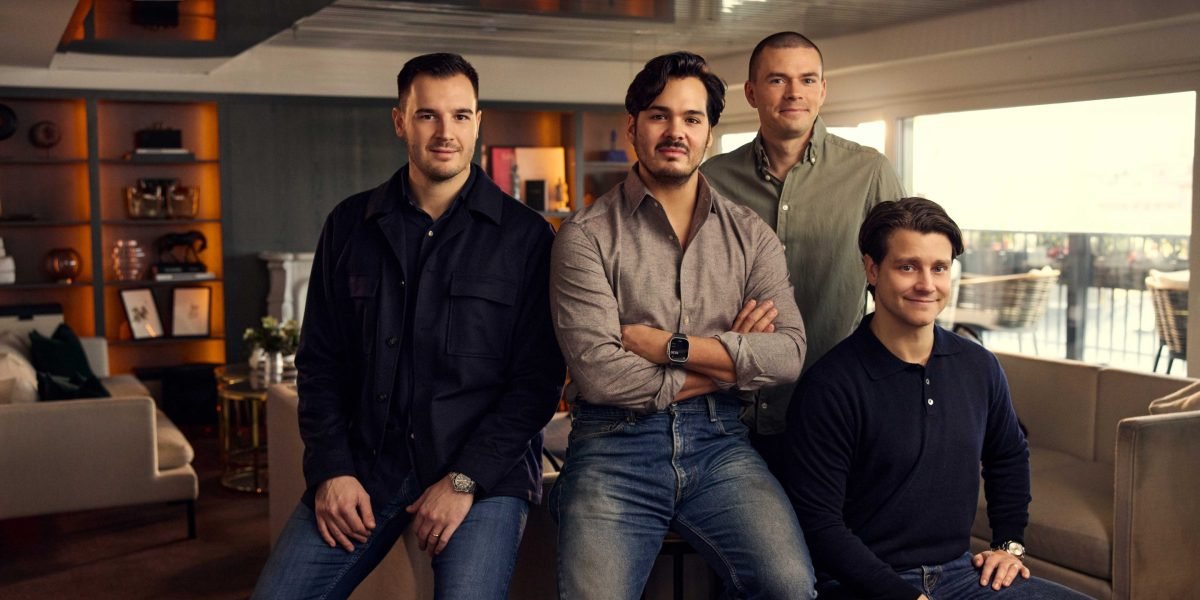
Juric co-founded the company with Lindgren and serves as its chief operating officer. Other co-founders include David Rydberg and Gustav Hammarlund, both of whom focus on developing Endra’s core technology. Currently, Endra’s system only designs the electrical network, but the company plans to add HVAC layout planning and plumbing network mapping over the next year, Lindgren says.
Endra integrates with Autodesk Revitthe standard computer-aided design software tool used in the MEP design industry. Engineers upload a three-dimensional architectural model into Endra, select the building code requirements and the type of system they want to design (such as lighting fixtures, electrical distribution or fire alarms) and the platform generates the engineering model along with the necessary calculations and documentation.
Endra’s system is hybrid, Lindgren said, combining large language models (LLMs) with other forms of machine learning, 3D simulation methods and deterministic algorithms. LLMs are used to understand information about the function of a building and to extract design parameters from building specifications. “They help us identify room types, identify objects,” Lindgren said, “and also the architect’s intent, like how the architect thinks this building should be used.”
With this information in hand, Endra’s system uses its own 3D modeling algorithm and deterministic software to determine the optimal way to organize the electrical wiring while respecting the building codes of the country or region concerned.
The company launched its first customers in August and has since accumulated a waiting list of more than 600 companies in more than 90 countries. The rapid demand reflects broader pressures on the construction sector, where productivity has stagnated while labor shortages have intensified.
Lindgren acknowledged that venture capitalists often ask him about the startup’s competitive moat and whether a company such as Autodesk could replicate Endra’s technology. He highlighted the company’s proprietary geometry engine and data model as differentiators, noting that replicating them would require substantial changes to existing systems.