

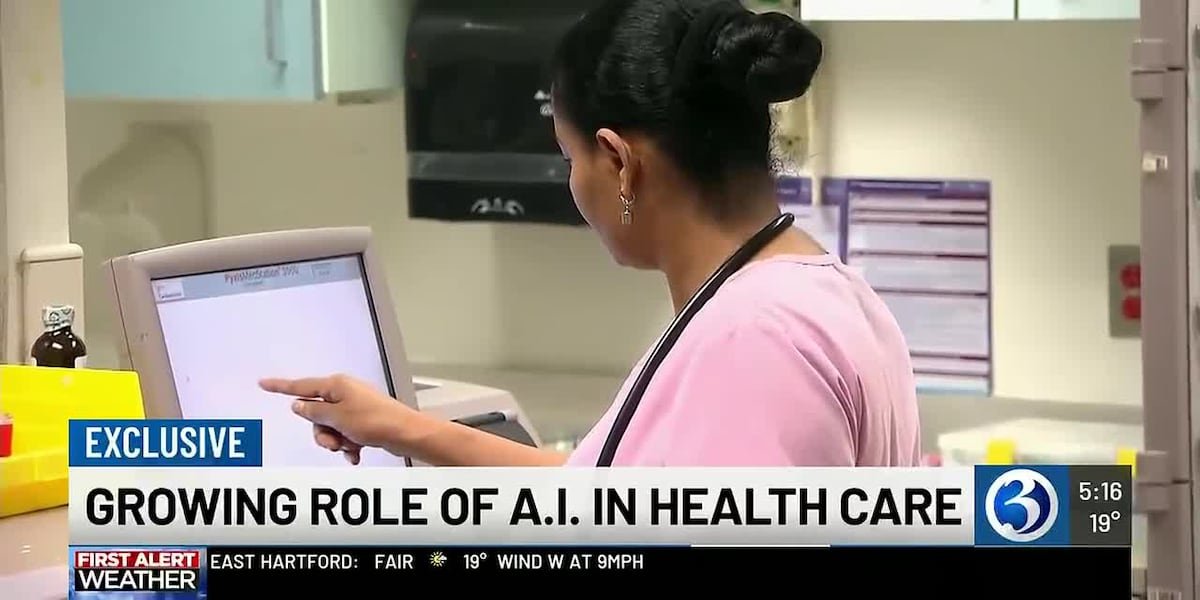
NEW HAVEN, CT (WFSB) – Artificial intelligence is reshaping healthcare as patients increasingly turn to AI tools for medical research.
According to an exclusive survey conducted by Sacred Heart University, GreatBlue Research and Gray Media, two in three out of 1,500 participants said they were already seeing AI being used for parts of their healthcare services.
“I saw my PCP and she asked if she could record our visit with AI,” said Michael Vigeant, CEO of GreatBlue Research. “I said, ‘sure’.”
The survey revealed widespread frustration with the current healthcare system.
“Members of the public like their doctors, they trust them, but there is a distrust of the health system,” said Foluke Omosun, an assistant professor at Sacred Heart University.
Waiting times top patients’ concerns, with 38 percent of respondents citing delays as their biggest problem.
Managing insurance, financial constraints and difficulty making appointments were also high on the list of problems.
Healthcare practices are responding by using chatbots to schedule appointments and send reminders, giving healthcare professionals more time to spend with patients.
Nearly 40 percent of those surveyed said they left their medical appointments feeling uncertain about the instructions they were being given.
Around 86 percent said they researched their health conditions or treatment plans themselves, with 37 percent admitting to using AI to do so.
Looking ahead, 38% of respondents believe AI will replace doctors for certain tasks in the next 10 years.
“It’s pretty clear. Doc is still in the lead in making these decisions and providing this advice, but it’s also very clear that AI is quickly going to become a larger percentage of that conversation, of that diagnosis, of that treatment plan,” Vigeant said.
While Americans recognize that AI can be a useful tool, almost everyone surveyed made it clear that they want the final say on its use in their care.
The survey found that 88% want disclosure when AI is used, 86% say how it is used should be clearly explained before implementation, and 83% want the right to opt out.
“You see doctors using AI to transcribe notes,” Omosun said. “It saves them time. It gives better quality care to their patients. They have more time to do other things. So I feel like that’s something that doctors should be excited about.”
Research experts said the growing role of AI should not scare doctors, but rather show them where patients are willing to use AI, allowing them to focus on care rather than paperwork.
“If AI could help replace some of these repetitive, mundane tasks, like note-taking and things of that nature, does that mean, or could it mean, that I’ll have more time with my provider? » said Vigeant. “He or she will have more appointments available because it will take less time to do the work they are doing.”
Copyright 2026 WFSB. All rights reserved.