

Close Menu
clearpathinsight.org
  • AI Studies
  • AI in Biz
  • AI in Tech
  • AI in Health
  • Supply AI
    • Smart Chain
    • Track AI
    • Chain Risk
  • More
    • AI Logistics
    • AI Updates
    • AI Startups

Zoom’s $51 million bet on Anthropic is now worth up to $4 billion

January 27, 2026

Shadow AI tools and chatbots are widely used in hospitals

January 27, 2026

The three pillars of digital infrastructure risk management: Risk and insurance

January 27, 2026
Facebook X (Twitter) Instagram
clearpathinsight.org
Subscribe
  • AI Studies
  • AI in Biz
  • AI in Tech
  • AI in Health
  • Supply AI
    • Smart Chain
    • Track AI
    • Chain Risk
  • More
    • AI Logistics
    • AI Updates
    • AI Startups
clearpathinsight.org
Home»AI in Healthcare»Gates and OpenAI partner to pilot AI solutions to health problems in Africa
AI in Healthcare

Gates and OpenAI partner to pilot AI solutions to health problems in Africa

January 26, 2026003 Mins Read
Share Facebook Twitter Pinterest Copy Link LinkedIn Tumblr Email Telegram WhatsApp
Follow Us
Google News Flipboard
C3ab8eec 9323 46e7 9ad6 38bf9b1a4874 4fdfc8c3 b6cd 49f5 8231 487cfa284660.png
Share
Facebook Twitter LinkedIn Pinterest Email Copy Link

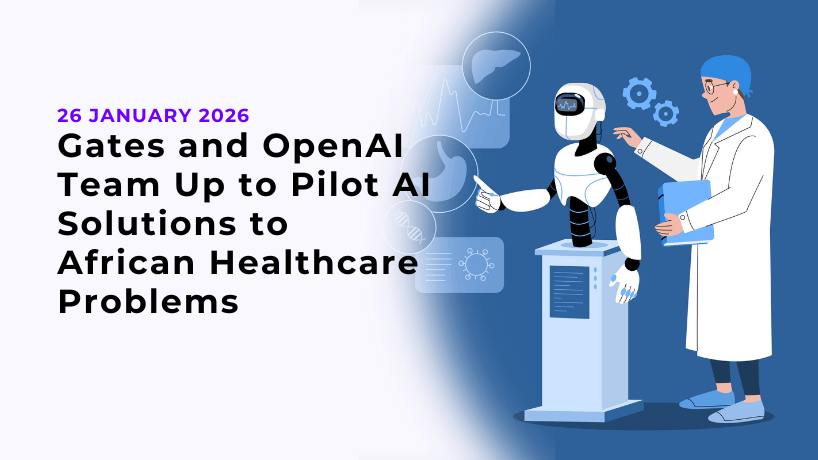
The Gates Foundation and OpenAI announced a $50 million pilot program, called Horizon 1000, to advance the use of AI in healthcare in Africa. The initiative aims to provide funding, technology and technical support to 1,000 primary health care clinics by 2028, focusing on improving quality, efficiency and access to care. OpenAI CEO Sam Altman said the effort aims to ensure AI becomes a societal benefit by tangibly improving people’s lives, while Gates Foundation CEO Bill Gates has focused on reducing administrative burden and more efficient healthcare delivery.

The pilot project will begin in Rwanda, before expanding to Kenya, South Africa and Nigeria. Rwanda has already invested heavily in digital infrastructure, enabling around 97% of its population to access the internet, and is actively deploying AI to support healthcare delivery. The country is developing decision support tools for its more than 60,000 community health workers, who manage the majority of primary care nationwide. With malaria accounting for around 70% of community health cases, Rwanda is using AI to improve diagnosis and predict outbreaks, building on previous efforts combining AI and drones to target mosquito breeding sites.

Rwanda’s Minister of ICT and Innovation, Paula Ingabire, said AI can help relieve health workers of administrative tasks, improve demand forecasting for medical supplies and allow clinicians to focus on patient care as the country rapidly expands its health workforce. She highlighted the importance of training AI models on local, context-specific data and using it to solve real operational problems. Rwanda is also in discussions with Anthropic to explore a national health intelligence platform that could directly feed into health planning and resource allocation systems.

Beyond Horizon 1000, global organizations are already seeing the impact of AI in low-resource settings. Peter Sands, CEO of the Global Fund, said the organization has invested $170 million in AI-based TB screening over the past four years, including deployments to refugee camps where radiologists are not available. However, Sands warned that basic infrastructure gaps, such as unreliable internet access and electricity, remain significant barriers to scaling AI solutions. He also warned against deploying AI tools without clear problem definition or adequate human capacity to use them effectively.

Gates and Sands suggest that low- and middle-income countries could adopt AI in healthcare more quickly than wealthier countries, due to urgent needs, government support and fewer concerns about job losses. Gates said the $50 million commitment is just a starting point, envisioning AI-powered health advisors as a free, foundational service that reduces paperwork and improves continuity of care in health systems.

Click here to read the original report.

Follow on Google News Follow on Flipboard
Share. Facebook Twitter Pinterest LinkedIn Tumblr Email Copy Link

Related Posts

Shadow AI tools and chatbots are widely used in hospitals

January 27, 2026

Modern Healthcare NewsNavigating 2026: How health systems can thrive in the face of AI, labor and consumer pressures. Healthcare organizations faced another historically difficult year in 2025. Executives were overwhelmed by increasing financial pressure…. 6 hours ago

January 27, 2026

UMass Chan’s new AI Assurance Lab tests the development of health technologies so they work well in the real world

January 26, 2026
Add A Comment
Leave A Reply Cancel Reply

Categories
  • AI Applications & Case Studies (56)
  • AI in Business (292)
  • AI in Healthcare (265)
  • AI in Technology (281)
  • AI Logistics (47)
  • AI Research Updates (109)
  • AI Startups & Investments (239)
  • Chain Risk (74)
  • Smart Chain (94)
  • Supply AI (75)
  • Track AI (57)

Zoom’s $51 million bet on Anthropic is now worth up to $4 billion

January 27, 2026

Shadow AI tools and chatbots are widely used in hospitals

January 27, 2026

The three pillars of digital infrastructure risk management: Risk and insurance

January 27, 2026

What top business leaders said about AI and jobs at Davos

January 27, 2026

Subscribe to Updates

Get the latest news from clearpathinsight.

Topics
  • AI Applications & Case Studies (56)
  • AI in Business (292)
  • AI in Healthcare (265)
  • AI in Technology (281)
  • AI Logistics (47)
  • AI Research Updates (109)
  • AI Startups & Investments (239)
  • Chain Risk (74)
  • Smart Chain (94)
  • Supply AI (75)
  • Track AI (57)
Join us

Subscribe to Updates

Get the latest news from clearpathinsight.

We are social
  • Facebook
  • Twitter
  • Pinterest
  • Instagram
  • YouTube
  • Reddit
  • Telegram
  • WhatsApp
Facebook X (Twitter) Instagram Pinterest
© 2026 Designed by clearpathinsight

Type above and press Enter to search. Press Esc to cancel.