


 Getty Images
“But it can also be used in a negative way, because maybe you don’t like something about yourself and you tell the AI that you’re not sure about a feature of your body. Maybe your hair is a little messy and you mention that in your application. While it might tell you, ‘Oh, that’s beautiful,’ it might also tell you, ‘You’re right, here’s how you can change it,'” Edwards adds.
But when technology acts like our eyes, it risks describing something that doesn’t exist at all. Hallucinations – where AI models pass off inaccurate or false information as true – are one of technology’s biggest problems. “At first the descriptions were very good, but we noticed that many of them were inaccurate and changed important details, or made up information when what was in the image didn’t seem enough,” says Mahadevan. “But technology is improving by leaps and bounds and these mistakes are becoming less and less common.”
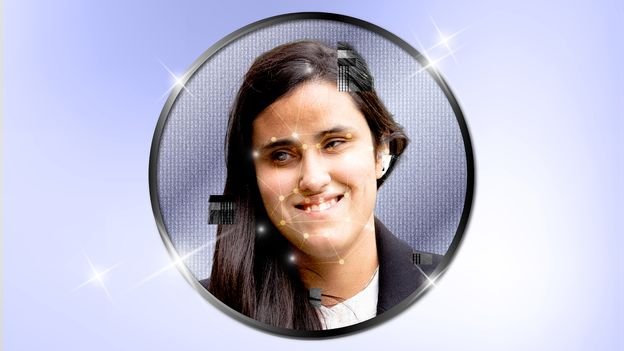
But it’s important to note that AI isn’t always right, despite Envision’s optimism. When Joaquín Valentinuzzi, a 20-year-old blind man, decided to use artificial intelligence to evaluate himself by choosing the perfect photos for a profile on a dating app, he found that the information returned by the AI sometimes bore little resemblance to reality. “Sometimes it would change the color of my hair or describe my expressions incorrectly, telling me I had a neutral expression while I was smiling,” he says. “These kinds of things can make you feel insecure, especially if, as we are encouraged to do, we trust these tools and use them as a way to gain self-knowledge and try to track how our bodies look.”
More like this:
• The complicated truth about social media and body image