

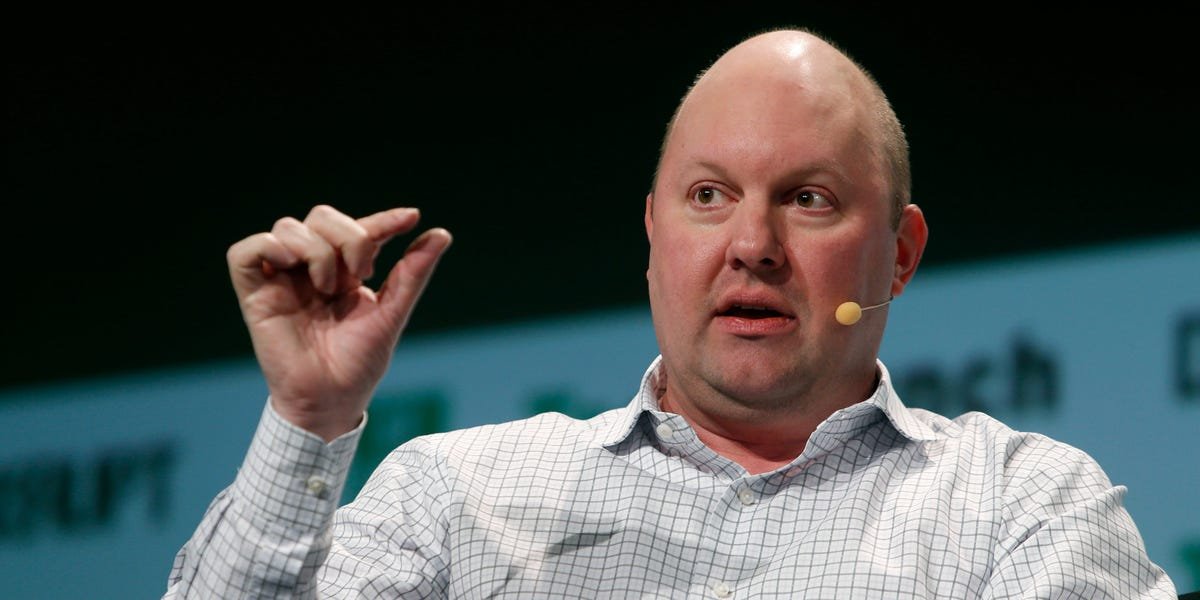
Worried about AI taking your job? Marc Andreessen is not.
The venture capitalist and co-founder of Andreessen Horowitz He says the biggest fear about artificial intelligence – that it will eliminate jobs – is aimed at the wrong problem.
The real danger, he said, lies in the direction in which the global economy is heading without AI.
“If we didn’t have AI, we would be panicking right now about what’s going to happen to the economy,” Andreessen said in an episode of “Lenny’s Podcast” released Thursday.
Without a major technological breakthrough, he added, the world would face “a future of depopulation,” where a shrinking workforce and slow growth in productivity would cause economies to stagnate or even shrink.
Over the past two decades or so, research has shown that productivity growth in advanced economies has been unusually weak compared to historical norms, slowing further after the 2008 global financial crisis, despite rapid advances in digital technology.
At the same time, birth rates in the United States, Europe, China and much of the developed world have remained below replacement level of approximately 2.1 children per woman – the threshold necessary to maintain population stability.
“Depopulation without new technologies would simply mean a decline in the economy,” Andreessen said.
AI as a solution to workforce decline
Andreessen’s assessment echoes the warnings of some demographers and some technology leaders like Elon Muskwho has repeatedly warned of the economic risks of population decline – a threat that the United States and Europe have tried to avoid by promoting pronatalist policies.
According to Andreessen, AI is coming at exactly the right time to address the declining workforce.
Rather than displacing workers en masse, it will help offset the shortage of people available to do the work, he said.
“The only reason this doesn’t worry us,” he said, “is because we now know we have the technology that can replace the lack of population growth.”
That doesn’t mean jobs won’t change. Andreessen is clear that AI will reshape work at the task level, automating parts of roles in engineering, design and product management.
But he rejected the idea of widespread permanent unemployment – a prediction made to varying degrees by several veteran AI researchers, including Geoffrey Hintonoften nicknamed the “godfather of AI”, computer science professor Roman Yampolskiand professor at UC Berkeley Stuart Russell.
Andreessen’s case for an AI advantage
Even a dramatic increase in productivity, he said, would only return the economy to the levels of job loss seen during previous industrial booms – periods widely seen as times of opportunity, not collapse.
In fact, Andreessen expects human labor to become more valuable in many countries as populations decline and immigration slows.
“The remaining human workers will get a bonus, not a discount,” he said.
In a more extreme scenario in which AI drives massive productivity In terms of gains, Andreessen predicts falling prices for goods and services, raising living standards even if some jobs disappear.
“It’s the equivalent of a giant raise for everyone,” he said.
His conclusion is straightforward: AI does not threaten the economic future. This avoids a much darker situation.