

Imagine this scenario: Doctors know that a small number of patients will face life-threatening complications after illness, but they must analyze millions of records to identify patients in need of intervention. This is a task that would take weeks and deprive practitioners of other healthcare needs.
At UC Davis Health, a team used artificial intelligence to solve this challenge. They scanned 3 million health recordsidentifying more than 11,000 patients at risk of life-threatening aneurysms, leading to surgeries saving more than thirty lives.
This is just one example of how UC Davis is using AI to revolutionize care.
I have been fascinated by the potential of this work for decades. As an electrical engineer in the 1990s, I explored early neural networks, the foundation of modern AI, as tools for solving complex problems. Today, these technologies are emerging on our campus, enabling clinicians to improve health and quality of life.
As this future of healthcare emerges in real time, we share the responsibility to use AI ethically, always putting the patient at the center. We are committed to leading its responsible development, enabling providers and researchers to engage more productively and creatively in care while honoring diverse human perspectives.
This approach to AI is critical to the future of our healthcare system, ensuring that the most vulnerable patients and those facing the most complex medical needs receive compassionate care, from the bedside to the operating room.
Our interdisciplinary AI research is grounded in this commitment to the public good, driving transformative interventions that improve access to care and improve the effectiveness of treatments, and ensuring that innovations developed at Davis serve patients across California and around the world.
One of the most interesting examples is diabetes care. When Associate Professor Sam King and his son were diagnosed with type 1 diabetes, he saw the challenges of monitoring his blood sugar and parenting a child with a chronic illness. He was inspired to develop the BeaGL metabolic watchdoga system that delivers real-time predictive health information to an app on the user’s phone, thereby easing the burden of care. Working with diabetes researchers at UC Davis Health, King hopes to make the technology accessible to millions of Americans with diabetes.
RELATED READING
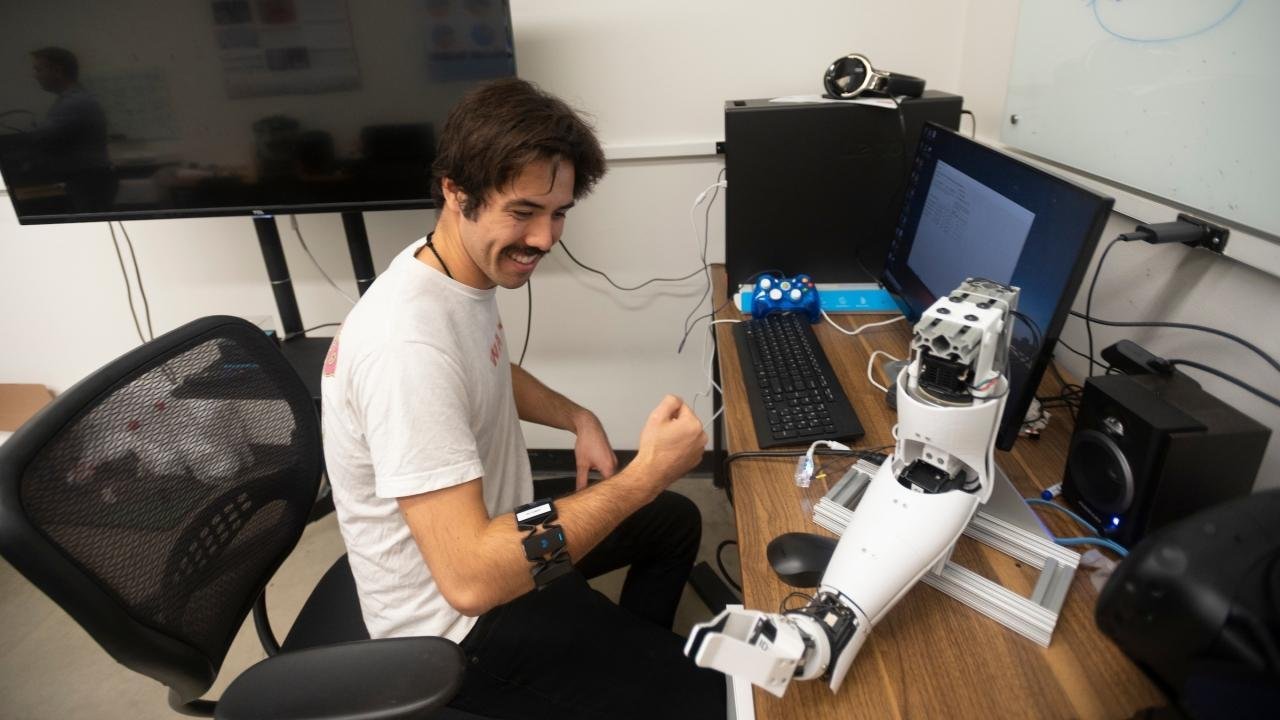
Our interdisciplinary research also develops next generation of prosthetic limbs. The complexity of the interactions between electrical signals that control muscle movement has long been a significant challenge. Today, our researchers in the College of Engineering and the College of Biological Sciences are exploring artificial intelligence applications that will not only speed up these connections, allowing for more natural movements, but also personalize prosthetics that can learn and adapt to each user’s needs.
We know that holistic health extends to the dining room, too. New $2 million grant from Bezos Earth Fund spurs partnership between UC Davis and American Heart Association to using AI to rethink food for the modern kitchen. The research aims to “reimagine what food can be,” creating tools that allow anyone – from home cooks to large-scale farmers – to develop new ingredients and flavor combinations for healthier, more environmentally sustainable meals.
These new applications do not remain in our laboratories. Forty-five optimized AI models are already in use at UC Davis Health, where they help detect diseases earlier, advance new treatment models and save lives.
With stroke being the fifth leading cause of death in the United States, rapid intervention is essential. Doctors use an AI platform that analyzes patient scans and immediately alerts healthcare teams, enabling faster intervention that reduces harm and improves outcomes.
This AI-augmented screening also extends to cancer care. From breast has liver cancer, clinicians are using AI to screen patients more accurately and increase treatment success and survival rates. A promising application is colorectal cancer, one of fastest growing cancers in the United States, where AI helps identify high-risk patients and facilitates CT analysis so doctors can begin appropriate treatment sooner.
Our leadership in the AI revolution is focused on empowering innovators and healthcare professionals. The vision that sparked my curiosity as a young researcher decades ago aligns with our vision at UC Davis. I am inspired every day by the development of technology and human potential that makes our community and the world a healthier place.
To learn more about how we are leading the way in medical research and AI, I encourage you to visit our Laboratories to Lives website. Learn more about these life-changing innovations and help us build a healthier future by sharing them with the people around you.