

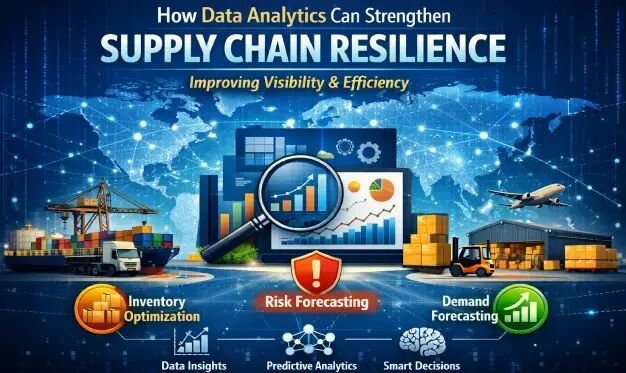
Supply chains today operate in an environment filled with uncertainty. Disruptions can arise from sudden changes in demand, transportation delays, geopolitical events, natural disasters or internal process failures. To remain competitive and reliable, businesses must build supply chains that can anticipate problems, adapt quickly, and recover faster. This is where data analysis plays an important role. Data analytics transforms unstructured data into insights that can be used to improve the stability of supply chains and help people make better decisions at every stage.
Understanding supply chain resilience through data
Supply chain robustness means being able to plan for issues, manage them well when they arise, and resume normal operations without issue. Data analysis supports this by creating visibility across the entire supply chain. When businesses analyze historical data, real-time shipment updates, inventory levels and supplier performance metrics, they get a clear picture of vulnerabilities. This visibility allows decision-makers to identify patterns that signal risk before problems become serious.
For example, analytics might highlight recurring delays on specific routes or ongoing quality issues with certain suppliers. Instead of reacting after disruptions, businesses can take preventative actions based on evidence rather than assumptions.
Improve demand forecasting and planning
Overly optimistic demand projection is one of the most difficult aspects of supply chain management. Poor forecasting often leads to excess inventory or stock-outs, which weaken resilience. Advanced data analytics uses machine learning models and predictive algorithms to analyze sales trends, seasonal behavior, market signals and customer demand patterns.
With better forecasting, companies can more accurately align production and inventory with expected demand. This reduces waste, improves service levels and ensures the supply chain can absorb sudden changes without major disruption. Accurate forecasts also promote better supplier coordination, making the entire network more stable.
Improve risk detection and response
Data analytics plays a vital role in identifying and managing supply chain risks. By combining data from multiple sources such as transportation systems, supplier databases, weather reports and market intelligence platforms, businesses can detect warning signs of disruption.
When risk indicators emerge, analytics tools help prioritize responses based on severity and likelihood. This allows businesses to reroute shipments, adjust inventory reserves, or change suppliers quickly. Physical security data also contributes to resilience. Solutions like Red Flag Seals Generate valuable data on the integrity of goods, helping organizations detect tampering, theft or unauthorized access and respond before losses increase.
Optimizing inventory and network design
Resilient supply chains depend on intelligent inventory placement and efficient network design. Data analysis helps determine optimal inventory levels in warehouses, distribution centers and retail locations. Instead of holding excess inventory everywhere, businesses can use analytics to strategically position inventory where it is most needed during disruptions.
Network modeling tools simulate different disruption scenarios, such as port closures or supplier shutdowns. These simulations help businesses test alternative routes, backup providers and contingency plans before real disruptions occur. As a result, supply chains become more flexible and better prepared for unexpected events.
Support collaboration and continuous improvement
Resilience is not built once and forgotten. This requires continuous monitoring and improvement. Data analytics enables collaboration across departments and with external partners by providing shared insights and performance metrics. When suppliers, logistics providers and internal teams work from the same data, coordination improves and response times shorten.
Over time, analytics also supports learning. Each disruption generates data that can be analyzed to improve future responses. This feedback loop strengthens processes, improves decision-making and gradually builds a more resilient supply chain.
Conclusion
Data analytics is no longer optional for modern supply chains. This is a critical feature that enables visibility, improves forecasting, strengthens risk management, and supports smarter planning. By using data to anticipate challenges and guide action, businesses can create supply chains that are not only efficient but also resilient. In an ever-changing world, analytics-driven resilience is what allows supply chains to move forward with confidence.