


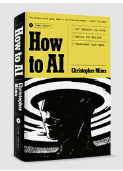
 Generative AI has joined the business world in November 2022but – more than three years later – many of us still aren’t comfortable with it, due to headlines about potential job losses, legal risks and other concerns. But the Wall Street Journal’s technology columnist Christophe Mims wrote a new book, “How to do AI: Cut through the hype. Master the basics. Transform your work“, providing 24 “laws” that make the technology much less intimidating. One reviewer says “How To AI” offers “an optimistic, realistic and down-to-earth practical guide on how to use AI in everyday life.” We spoke to Mims to get some insight.
Question: Perfectly rational business leaders may panic when they hear “AI.” What is the most common reason for their fear – and what is the main reason business leaders are adopting AI?
Answer: Change is always scary, but change that threatens to take your job away from you is terrifying. It is a natural human reaction to an existential threat over which we have no power: denial, delay, dissociation. But my main message is this: it is very early for the development and adoption of AI, and there is no one right way to use these technologies. For perhaps the first time, technology has arrived that can be a huge benefit to those who might feel most threatened.
Question : One of your most important messages is that AI is a tool, not a replacement. In what unexpected ways are business leaders using generative AI to do their jobs better?

A: When it comes to AI, it’s important to walk before you try to run. Start by letting it record each of your meetings, then ask it to extract information from it. But don’t just use it to replace note-taking: actually change the way you conduct meetings. (When the weather is nice, I’ve turned all my Zoom meetings into walking meetings; when I need to be on camera, I’ve gone back to taking notes by hand, with the AI transcription as a backup.)
From there, start experimenting: ask the AI to create “personas” (for example: “You are a Fortune 100 CEO with 30 years of experience in leadership roles…”) and try asking them for advice on questions that you might normally bring to a personal board of directors.
After that, find yourself an engineer and start talking to them about the repetitive tasks your company now outsources that could be better handled by AI agents.
Question : Many business leaders are handing over everything AI-related to IT. Why is it important for them to get started with AI themselves?
A: This is the first technology in history that can teach you how to use it. (Really: try asking it how it might help you in a given situation.) But that’s also why I wrote “How to Make AI” — because having at least a basic understanding of how it works is as important in 2026 as having a basic understanding of how the web worked at the turn of the millennium.
Question : One reason why leaders might turn away from AI is that their teams don’t want to join in. Do you have any quick solutions to this problem?
A: Every organization has at least one person who is curious and experimenting with AI. Start hosting lunch and learns where this person can demonstrate how it works for them. If you want to get more ambitious, find people like this and make them resident “black belts” who are responsible for talking to every team in the company about how to use AI.
Question : Words like risk, bias, and hallucination can still make it difficult to understand generative AI. Your book offers several simple ways to solve many of these problems. Can you summarize them here?
A: AI is software and all the old rules still apply. Waste in means waste out; a human must review his work because the hallucination never disappears; and if you work in a highly regulated industry, it is your responsibility to correct bias in your AI systems. For this last point, there is an entire industry of “algorithmic auditors” who can help you.
Learn more about “How to Do AI: Eliminate the Hype. Master the Basics. Transform Your Work.”
Christophe Mims writes about technology for the Wall Street Journal and has previously covered technology for Quartz. The author of “Arriving Today: From the Factory to the Front Door – Why Everything Has Changed, How and What” We Buy,” Mims has written on topics ranging from bidets to brain implants and from wireless communications to flying taxis.