

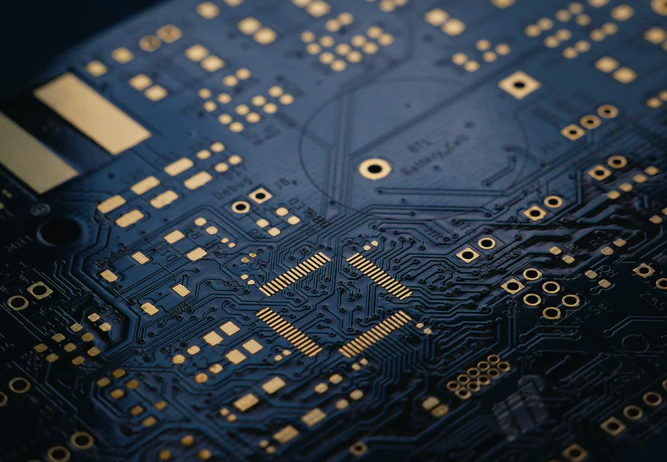
Olix Computing Ltd., a startup developing an artificial intelligence chip with integrated optical components, has raised $220 million in funding.
The Financial Times reported today that the investment was led by Belgian venture capital firm Hummingbird Ventures. The deal values British company Olix Computing at more than $1 billion. The company previously raised an undisclosed amount from Plural, Vertex Ventures, LocalGlobe and Entrepreneurs First.
Olix’s chip is optimized for inference, the task of running AI models in production after training is complete. It is unclear what optical components are included in the processor or how they are used. However, a blog post on the company’s website, it says its chip features a “new memory and interconnect architecture.” This suggests that Olix uses the photonic components to power an interconnect, the part of a processor responsible for moving data between circuits.
Several other startups are developing photonic interconnections. One of the better-funded players, Ayar Labs Inc., has built an optical interposer that can be used to build chips as small as 40 square centimeters. That’s more than double the size of Nvidia Corp.’s Blackwell B200 graphics cards.
The value proposition of optical interconnects is that light travels faster than the electrical signals used by current chips to move data. As a result, the technology can theoretically provide significantly higher throughput. It also consumes less energy.
Olix says its processor is designed to address a technical challenge called the memory wall. This is the HBM, the external memory that AI chips use to store data.
A graphics card performs calculations by loading data from HBM memory into its built-in cache and then saving the results to the HBM module. The speed at which the chip can move data to and from memory directly influences performance. A memory wall appears when a chip cannot operate at full speed due to performance bottlenecks in its HBM module.
According to Olix, its chip design addresses the challenge by not using HBM. The processor stores data only in SRAM, a significantly faster type of memory.
An HBM memory cell, the basic element of HBM devices, includes a transistor and a kind of miniature battery called a capacitor. SRAM, on the other hand, uses a more complex design with six transistors. Another contributing factor to SRAM’s performance is that it is typically integrated directly into IA chips, whereas HBM memory is implemented as a standalone module. This means that the SRAM is closer to the host chip transistor, reducing data travel times.
Startup Cerebras Systems Inc. also prioritized SRAM when designing its slice-sized AI accelerator. The chip includes 44 GB of SRAM, which allows many AI models to run without using HBM. Olix claims its photonics technology outperforms “silicon-only SRAM architectures in terms of interactivity and latency.”
Olix’s chip is called the OLIX Optical Tensor Processing Unit, or OTPU for short. A tensor is a mathematical object that AI models use to hold information. Many AI chips include circuits specifically optimized to process such objects.
The chip likely also includes circuitry optimized for non-tensor workloads. Google LLC’s tensor processing units, which are also designed to power AI models, combine tensor-optimized cores with scalar and vector units. These are circuits optimized for tasks such as memory management.
Olix will use its newly raised capital to fund chip development initiatives. A job offer on the company’s website says it is also working on a compiler that can adapt existing AI models to run on its silicon. According to the Financial Times, Olix plans to start shipping OTPU chips to its customers next year.
Photo: Unsplash
Support our mission of keeping content open and free by engaging with the CUBE community. Join the trusted network of CUBE alumniwhere technology leaders connect, share information and create opportunities.
- Over 15 million viewers of theCUBE videosfueling conversations about AI, cloud, cybersecurity and more
- More than 11.4,000 CUBE alumni — Connect with 11,400+ technology and business leaders shaping the future through a unique network of trust.
About SiliconANGLE media
Founded by technology visionaries John Furrier and Dave Vellante, SiliconANGLE Media has built a vibrant ecosystem of industry-leading digital media brands that reach more than 15 million elite technology professionals. Our new proprietary theCUBE AI Video Cloud innovates audience engagement, leveraging the CUBEai.com neural network to help technology companies make data-driven decisions and stay at the forefront of industry conversations.