

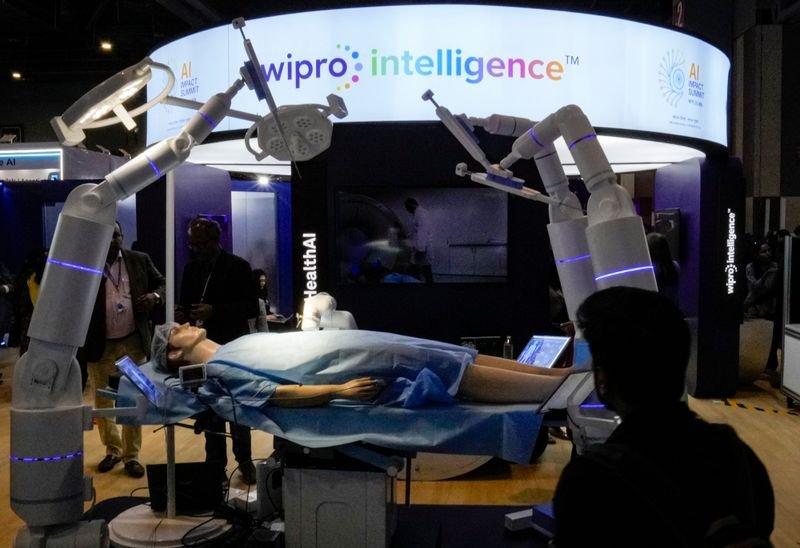
At the India AI Impact Summit 2026, officials from the Union Health Ministry said the integration of artificial intelligence (AI) in healthcare is imperative as it would reduce the healthcare workforce while strengthening the doctor-patient relationship.
Dr Sunil Kumar Barnwal, CEO of the National Health Authority, said AI could significantly improve the efficiency of healthcare delivery and enable faster, data-driven decision-making, especially in large-scale public health programs. He highlighted that AI-based analytics could strengthen beneficiary identification, streamline claims management, detect fraud and monitor service usage, thereby improving transparency, accountability and overall system performance.
“We are not exploiting the full potential of AI. It should become an integral part of healthcare. A specialist doctor spends time on non-clinical matters, including listening to patients and writing prescriptions. These will be reduced if AI is integrated into the healthcare system,” he said, highlighting the importance of building interoperable digital platforms supported by strong data governance and privacy safeguards to ensure responsible deployment of AI solutions.
Union Health Secretary Punya Salila Srivastava said that over the last decade, India’s healthcare system has moved from basic digitization of records and improved data reporting to building a nationwide interoperable digital health ecosystem.
Citing the example of Ayushman Bharat Digital Mission (ABDM), she said the Centre’s program has evolved into a robust digital public infrastructure for health, with over 859 million ABHA accounts linked to over 878 million health records. “With over 1.8 lakh Ayushman Arogya Mandirs operational across the country, digital platforms are being integrated at the primary care level. E-Sanjeevani, powered by AI-assisted clinical decision support systems (CDSS), has enabled over 449 million teleconsultations through over 2.2 lakh registered healthcare providers, making it the world’s largest telemedicine initiative in primary health care,” she said.
Citing examples, she referred to MadhuNetrAI for AI-based diabetic retinopathy screening, AI-enabled wearable X-rays and acoustic screening tools such as Cough Against TB (CA-TB) for TB detection and AI-integrated surveillance systems for faster epidemic alerts.