

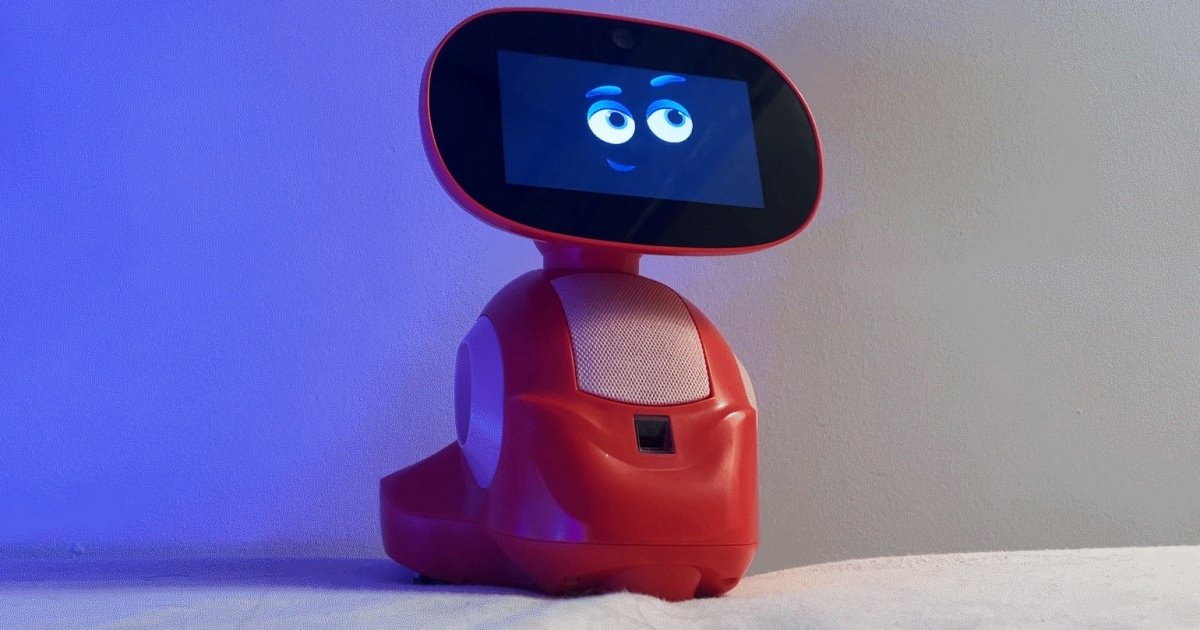
Miko, a company that makes artificial intelligence-powered toys, is including an AI on/off switch for its core technology after political pressure and investigations into its products.
The new option, which follows public criticism, is a rare adjustment that allows consumers to opt out of using AI as companies of all stripes rapidly integrate the technology into their products.
“Miko puts full control in the hands of parents and guardians with an ON/OFF toggle option to enable or disable the conversational AI features of Miko 3 and Miko Mini,” the company announced in a statement. press release Monday.
Miko toys are mobile robots with a touchscreen face, which can play music and games with children and use AI chatbots, called Large Language Models (LLM), to interact with children. The company collaborated with Google, according to a 2024 blog post, to use Google Cloud and Google’s Gemini AI models.
Recently, Miko has been the subject of increased scrutiny and political pressure, with watchdogs and politicians raising safety concerns about Miko and other AI toy creators.
Last week, Sens. Marsha Blackburn, R-Tenn., and Richard Blumenthal, D-Conn., said they had identified a website where any visitor could download thousands of Miko-generated answers for specific children. It appears to have been accidentally left available online, without password protection or other safeguards, and accessible to anyone with an Internet connection.
NBC News listened to some recordings, including those that appeared to be from prolonged conversations in which the LLM repeatedly addressed a child by name and asked questions such as what he was feeling and what music he was listening to. The site became inaccessible last week.
Miko CEO Sneh Vaswani said at the time in an emailed statement to NBC News that the company did not disclose user data and did not store children’s voice recordings, but did not comment directly on the recordings that appeared to be responses to children.
Senator Blackburn responded to the news of AI’s deactivation in a statement, saying: “These new parental controls are a last-minute attempt to save face following the cybersecurity breach that came to light last week, where the company exposed sensitive data involving children to the public. Parents should think twice before purchasing this toy for their children, regardless of the latest press release.
Ritvik Sharma, senior vice president of growth at Miko, declined to respond directly to Blackburn, but said the new feature “has been in the works for some time” and that the audio responses posted online “had nothing to do with this announcement.”
AI toys, as well as the chatbots that power them, are largely unregulated in the United States. The popularity of toys has increased recently as technology becomes more widespread and popular.
Toy manufacturers usually put safeguards in place to prevent them from saying inappropriate things to children. But all LLMs are susceptible to “jailbreaks,” or phrases that can convince a chatbot to ignore its developers’ instructions.
In December, an NBC News investigation found that some of the most widely marketed AI toys to Americans could be prompted, in certain contexts, to say things that parents would likely find disturbing or objectionable, including descriptions of sexual activity or descriptions of geopolitics closely tied to the Chinese Communist Party.
The AI toy market is booming, especially in China. MIT Technology Review reported last year that the company has more than 1,500 registered AI toy companies.