

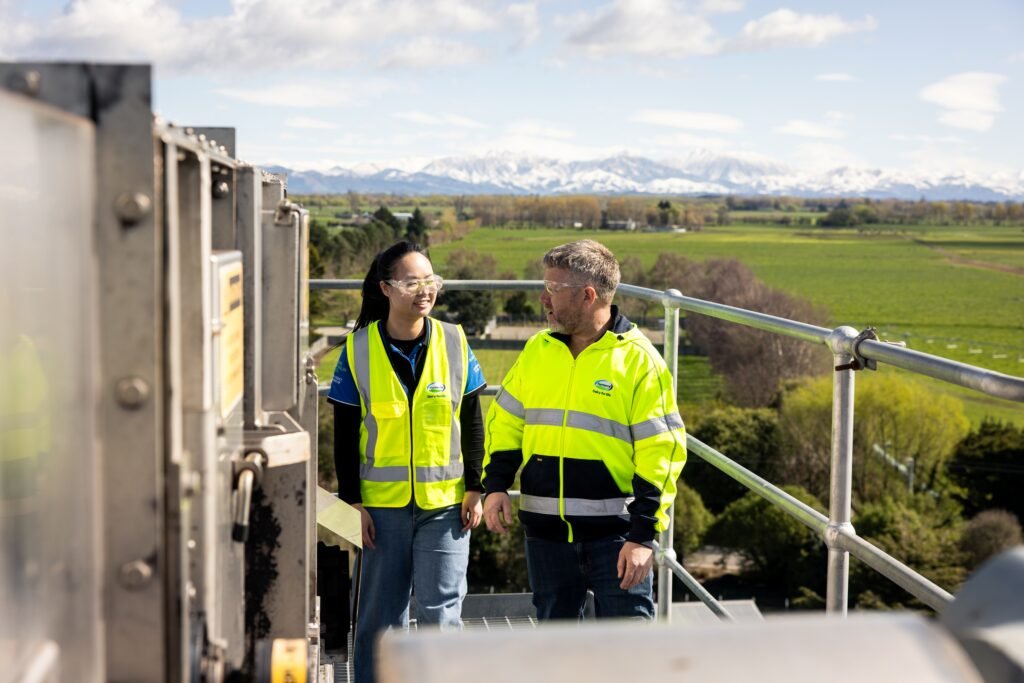
For Fonterra, operating globally means managing constant complexity. As New Zealand’s largest company, the cooperative serves customers in more than 100 countries and processes approximately 22 billion liters of milk solids each season. In this context, even small improvements in quality, consistency, sustainability and productivity can add up. AI is increasingly becoming a practical way to reduce complexity rather than add it, driving better decisions and more consistent ways of working.
Since partnering with Microsoft six years ago to move its core operations to Azure, Fonterra has taken a deliberate and measured approach to integrating AI in support of its multiple strategic priorities.
AI in the factory
Some of the clearest examples are in the manufacturing sector. At Fonterra’s site in Clandeboye, South Canterbury, AI is used to monitor butter packaging at several stages of production, stopping the line when defects are detected. Instead of planning production using spreadsheets, teams now use AI to do it automatically.
Meanwhile, real-time IoT data flows from machines in more than 100 factories to the Microsoft cloud, enabling a more predictive approach to maintenance, so factories stay operational with less costly downtime and interruptions.
Integrate AI into everyday work
In all its offices, AI has also saved a huge amount of time. Fonterra was an early adopter of Microsoft 365 Copilot in New Zealand through the Early Adopter program, identifying hundreds of use cases across the business. As of February 2026, 35% of its global workforce was actively using AI tools, generating almost a million interactions in a single month through Copilot Chat, Copilot Studio agents, GitHub Copilot and Fonterra’s own Co-op GPT. These tools are used in practical ways, from summarizing meetings and capturing actions to accelerating policy development and helping teams ask the right questions of each other to get work done quickly, challenging biases and existing ways of thinking and acting. The advantage is not only time saving. It also gives people more space to focus on their judgment, collaboration and decision-making to better support the cooperative’s strategy.
Using Microsoft Copilot Studio, Fonterra’s IT delivery team partnered with EY to create three production workers.
The first, an Idea Submission Coach, helps people develop strong investment proposals. He tests their ideas and gives them advice to strengthen their submissions, ensuring that each submission arrives complete and ready for evaluation, making investment decisions easier and faster. An architecture assessment agent helps the IT team review its technical architecture, helping to reduce the manual work needed to ensure solutions meet governance requirements as well as technical needs. Finally, a technical accounting valuation officer reinforces the consistency of the financial valuation, ensuring that everything is audit-ready, saving a huge amount of time and effort in the end. Together, these tools support more auditable workflows by automating common requests, triaging incidents, and helping create more consistency.
“What stands out is how pragmatic Fonterra has been in its use of AI,” says Brendan Bain, enterprise sales director at Microsoft New Zealand. “From the beginning, the focus has been on real business needs, not experimentation per se. AI has evolved from cloud computing to something that is now part of everyday work, helping teams plan, make decisions and collaborate across the business.”

Raising the bar for NZ Inc – and for the world
This work is still in its early stages. Fonterra and Microsoft have developed an AI acceleration program designed to gradually expand across the entire cooperative, from F&B and finance to people, culture and corporate affairs. It builds on shared sustainability priorities, with Microsoft’s commitment to New Zealand data centers powered by renewable energy aligning closely with Fonterra’s own environmental ambitions, reinforcing that productivity, resilience and sustainability can advance together.