

The enterprise AI revolution isn’t happening in Silicon Valley boardrooms or university research labs. Across industries, AI is reshaping customer engagement, product development and decision-making; not to replace people, but to expand their capabilities and evolve their expertise.
From aviation to automotive, telecommunications to luxury retail, leading brands are integrating AI with robust data strategies to streamline operations, personalize services and create new value streams.
The following case studies reveal how organizations across industries are deploying AI as a strategic imperative. From chatbots that truly understand context to recommendation engines that predict customer needs, these implementations offer a glimpse into the future of AI-powered business operations.
Each story illustrates a different facet of AI adoption. However, these implementations share commonalities that illuminate the path forward for enterprise AI adoption. Together, they paint a picture of an economy in transition, where competitive advantage increasingly goes to those who best know how to exploit artificial intelligence.
Finnair Takes Off with AI: Transforming Aviation Customer Service
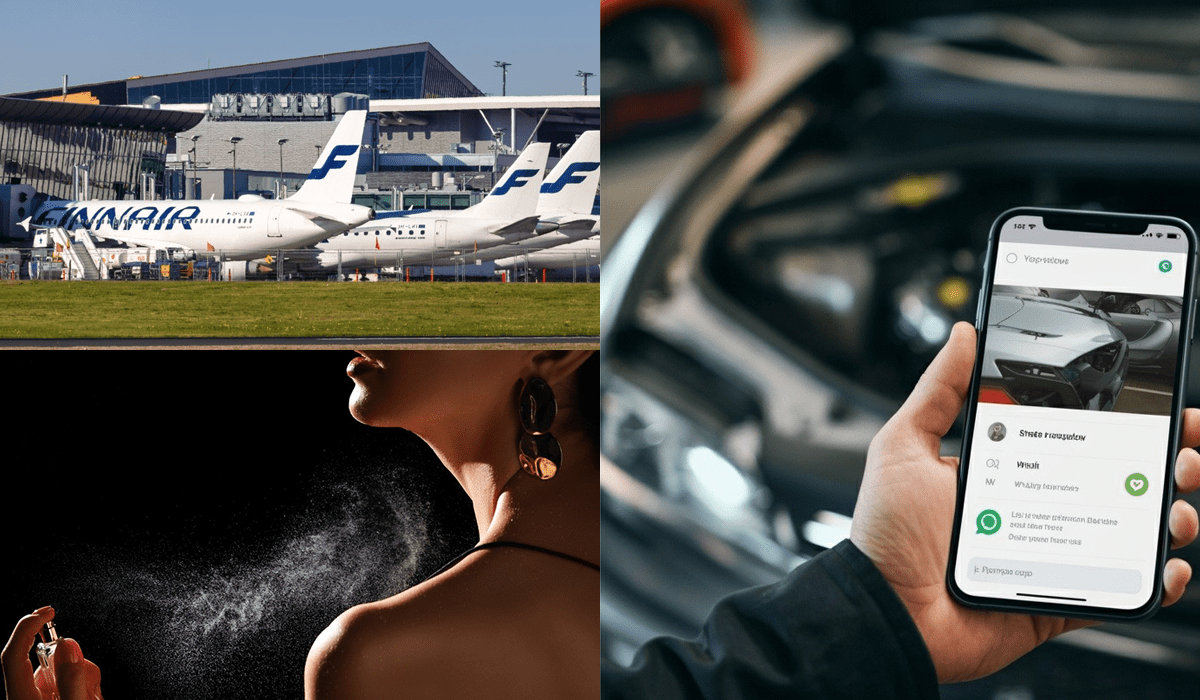
Finnish airline Finnair achieved an 80% case resolution rate and reduced agent training times by 30% after becoming one of the first airlines to deploy Salesforce’s Agentforce platform.
Finnair connects 12 million passengers each year to 1,000 destinations with an punctuality rate of 90%. Today, the century-old airline is applying operational precision to customer service using AI. “Customer satisfaction is at the center of everything we do,” says Tiina Vesterinen, vice president of customer and digital revenue, “but in the aerospace industry, disruption is inevitable. »
Building on a Salesforce 2018 foundation with Service Cloud and Data Cloud for loyalty programs, Agentforce became a “natural evolution”. AI agents leverage data from Finnair’s website, Service Cloud information, loyalty information and reservations from the Amadeus reservation system to handle customer queries.
Operating on Finland’s largest online store, Agentforce manages chat functions for loyalty programs, travel requests and baggage allowances. Human agents now focus on complex problems while AI handles routine triage. “This makes their work easier and allows them to focus on situations where they are most needed,” says Vesterinen.
Next comes integration with Amadeus ERP for access to flight inventory, allowing travel-related questions to be proactively answered, such as alternative routes in the event of a disruption. Data confidentiality remains central: “We must always be very careful about the use of data and the consents we obtain from the customer. »
Separately, Salesforce Dreamforce 2024 revealed broader adoption trends. Publisher Wiley saw a 40% improvement in the chatbot, while retailer Saks deployed AI assistant “Sophie” within weeks. Marc Benioff’s vision targets one billion interactions with AI agents by next year, positioning Agentforce against competitors who are “forcing companies to tinker with GenAI solutions.”
Euro Car Parts: WhatsApp Business meets AI for automotive excellence
British automotive giant LKQ Euro Car Parts replaced an end-of-life phone system with Genesys cloud orchestration and WhatsApp integration, now handling more than 500 new WhatsApp conversations per day while eliminating data blind spots across more than 330 branches.
The parts retailer stocks 160,000 distinct auto components across a network rivaling Amazon’s warehouse footprint. Yet despite this scale, Sales Excellence Manager Chloe Thomson admits: “Unless you’ve ordered a spare part from us, you’ve probably never heard of us. » The company’s challenge was not visibility; it adapted to generational changes in customer communication preferences.
Sales teams were increasingly using personal WhatsApp accounts to communicate with customers, creating data silos and compliance risks. The February deployment of Genesys’ cloud system brought these interactions in-house while providing unprecedented visibility into customer behavior and preferences.
“We’ve never had as much data as we have today,” says Thomson. “We no longer have a blind spot. We can see everything. We can now analyze the ups and downs of the different queries we receive as well as the different sales that come in.”
WhatsApp integration enables sophisticated interactions: customers photograph license plates requesting brake pads or clutches, while sales advisors access customer preferences to suggest complementary products like brake fluid promotions. This contextual selling approach turns everyday transactions into revenue opportunities.
Beyond immediate business benefits, the system provides strategic insights into customer journeys and sales team performance. Thomson says the company is exploring contact center methodologies to improve its sales office model.
Future plans include integrating AI for data mining and sentiment analysis, as well as gamification to celebrate high performers with transparent, data-driven metrics rather than subjective evaluations.
Telecom titans are pioneering next-generation conversational AI
Two of Europe’s biggest telecommunications companies have offered a candid look at the evolution of conversational AI. Their experiences provide a model for organizations looking to balance automation with authentic customer engagement.
BT and Deutsche Telekom revealed ambitious chatbot strategies at the Chatbot Summit in London, with DT’s decade-old Frag Magenta handling millions of daily queries and BT’s Aimee targeting 400 million customer conversations.
Deutsche Telekom’s Franz Weisenburger described their “decade-long journey” with Frag Magenta, the German telecom company’s AI-powered voice and chat bot that handles everything from internet outages to contract extensions.
“As you can imagine, 10 years is a long time to learn how to interact with customers and use technology the right way,” Weisenburger explained. The company partnered with Rasa to scale massively across chat and voice channels, leveraging Level 3 conversational AI that understands context and handles unexpected queries.
DT’s future vision includes “digital twin” concepts in which AI agents seamlessly replace human workers during their absences. “We’re looking at a digital twin concept – leveraging technologies like robots, avatars and LLM technology – where we can seamlessly step in for that worker when they’re on vacation,” Weisenburger explained.
BT’s Kevin Lee has positioned his chatbot Aimee as evolving beyond customer service into business intelligence. “As Aimee leverages her vast language model across millions of customers every day, she will begin to learn what features we actually need to build for that particular customer,” Lee noted.
BT envisions Aimee achieving a Net Promoter Score (which measures customer satisfaction) above 80 (which is in the top percentile) by 2025, based on more than 400 million customer conversations.
LVMH: The art and science of AI in luxury beauty
The French luxury conglomerate has deployed more than 200 AI products across its 15 beauty brands, including Dior and Fenty Beauty, using “silent AI” to enhance human creativity rather than replace it, while maintaining artisanal excellence across the Create, Move, Display, Sell and Service categories.
LVMH’s beauty division brings together many prestigious names, each requiring distinct digital approaches depending on their heritage, their market segments and their geographic coverage. Julie de Moyer, head of data and AI, explained their strategy: “We are not just undergoing a single data transformation. We are working on multiple transformations, each tailored to the needs of different brands and business areas.”
The company’s in-house AI chatbot, MaIA, assists employees from translating content to generating mockups. MaIA predicts that by 2027, 70% of consumer beauty experiences will be influenced by data and AI; a forecast reflecting the sector’s rapid pace of adoption compared to other sectors.
At the heart of LVMH’s approach is “Quiet AI” which subtly supports decision-making without overwhelming creativity. In the development of Guerlain perfumes, AI analyzes thousands of ingredients to help perfumers more effectively identify promising combinations.
However, de Moyer emphasizes human primacy: “Art is the know-how: the designer, the perfumer, the creative mind behind the product. Science is the data and technology that improves the decision-making process.”
The five-category framework covers product innovation (Create), operational optimization (Move), targeted marketing (Show), personalized retail (Sell) and post-purchase relationship management (Service). Each category uses AI to improve specific business functions while maintaining luxury brand standards.
LVMH is collaborating with Stanford’s AI Ethics Program to ensure responsible deployment, creating what de Moyer calls a “robust data platform” for rapid processing and market responsiveness in a rapidly evolving beauty industry.