

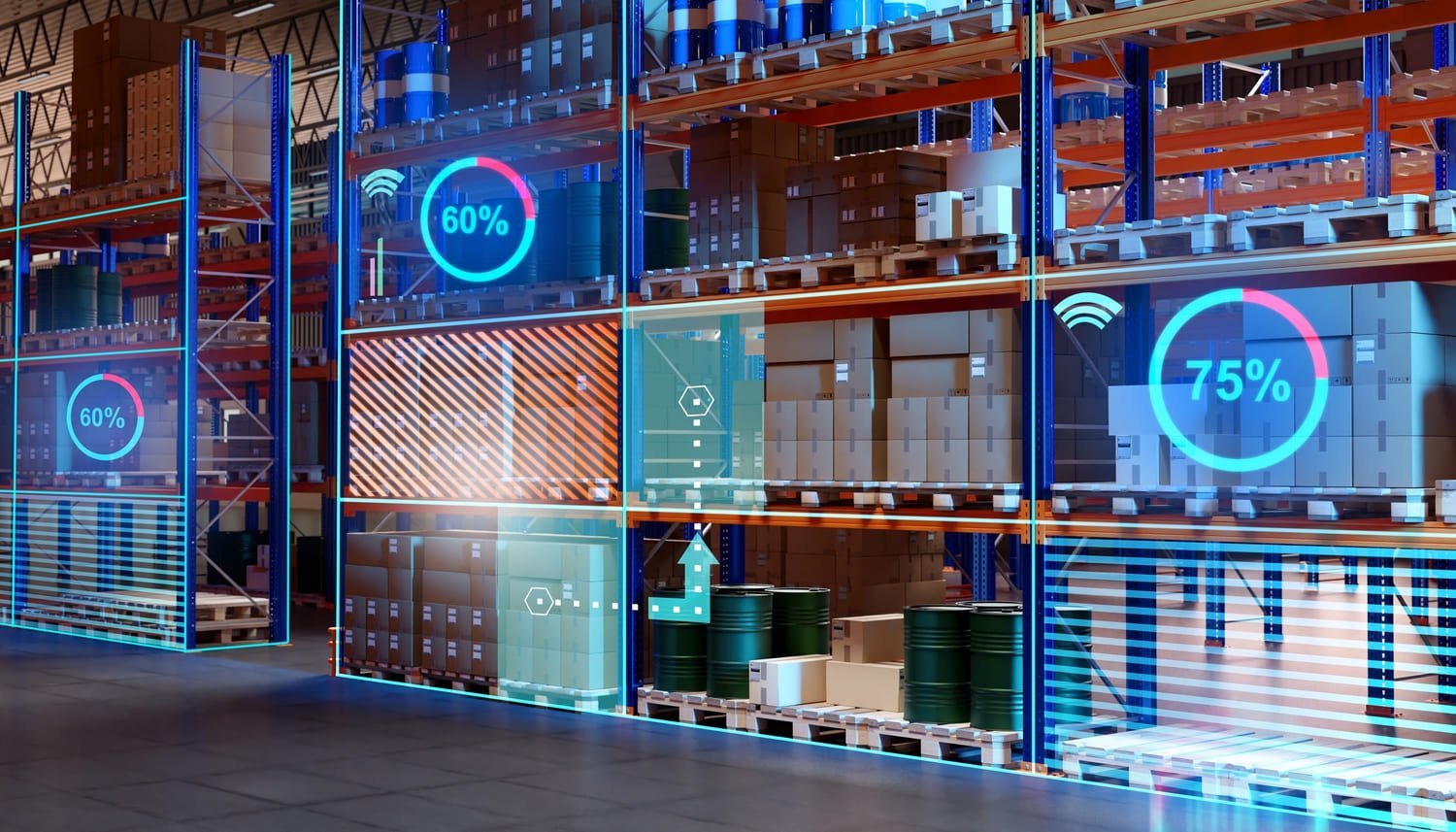
In today’s rapidly evolving supply chains, warehouses are integrating AI-powered systems to meet growing demand and maintain precise inventory control. Leading e-commerce and logistics operations, including those offering high-volume fulfillment solutions, rely on intelligent automation to process large order volumes without sacrificing accuracy. According to industry forecasts, the global market for AI in warehousing is expected to exceed $14.1 billion in 2025, reflecting rapid investments in AI technologies. By combining predictive analytics, robotics, machine learning and computer vision, modern warehouses achieve unprecedented agility. Together, these innovations improve inventory visibility, accelerate order fulfillment, and help warehouses quickly adapt to disruptions, making inventory accuracy and throughput faster and more reliable than ever.
Predictive analysis and demand forecasting
AI-powered predictive analytics transforms how warehouses plan demand and manage uncertainty. Unlike traditional static planning, AI models continuously ingest real-time data (sales trends, supplier performance, weather, social media signals, etc.) to predict demand and potential disruptions. For example, large retailers use machine learning models to anticipate seasonal demand or sudden changes. A study found that AI forecasts can reduce demand forecast errors by 20-50%. This greater accuracy directly translates into fewer stock-outs and excess inventory: McKinsey reports that AI-powered supply chain forecasting can reduce lost sales (due to unmet demand) by up to 65%. During the COVID-19 pandemic, companies with AI-enabled supply chains have maintained higher service levels; they quickly expanded their operations in anticipation of an increase in online orders. In one case, Amazon leveraged AI predictions to increase its inventory of high-demand products, helping it capture the pandemic-driven e-commerce boom. Likewise, AI models can flag risks early: for example, they can identify that a supplier located in a flood-prone region is likely to have delays, prompting managers to find alternatives in advance. By proactively forecasting demand and disruptions, warehouses can adjust supply, staffing and transportation plans in near real time, increasing both throughput and resiliency.
Robotic automation and order picking efficiency
Robotics and automation are at the heart of AI-driven warehousing. Advanced order picking robots and autonomous mobile robots (AMR) equip warehouses with continuous, high-speed material handling. These robots operate 24 hours a day without fatigue, significantly reducing order cycle times. For example, Amazon – which has deployed more than 750,000 warehouse robots – reports a 75% reduction in preparation and packaging times. This dramatic acceleration comes from robots using AI and computer vision to locate and grasp objects with great precision. Modern robots navigate dynamically: they optimize routes on the fly, avoid obstacles and even collaborate, which can reduce internal travel time by 30-40% compared to fixed path systems. By automating repetitive tasks, warehouses allow human workers to focus on supervision and exception handling. In practice, this human-machine collaboration not only improves productivity, but also helps alleviate labor shortages: Amazon’s robotics deployment has notably “effectively alleviated labor shortages” while reducing processing times. For operations managing high-volume fulfillment solutions, these intelligent robots ensure that order increases can be absorbed smoothly without delays or errors.
Computer Vision for Inventory Accuracy
AI-based computer vision systems bring near-perfect inventory accuracy to warehouses. Vision-enabled devices – from ceiling-mounted cameras to scanning drones – can continuously read barcodes, QR codes and text on labels, automatically checking stock on shelves in real time. Warehouses using these technologies report inventory accuracy rate greater than 99%far surpassing manual counting. Importantly, these systems also operate much faster than humans: automated visual analysis can audit inventory 10 to 15 times faster than manual methods. This means a warehouse can count entire aisles or the entire facility daily without interrupting operations. Continuous vision-based audits immediately detect errors (such as misplaced or missing items), preventing stock-outs and overstocks before they occur.
By eliminating bottlenecks and manual counting errors, computer vision significantly reduces inventory discrepancies, misplacements and fulfillment errors. Many facilities that previously struggled with issues such as missing palettes or 3pl-malpick events now use AI-based analytics systems to detect anomalies in real-time. When an irregularity is detected, the system immediately reports it on a centralized dashboard for instant reconciliation, preventing small errors from turning into operational delays. Overall, integrating AI insight into warehousing transforms inventory control from a slow, error-prone process into a fully transparent and time-saving routine.
Real-Time Decision Making and Supply Chain Resilience
AI extends beyond the warehouse to enable real-time supply chain decisions and resilience. Modern AI platforms process live data feeds (GPS, IoT sensors, weather alerts, political news, etc.) to keep managers informed and responsive. For example, AI-based digital twins make it possible to simulate entire supply chains: if a key port is threatened by bad weather, the system can predict port congestion days or weeks in advance. Logistics teams can proactively reroute shipments, avoiding costly delays. In another example, AI models monitored suppliers’ financial health and climate data; When a chipmaker became distressed by a global shortage, the companies involved quickly switched sources and avoided the collapse that befell unprepared competitors.
Real-time inventory platforms also give warehouses instant visibility into replenishment levels. When online demand spikes unexpectedly (due to a viral trend or flash sale), AI-powered analytics can detect the surge as soon as it starts, automatically reprioritizing order picking tasks and flagging replenishment before out-of-stock thresholds are reached. The net effect is less disruption: Businesses that use AI for resilience see reduced downtime and emergency shipping costs, while maintaining or even improving customer trust.
In practice, AI tools are now used to automatically adjust warehouse workflows whenever anomalies arise, transforming fragile supply chains into predictive and adaptive networks. Rather than reacting to crises, AI-integrated systems allow warehouses to anticipate problems and take defensive measures in advance, such as reassigning labor, directing suppliers to other suppliers, or redistributing inventory between locations in real time. These capabilities make warehouses much more resilient to volatility, whether pandemics, storms, or market fluctuations.
Benefits and future prospects
The benefits of AI-driven warehousing are evident across all industries. Better inventory accuracy means fewer lost sales and lower carrying costs – for example, one analysis found that increasing accuracy from 65% (industry lowest) to 93% could increase sales by around 9%. Improved speed and throughput allow orders to be shipped faster, improving customer satisfaction and reducing labor expenses. Importantly, AI solutions make warehouses adaptive: predictive analytics and automation help businesses respond smoothly to changes in demand or supplier issues. In operational terms, executives report a 30-40% reduction in operating costs thanks to AI-driven process improvements. Businesses gain agility and strategic advantage: those who plan with AI can capture market share when others fail. In the future, warehouses will continue to integrate AI with 5G, IoT, and even collaborative data networks. We can expect even more autonomous operations: for example, a warehouse could self-reconfigure shelves and routes in real time based on AI algorithms, all without human intervention. Over the next decade, innovations such as blockchain-secured procurement data and hyper-local AI predictions will further strengthen the warehouse as an intelligent and resilient hub.
In short, AI technologies – from machine learning demand forecasting to vision-guided robots – are transforming warehousing into faster, more accurate and more resilient operations. By leveraging predictive insights and automation, businesses achieve higher service levels and can respond on the fly when disruptions occur. As AI-powered solutions become the norm, today’s warehouses become tomorrow’s robust, intelligent distribution centers.