

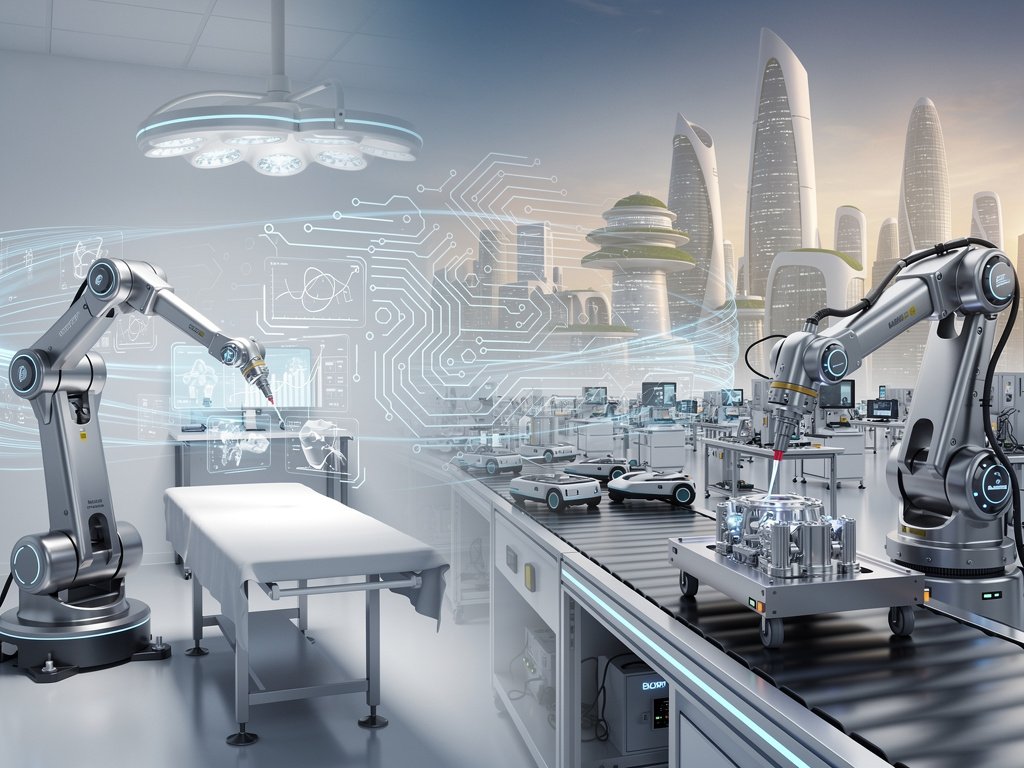
In the rapidly evolving field of artificial intelligence and robotics, a profound change is underway, reshaping sectors from healthcare to manufacturing. Machines that once followed rigid programming now learn, adapt, and collaborate with humans in ways that seemed like science fiction just a few years ago. This transformation is driven by advances in AI algorithms, sensor technologies, and machine learning models that enable robots to perceive their surroundings, make decisions, and even predict outcomes. At the dawn of 2026, these developments are not simple experiments but practical applications delivering measurable results in terms of efficiency, precision and innovation.
At the heart of this revolution is the integration of AI into robotic systems, enabling unprecedented levels of autonomy. In medicine, for example, AI-equipped surgical robots perform procedures with minimal human intervention, reducing errors and recovery times. Beyond the operating room, AI-driven robots are facilitating patient care, from monitoring vital signs to administering medications in hospitals. This synergy is also evident in manufacturing, where robots perform complex assembly tasks, adapting on the fly to variations in materials or designs. The economic implications are vast, with projections suggesting that AI robotics could add billions to global GDP by streamlining operations and unlocking new capabilities.
Yet this progress raises critical questions about ethics, job cuts and regulatory frameworks. Industry leaders are grappling with how to balance innovation and security, ensuring AI systems are transparent and accountable. As robots become increasingly integrated into daily life, from elderly care to logistics, the need for robust standards becomes paramount. Drawing on recent insights, experts point out that the real power of AI in robotics lies not only in automation, but also in augmenting human potential, creating hybrid systems in which machines and people work in harmony.
Advances in medical robotics
The medical field is the main beneficiary of the AI-robotics fusion, with innovations accelerating diagnostic and therapeutic processes. According to a report from World Economic ForumAdvanced robotics is developing life-saving techniques that improve the patient experience, such as robotic arms that assist microsurgery with superhuman precision. These systems use AI to analyze real-time data from imaging tools, adjusting movements to avoid complications. In hospitals around the world, robots like those featured in a Case Western University Reserve Analytics improve outcomes by performing tasks ranging from wound care to rehabilitation therapy.
This integration extends to telemedicine, where AI and robotics enable remote monitoring and interventions. A study published in BMC artificial intelligence details how natural language processing combined with robotic devices is advancing remote patient care, particularly in the areas of cardiology and diabetes management. For example, AI algorithms process patient data to predict health events, while robots offer personalized interventions. In India, as noted in a PMC According to a review, these technologies fill gaps in healthcare access for large populations, blending AI and robotics to provide scalable solutions.
In addition, clinical applications are developing rapidly. A PMC a narrative review on AI in robotic surgery describes how machine learning is revolutionizing procedures, from predictive analytics to postoperative care. Surgeons are reporting fewer invasive procedures and faster recoveries, thanks to robots that learn from large datasets of past operations. As these tools become the norm, they promise to democratize high-quality care, although challenges such as data privacy and system reliability remain the focus of ongoing research.
Emerging trends in machine transformation
By focusing on larger machines, AI infuses traditional robots with intelligence that mimics human cognition. Posts on This embodied intelligence paves the way for humanoid robots that perform tasks in unpredictable environments, from warehouses to homes.
In manufacturing, AI robots are transforming production lines by integrating multimodal learning, study predicts Interesting engineering piece featuring Figure CEO Brett Adcock. These systems adapt in real time, handling everything from assembly to quality control, with breakthroughs expected in electric vertical takeoff and landing (eVTOL) vehicles and memory AI. Such progress is not isolated; they build on trends such as smaller, more efficient models discussed in a TechCrunch article, moving from hype to practical, real-world applications.
Additionally, the convergence of AI with quantum computing and other technologies is accelerating this change. A IBM The analysis predicts that by 2026, AI agents will become reliable for complex tasks, including in robotics. This includes global models that simulate physical interactions, allowing machines to “reason” about actions before executing them, reducing errors in high-stakes environments like autonomous driving at CES 2026, as reported Euronews.
Challenges and ethical considerations
Despite this promise, the integration of AI into robotics is not without obstacles. Hospitals face ‘prisoner’s dilemma’ when faced with new technologies, study explains STAT News article, where investments in expensive robotic systems become necessary due to reliance on doctors, leading to broader economic consequences. Training these systems requires vast data, raising concerns about bias and equity in healthcare delivery.
Ethical debates are intensifying, particularly around the impacts on employment and the security of AI. X posts from users like Dr Khulood Almani discuss the structural impacts of technologies such as artificial general intelligence (AGI), which could orchestrate cross-domain reasoning in robots. This could automate up to 70% of work tasks by 2026, freeing humans for creative roles but requiring reskilling programs. Regulators are urged to keep pace, ensuring that progress does not exacerbate inequalities.
In response, industrial initiatives are emerging. A Borders A review on AI and robotics in transformed health ecosystems advocates proactive and personalized medicine, emphasizing preventive and participatory approaches. This holistic vision integrates robotics into ecosystems that prioritize human well-being, with AI enabling predictive analytics to predict health issues before they arise.
Future Horizons in AI-Robotics Integration
Looking ahead, the trajectory suggests even deeper integrations. Experts in a BBC News predict that by 2050, AI-driven robotics will dominate fields such as bioengineering, with the instantaneous generation of new treatments. In the shorter term, trends for 2026 Euronews suggest a move towards sustainable AI, addressing energy issues in robotic deployments.
In the pharmaceutical sector, AI robotics is streamlining drug development, as Jordi Visser noted in the X-Talks, potentially leading to faster trials and cheaper drugs through computationally powered design engines. This could reevaluate entire sectors, making healthcare more efficient. Similarly, healthcare robot robots, predicted in Karl Mehta’s articles, are poised to administer treatments in underserved areas by 2027, filling gaps where human providers are scarce.
Biotechnological innovations further illustrate this potential. According to insights from BioTech Blueprint’s X, teleradiology and AI platforms are democratizing access, with robots handling data-intensive tasks while clinicians focus on nuanced care. This augmentation, rather than replacement, underscores a future where AI robotics enhances human expertise, thereby promoting system resilience across all sectors.
Innovative applications and case studies
Looking at specific examples, consider the Da Vinci surgical system, now enhanced by AI for real-time analysis, as mentioned in Dr. Harishankar’s X articles. These robots perform complex procedures with fewer complications, representing an advancement in precision care. In non-medical fields, humanoid robots with embodied cognition, discussed in articles in The Innovation | Medicine evolves physical and cognitive intelligence in synergy, beyond pre-programmed actions.
Case studies of recent implementations reveal tangible benefits. A ScienceDaily A compilation of AI news highlights robots in treatment centers that are improving patient outcomes through adaptive therapies. In logistics, AI agents orchestrate robotic fleets, optimizing supply chains through predictive modeling.
Additionally, global adoption is accelerating. In regions like the Middle East, as shared by ipfconline on
Strategic implications for industries
For businesses, adapting to this wave of AI-robotics means rethinking their strategies. Leaders must invest in hybrid models in which robots perform routine tasks, allowing humans to innovate. Economic forecasts suggest significant margins in sectors like the pharmaceutical industry, thanks to the effectiveness of AI.
Geopolitically, nations are fighting to become leaders in this field, with investments in R&D creating competitive advantages. Ethical frameworks will be key to mitigating risks and ensuring inclusive growth.
Ultimately, as AI continues to transform robotics, the focus remains on creating value that improves human lives, from precise medical interventions to intelligent machines that redefine productivity. This continued evolution promises a world where technology and humanity converge more harmoniously than ever before.