


Clemson University College of Education faculty have developed three new microcredential courses for K-12 teachers focused on artificial intelligence and its ideal use in the classroom as an educational tool. The courses provide a fundamental understanding of AI in education, an overview of various AI tools, how educators can use these tools to improve classroom activities, and how educators can integrate ethical and responsible use of AI into classroom activities and discussions.
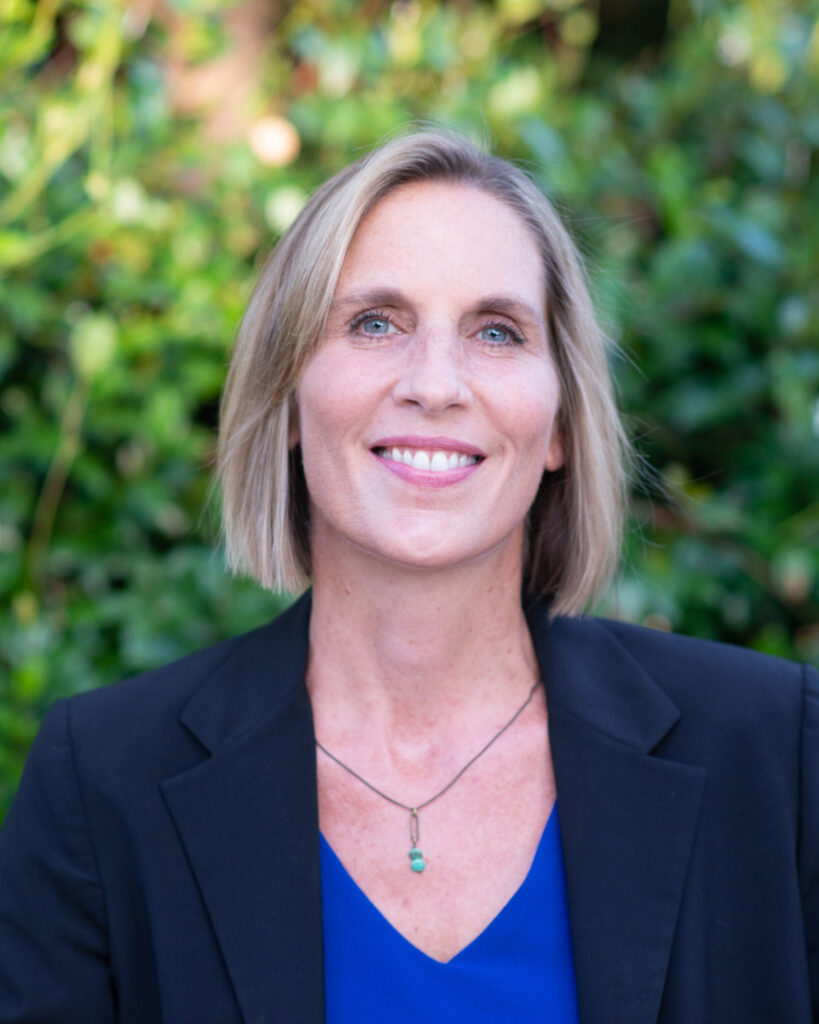
Dani Herro is a College of Education Dean’s Fellow for Humanistic AI and Emerging Technologies in K-12 Education and Professor of Learning Sciences. She likes to emphasize the “humanist” side of her title; her work alongside other professors to design courses on AI focuses on practical human use and how teachers can relate – as educators to students and as individuals to others – to a rapidly evolving technology that affects education and the world.
“It doesn’t matter what industry you go into: the workforce wants people prepared for AI-enabled careers,” Herro said. “Students need to learn when not to use AI and when to treat it as a “cognitive partner.” Using AI or prompts should not consume 80% of learning time; this should accelerate deeper thinking and discussion, and we need qualified educators who can foster this type of learning among students.
Each microcredential course lasts four weeks and includes readings, videos, peer discussions, and hands-on activities that educators can apply directly in the classroom with students. Herro developed the courses with April Pelt, director of online education, and Ryan Visser, lecturer, based on current research-to-practice guidelines, AI literacy frameworks, and resources from respected educational technology nonprofits.
Herro likes to use real-world examples of AI-infused lesson plans in microcredentials to help teachers realize its potential. For example, a middle school lesson on preserving South Carolina history and architecture demonstrates how teachers can ask students to find reliable sources of information from audio files, websites, images, and printed sources, then have students use AI tools to turn those sources into a peer-to-peer learning experience. In this scenario, students become podcast producers, sharing lessons with each other that encourage reflection, analysis, and connection to broader themes.
“This approach transforms what could be a passive listening experience into an interactive learning experience, powerful for both educators and students,” Herro said. “When teachers are familiar with the tools, there is more emphasis on teaching teachers and students how to refine prompts, check results, and think critically, not just copy and paste a result. »
Educators in the three microcredentialing courses are thinking about current school district policies regarding AI and even writing their own policy specific to their classes. Combined with hands-on lessons on rapid engineering, development of AI-integrated learning activities, and an overview of several generative AI tools, educators emerge with a suite of approaches to AI and a fully formed philosophy they helped define on its use in the classroom.
A comprehensive course on the ethical use of AI equips educators to learn about the inherent biases and fairness of AI tools, enabling them to help students critically evaluate and use AI responsibly. Even if a teacher does not systematically apply AI in their discipline, they can learn about its ethical use to encourage students to use it responsibly.
The College will pilot the microcredential courses beginning in February 2026 with nearly 30 educators from six different school districts across the state. Participants will help faculty evaluate courses and make improvements based on their expertise as educators and instructional leaders. The College plans to expand classes and provide multiple opportunities each year for South Carolina educators and others to participate.
Participants who complete all three microcredential courses may apply the credit toward a three-credit graduate course in select College of Education graduate programs.