

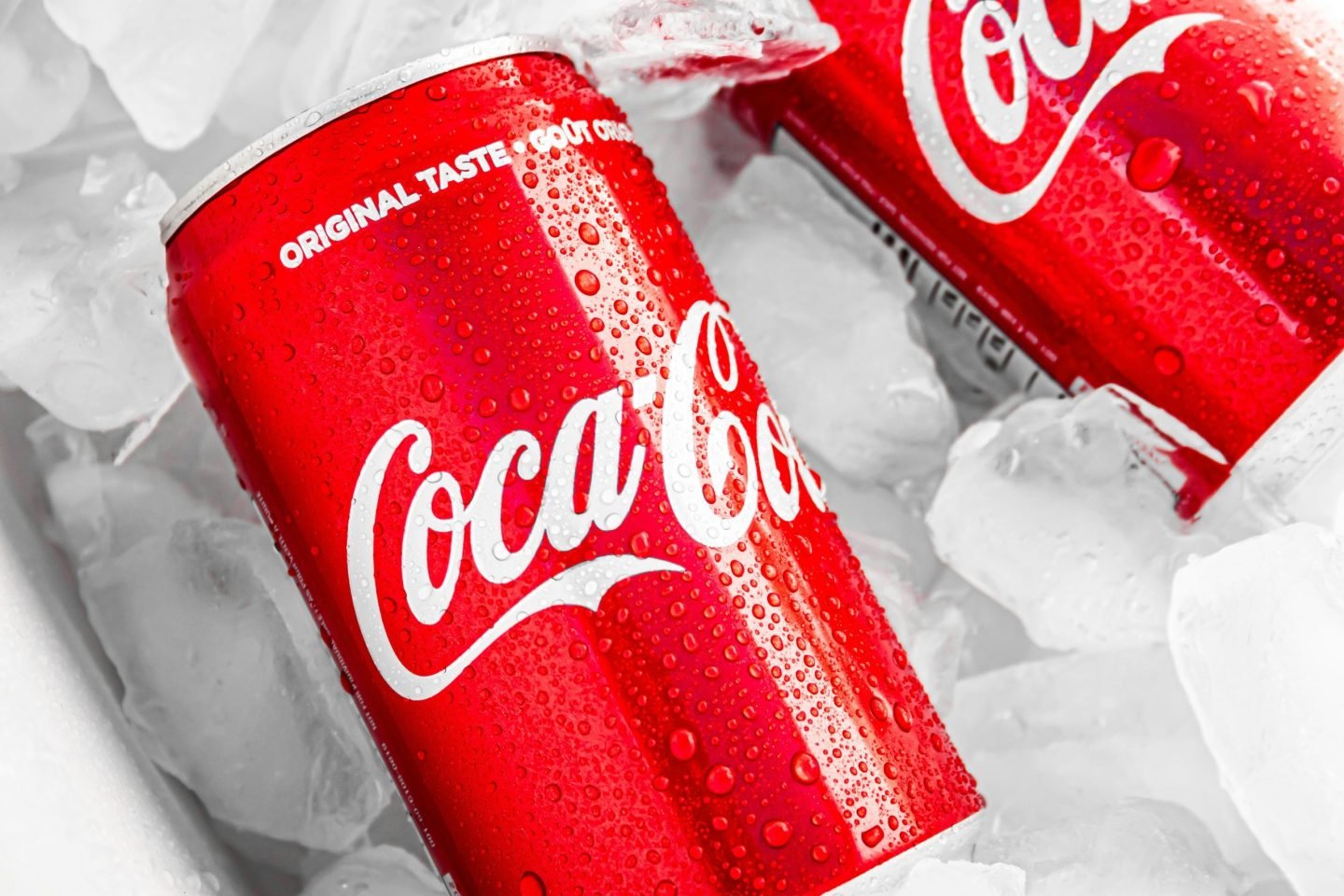
Moving from price gouging to persuasion, Coca-Cola’s latest strategy shows how AI is moving deeper into the heart of business marketing.
Recent coverage of the company’s leadership discussions shows that Coca-Cola is entering what executives describe as a new phase focused on influence, not pricing power. According to Mi-3, the company is moving from “price to persuasion,” with digital platforms, AI and in-store fulfillment becoming increasingly important to growing demand. This reflects a shift in consumer brand behavior as inflationary pressures ease and companies seek new strategies to maintain revenue growth.
This means expanding the role of AI in Coca-Cola’s marketing production and decision-making. The company has already experimented with generative AI in creative campaigns and continues to test how automation can help with content creation, campaign planning and distribution.
The Current’s industry analysis highlights that Coca-Cola has integrated AI into marketing workflows and expanded its use in creative production and campaign execution. These efforts include using AI tools to generate images, assist with storytelling, and adjust campaigns across channels.
Testing AI in the Marketing Pipeline
This week’s report suggests that the company is currently testing AI-based systems that can help automate parts of the advertising process, including writing scripts or preparing content for social media. While these initiatives are still in the testing phase and not yet fully deployed, they illustrate how major brands are moving toward more automated marketing pipelines. Instead of relying solely on agencies or long creative cycles, companies are exploring ways to shorten the path from concept to campaign.
Over the past two years, many consumer goods companies have resorted to price hikes to offset rising costs. As inflation slows in several markets, analysts say this strategy has limits. Growth increasingly depends on persuading consumers to buy more often or choose higher-margin products. AI offers a way to fine-tune this persuasion at scale, using data to shape messages, target audiences, and adjust campaigns in near real time.
Coca-Cola’s approach is part of a broader trend in marketing technology. Generative AI tools have quickly moved from experimental use to regular deployment in large enterprises. According to McKinsey’s 2024 Global AI Survey, around a third of organizations are already using generative AI in at least one business function, with marketing and sales among the most common areas of adoption. Analysts expect this share to continue to rise as companies test automation of creative work and customer engagement.
AI advances upstream in business strategy
What’s striking about Coca-Cola is how the company views AI not just as a cost-cutting tool, but also as part of broader operational change. By focusing on persuasion, the company signals that the value of AI lies in how it shapes demand, not in improving efficiency. This includes using AI to analyze consumer behavior, tailor messages to different markets, and support local teams with adaptable content.
The strategy also reflects growing tension in the marketing industry. Automation can speed up production and test more campaign ideas, but it also raises questions about creative quality, brand consistency and the role of human teams. Companies experimenting with AI-generated content, however, need to ensure the message matches their brand identity and cultural context. For global brands like Coca-Cola, this challenge becomes more complex as campaigns often need to operate across many regions.
Another factor driving this transition is the rapid growth of digital advertising channels. As spending shifts to social platforms, streaming services and online retail media, the volume of content required has increased. AI tools provide a way to produce numerous versions of ads, test different approaches, and adjust messages based on performance data. This makes automation attractive not only for cost reasons, but also for its speed and flexibility.
Coca-Cola’s move reflects a broader pattern: AI adoption is moving upstream in business processes. Early deployments often focused on internal analytics or automation. Businesses are now applying AI to customer-facing functions such as marketing strategy, creative development and campaign management. This shift suggests that AI is now part of how companies compete for market share, not how they reduce spending.
The company has not indicated that AI will replace creative teams or agencies. Instead, the current direction points to a hybrid model in which automation handles repetitive or data-intensive tasks while human teams guide brand voice and campaign concepts. Many marketers believe this blended approach will define the next phase of AI adoption.
Coca-Cola’s focus on price persuasion may impact how other consumer brands approach growth in a post-inflationary environment. If AI can help companies shape demand more precisely, it could minimize the reliance on price increases or mass market campaigns.
(Photo by James Yarema)
See also: PepsiCo uses AI to rethink how factories are designed and updated
Want to learn more about AI and Big Data from industry leaders? Check AI and Big Data Exhibition taking place in Amsterdam, California and London. The entire event is part of TechEx and co-located with other leading tech events. Click here for more information.
AI News is powered by TechForge Media. Check out more upcoming business technology events and webinars here.