

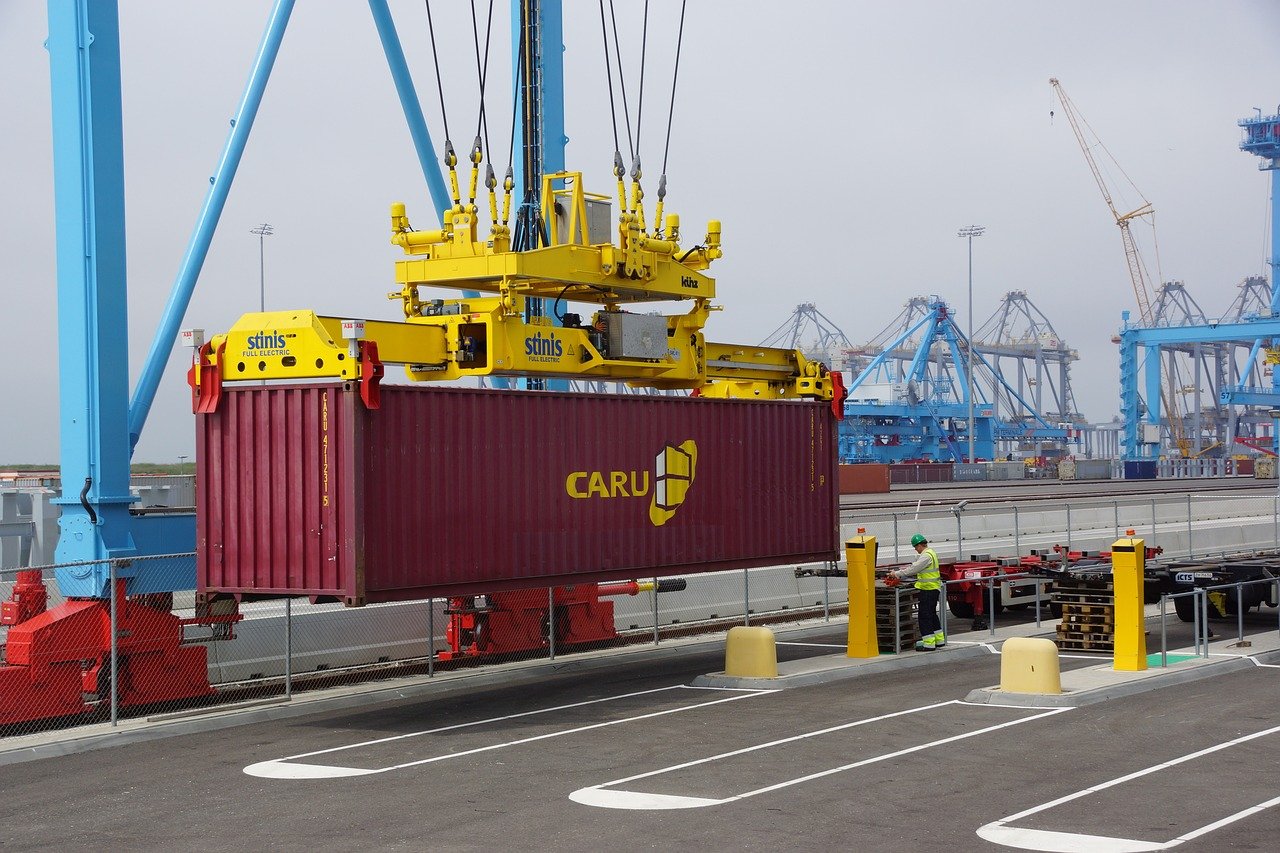
Global logistics has become increasingly complex as consumer expectations rise, trade networks expand and supply chains extend across continents. To meet demand and maintain competitiveness, businesses are turning to automation. In this article, we explore how automation enables efficiency at scale in global logistics.
Read also: How to Find the Best Warehouse Automation System for Your Budget in 2025
How automation is transforming the global logistics landscape
Automation in global logistics uses technology and systems to perform tasks traditionally handled manually throughout the supply chain. As such, it introduces software, robotics, sensors and artificial intelligence to manage or perform functions such as inventory tracking, order processing, packaging, routing and delivery coordination.
For example, packaging machines from paxiom.com automate the bagging, filling, sealing and labeling of goods with minimal human intervention. So how is such technology transforming logistics?
Streamlines warehouse operations
Automation is reshaping warehouse workflows by handling repetitive tasks such as picking, packing and sorting. Robotics and conveyor systems maintain consistent speed and accuracy, significantly reducing handling times. These tools also support real-time inventory tracking, helping to avoid inventory imbalances and improve space utilization.
Allows real-time visibility
IoT sensors and tracking devices update shipment locations, vehicle movements, and goods status. This live data is streamed into centralized dashboards, giving supply chain managers a complete, instant view of operations. With this visibility, teams can respond to delays, reroute shipments, or resolve equipment issues before they escalate, reducing disruption throughout the chain.
Optimizes transport and delivery
AI-powered route planning tools analyze traffic, weather, fuel costs and delivery windows to recommend the fastest and most efficient routes. Additionally, integrated fleet tracking systems refine these routes in real time to avoid delays. Sometimes, companies deploy autonomous vehicles to reduce human errors and labor demands, especially for long-distance transportation.
Reduces manual errors
Automating data capture and entry minimizes the risk of human errors in tasks such as labeling, order entry and shipment coordination. Additionally, technologies such as barcode readers, RFID tags and direct software integrations ensure precise management from inventory to delivery. As a result, the frequency of lost items, incorrect orders and billing errors decreases significantly.
Accelerates end-to-end order processing
Automation connects once-siloed functions like ordering, fulfillment and shipping into one seamless process. The orders are automatically checkedtransported and prepared for delivery with minimal intervention. This end-to-end integration reduces delivery times and improves the consistency of customer updates, confirmations and final transfers.
Supports scalable operations
As demand increases, automated systems increase production without requiring a corresponding increase in staff. This flexibility ensures stable performance even during rapid expansion, seasonal peaks or market changes.
Improves forecasting and planning
Predictive analytics tools process historical and real-time logistics data to forecast inventory needs, identify potential delays, and recommend optimal supply schedules. This information helps logistics managers make informed decisions in advance rather than reacting to disruptions. Such precise planning reduces waste and ensures smoother coordination between partners.
Strengthens security and compliance
Automated systems are programmed to enforce customs controls, security rules and documentation requirements at all stages of shipping. They record and time-stamp every movement, creating a complete audit trail for compliance reviews.
Repositions staff towards strategic tasks
Automation frees staff from repetitive and time-consuming responsibilities, allowing them to focus on supervision, exception handling and performance improvement. Thus, human roles evolve from task execution to strategic supervision, where judgment and critical thinking add more value. This change increases operational resilience without unnecessarily increasing headcount.
Conclusion
As supply chains become increasingly complex, automated systems provide the control, speed and adaptability needed to meet global demand. For example, automation is reshaping the way goods move and how businesses operate by minimizing errors that can occur during manual operations. Additionally, it allows organizations to respond more quickly to disruptions, scale efficiently without a proportional increase in workforce, and maintain consistent performance in global markets.