

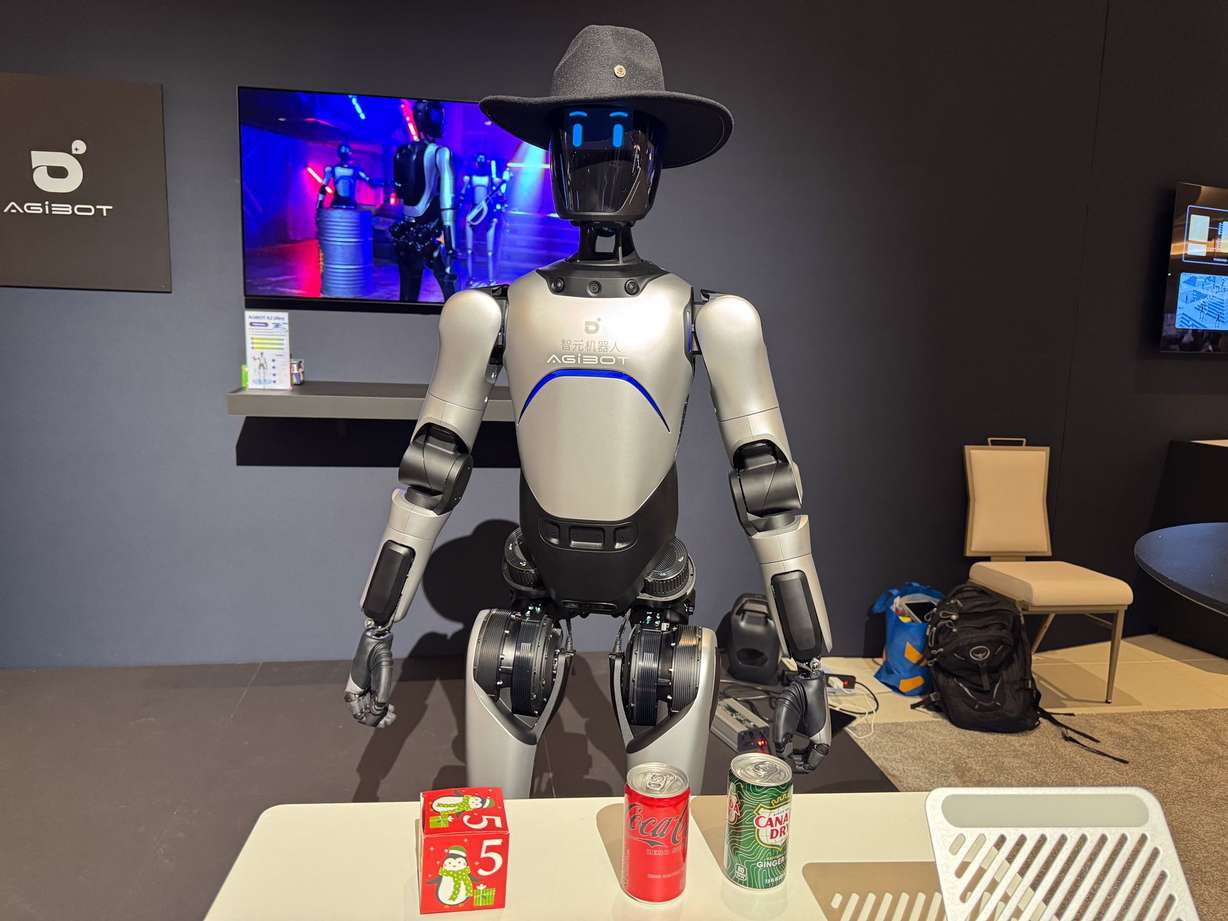
LAS VEGAS — Robots took over the floor at the biggest tech show of the year: I saw a hulking humanoid robot walk forward, turn its head and wave to an excited crowd. Then I almost ran into a dog-like robot on all fours behind me.
These are just a few of the many robots I encountered this week designed for a variety of purposes, from playing chess to performing spinal surgery. These are common occurrences on the Las Vegas Convention Center show floor during CES, which ended Friday. Every January, companies from around the world come together to showcase new technologies, products and services.
The show is as much a spectacle as it is a content; many of the most eye-catching products either didn’t pan out (like flying cars) or were extremely expensive and impractical (think TVs that cost tens of thousands of dollars). But CES provides insight into the bets being made by industry giants like Nvidia, Intel, Amazon and Samsung.
AI once again dominated the conference. Companies have been showing off everything from the humanoid robots they say will power factories, to refrigerators you can open with your voice, to the next-generation chips that will power it all. CES, in a way, turned the Strip into a bubble of its own, free from AI skepticism.
CNN interviewed a handful of tech executives at CES about an AI bubble and its potential impact on their companies. Some said their businesses were irrelevant to bubble concerns, while others expressed optimism about AI’s potential and said they were focused on creating products that demonstrate it.
“We’re at the very beginning of what’s possible. So when I hear we’re in a bubble, I’m like… This is not a fad,” said Panos Panay, Amazon’s head of devices and services. “This is not going to happen.”
Growing concerns of an AI bubble
Technology companies have invested more than $61 billion in data centers in 2025, according to S&P Global, fueling concerns that investments could far outpace demand.
And investment is only expected to increase, with Goldman Sachs reporting that AI companies are expected to invest more than $500 billion in capital spending this year. Julien Garran, a researcher and partner at research firm MacroStrategy Partnership, said in a report last year that the AI bubble is 17 times larger than the Internet bubble.
Most concerns about an AI bubble have focused on investments in data centers designed for AI tasks that are too power-intensive for devices like laptops and smartphones to handle on their own. Nvidia, the face of the AI boom and the company at the center of the bubble debate, announced at CES that the next version of its computing platform that powers these data centers would arrive in the second half of this year.
When asked about the AI bubble, executives from chipmakers Intel and Qualcomm highlighted their respective companies’ efforts to improve how computers handle AI tasks locally rather than in the cloud.
Qualcomm, which makes chips for smartphones and other products, announced its expansion into data centers last year. But this only represents a very small part of its activity.
“As far as we’re concerned, the place where we operate is not where the bubble exists,” Akash Palkhiwala, Qualcomm’s chief financial officer and chief operating officer, told CNN.
Intel is focusing on products that are important to its consumers, such as chips that improve laptop performance, rather than making a big bet “that requires a lot of investment that may or may not be made,” said Jim Johnson, head of its customers’ computing group.
CK Kim, executive vice president and head of Samsung’s digital devices business, said in an interview through an interpreter that it was not his place to say whether the industry was in an AI bubble. He added that the company is more focused on whether AI brings value to consumers.
AI and the search for the next big thing
This “value” looks exactly like what the thousands of CES exhibitors tried to demonstrate this week. Humanoid robots play an important role in this equation for companies like Nvidia, Intel, Hyundai, and Qualcomm, all of which have announced new technologies to power human-shaped robots.
Boston Dynamics and Hyundai have launched Atlas, a humanoid robot developed in partnership with Google’s DeepMind AI division, designed for industrial jobs such as order fulfillment. It will be rolled out to Google DeepMind and Hyundai’s Robotics Metaplant application center in the coming months, with other customers adopting it in early 2027.
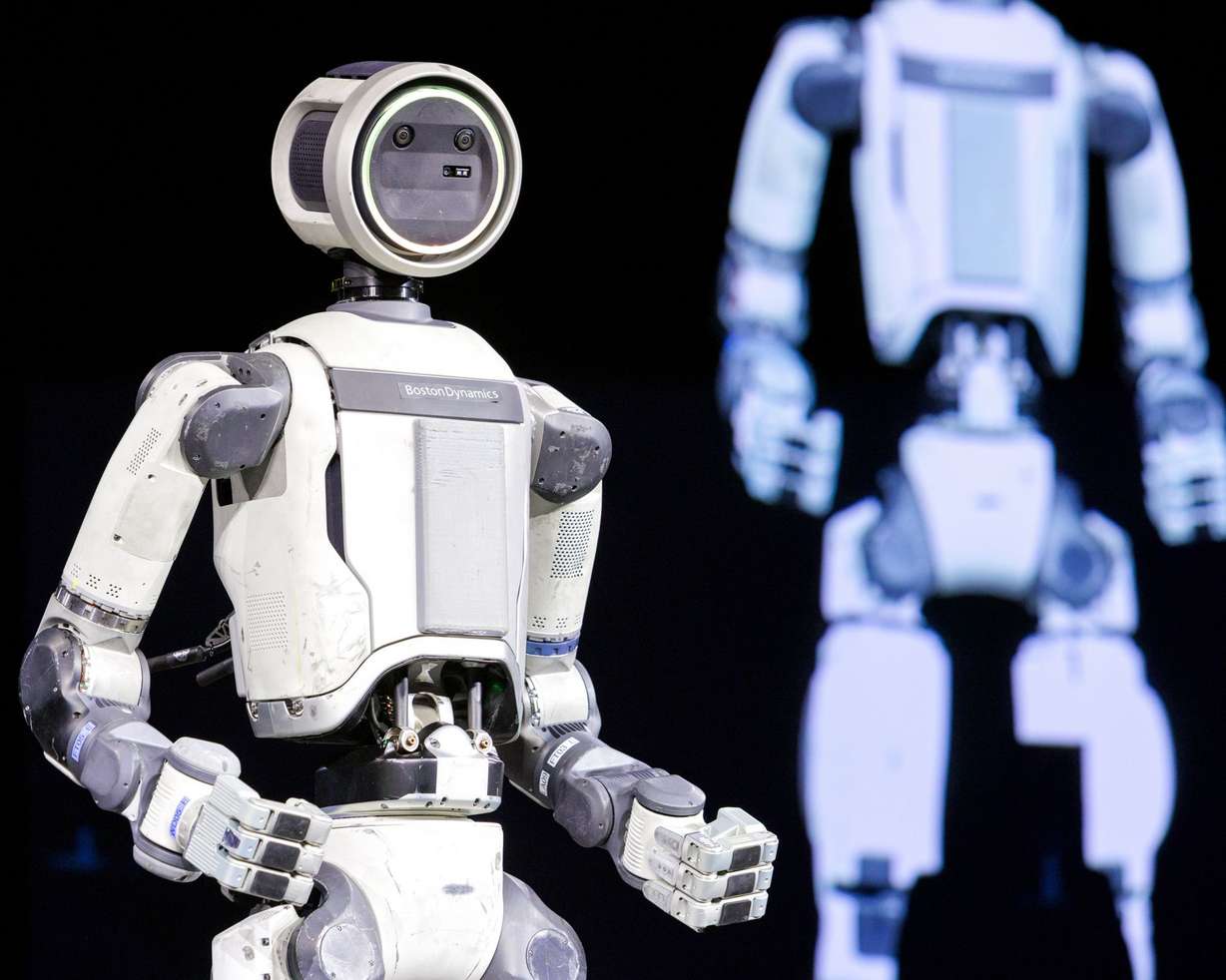
“With a single investment, we can explore any application in the world, from industrial use cases to retail use cases to home use cases,” said Aya Durbin, who leads Boston Dynamics’ humanoid application product strategy, in an interview at Hyundai’s booth when asked what is driving interest in humanoid robots. (Hyundai owns a majority stake in Boston Dynamics.)
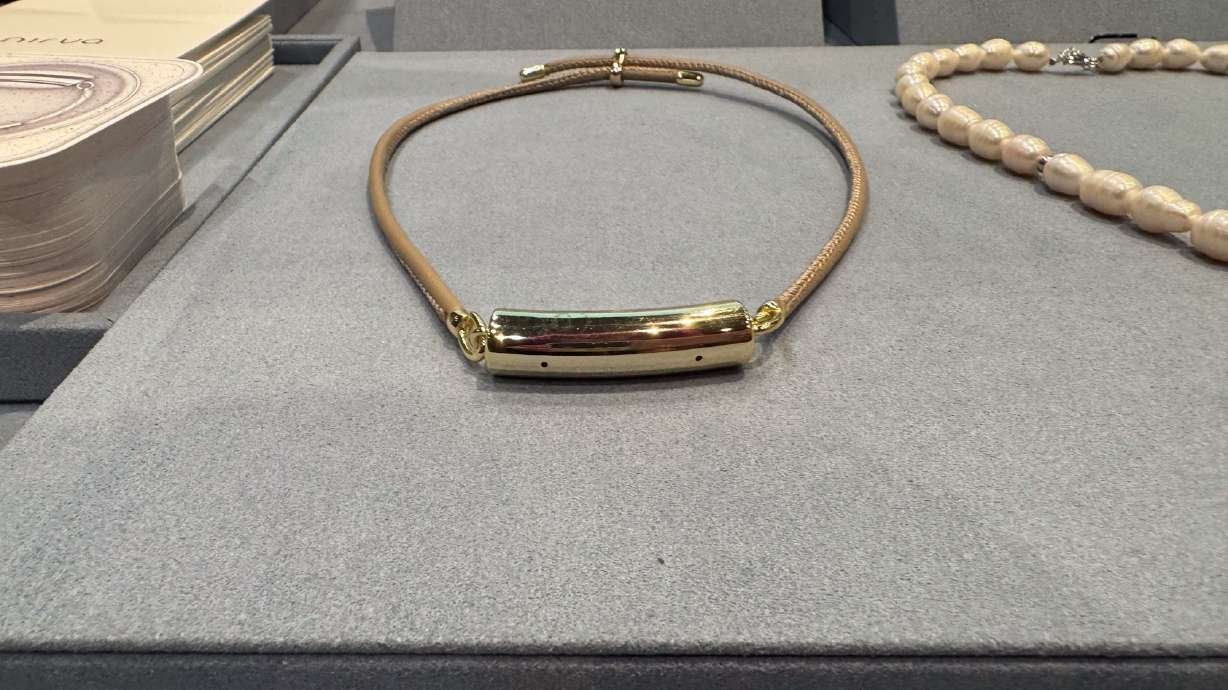
Tech companies are also looking for the next big thing after the smartphone and believe AI could be the key to finding it. At CES, a wave of companies introduced discreet listening devices capable of recording conversations or voice notes. Those products included AI jewelry from a startup called Nirva, the Index 01 ring from smartwatch maker Pebble, and the Bee bracelet, now owned by Amazon.
Talking to gadgets is often faster than typing, but Amazon and Nirva also see their devices as another way to collect data that can provide insights into a user’s life, although it will surely raise privacy concerns.
Business leaders seem to agree that AI is here to stay — even for those like Pete Erickson, CEO of tech events and education company Modev, who said the industry is effectively in a bubble.
But Erickson also believes that AI is now “just part of our lives.”
“I don’t think it goes anywhere,” he said.
Contribute : Leif Coorlim
The key takeaways from this article were generated with the help of large language models and reviewed by our editorial team. The article itself is solely written by humans.