


THE The Gates Foundation and OpenAI announced a A $50 million “pilot project” was launched Wednesday to “advance the capabilities of AI for health” in Africa. Horizon 1000 promises “funding, technology and technical support” to deploy AI solutions in 1,000 primary healthcare clinics in Africa by 2028.
“AI will be a scientific marvel no matter what, but for it to be a societal marvel, we must find ways to use this incredible technology to improve people’s lives,” Sam Altman, CEO of OpenAI, said in a statement. press release.
“The goal is to make (health care) much better quality and, if possible, twice as efficient as it is today – eliminating paperwork, organizing resources so the patient knows what is available and when to come to their appointment,” said Bill Gates, CEO of the Gates Foundation. session at the World Economic Forum (WEF) in Davos on Wednesday.
Starting with Rwanda
The pilot project will begin in Rwanda and then expand to Kenya, South Africa and Nigeria, Gates added.
Rwanda is already exploring the use of AI to help health workers diagnose diseases, relieve them of heavy administrative tasks and model disease trajectories.
Paula Ingabire, Rwanda’s Minister of Information, Communication, Technology and Innovation, told the WEF that her country had been working on technological solutions to its “problems” for more than two decades.
For starters, the country has rolled out internet access to about 97% of its population – a significant achievement in a country where most people live in rural areas.
It is currently building “part of the fundamental digital infrastructure that enables and fuels (technological) advancements,” Ingabire said.
One of Rwanda’s goals is to use AI to create “decision support tools” for its more than 60,000 community health workers (CHWs) who provide primary health care to communities across the country.
As around 70% of cases treated by CHWs each year are malaria cases, the country wants to have an AI tool to help them improve diagnosis and better anticipate when and where to expect malaria cases, Ingabire said.

Rwanda has already used a combination of drones and AI to combat malaria – with drones locating and spraying mosquito breeding sites and AI helping with disease prediction and modeling.
Two years ago, Rwanda set a goal of quadrupling its health workforce in four years – a goal it has already almost achieved.
“But they’re going to need those tools to support better care delivery. Some of the administrative tasks that they’ve been working on, we can use AI to do that, so they can focus more on providing better, targeted care to our population,” Ingabire said.
The government also wants to use AI to improve its forecasting of demand for healthcare products to avoid drug stock-outs.
“We started this digital transformation journey over 15 years ago. We have a lot of data that we don’t use. It’s critical to build national data intelligence platforms that help us. Once we build these models, they need to be trained on our own data, they need to be context-specific, and they need to step in to solve real problems.”
Ingabire added that his country is also in conversation with AI company Anthropic, which developed the large language model Claude, “to see how we can have an instant health intelligence platform that then feeds into the entire national health planning systems and allows us to allocate better resources.”
AI-based TB screening

Peter Sands, CEO of the Global Fund to Fight AIDS, Tuberculosis and Malaria, told WEF that the fund had invested $170 million over the past four years in AI-based TB screening.
This is one of the most important applications of AI and health, and has a “very significant impact,” he added.
An example of how the Fund has used AI-based TB screening is in refugee camps.
“There are over a million Sudanese refugees in Chad and we have set up mobile clinics with the government of Chad to go to these refugee camps and do tuberculosis screening,” Sands said.
Since there were no radiologists, “if you want the screening to be interpreted, there is no alternative (except AI),” he added.
However, Sands warned that some “very fundamental issues” still need to be resolved to enable the deployment of AI-based solutions – including the fact that many primary health care facilities in Africa lack internet connectivity, and some even lack electricity.
He also urged that the use of AI be “framed around problems that need solutions, as opposed to a whole bunch of tools that need a problem to solve” – a bit like people “running around with a bunch of hammers looking for nails.”
He added that it’s easier to develop tools than to find people “who can use them and make things happen.”
Faster progress in LMICs than in rich countries?

Gates believes there could be faster progress in deploying AI in healthcare in developing countries than in “rich worlds” because “the need is so great, and governments are embracing it and making sure it moves full speed ahead.”
“The $50 million commitment is just the beginning. I believe Africans should have this ‘health advisor’ without having to pay anything for it. It should just be a basic capability at their disposal.”
“As you go into the healthcare system, instead of filling out paperwork and redescribing everything, the AI that you talked to sums it up…getting rid of the paperwork together.”
Sands also believes that low- and middle-income countries could adopt AI tools more quickly than developed economies, which are more regulated and where AI is more likely to eliminate jobs.
“One of the reasons this may well grow faster in middle-income countries is that there won’t be resistance from people who say, ‘This took my job’ and ‘I don’t want to change the way we do things,’ because that makes up for the fact that these people don’t exist.”
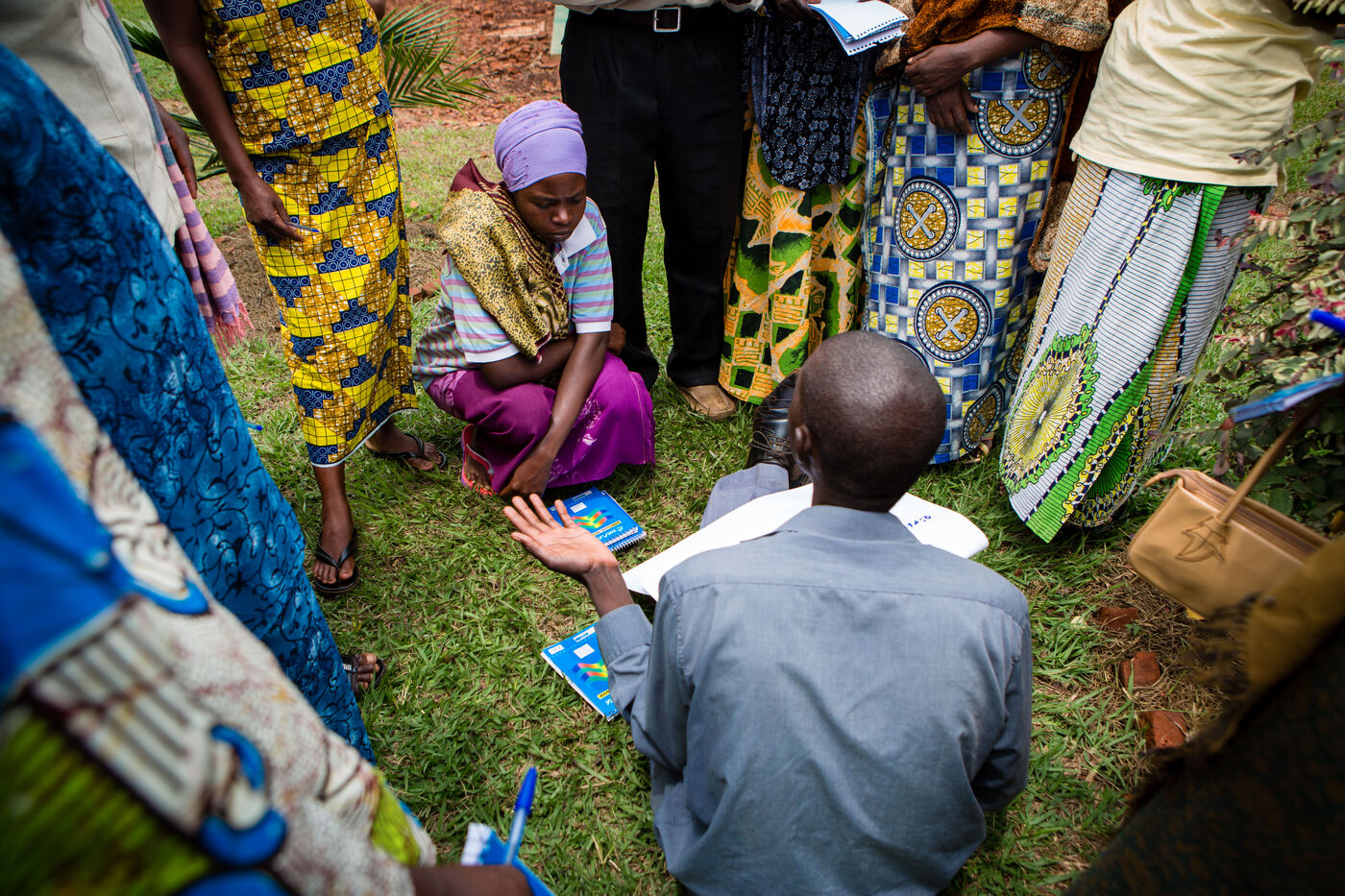
Image credits: Cecille Joan Avila / Partners in Health.
Combat the infodemic in health information and support health policy reporting from the Global South. Our growing network of journalists in Africa, Asia, Geneva and New York connect regional realities to major global debates, with evidence-based, open-access news and analysis. To make a personal or organizational contribution, click here.