

Searching for missing hikers and climbers in remote areas can take rescuers weeks or even months. AI can do the job in a matter of hours in some cases – and potentially save lives.
Faced with deteriorating weather conditions, mountain rescue teams in the Italian region of Piedmont were faced with a headache. Nicola Ivaldo, an experienced Italian climber and orthopedic surgeon, was missing. The 66-year-old failed to show up for work on Monday and an alarm was raised.
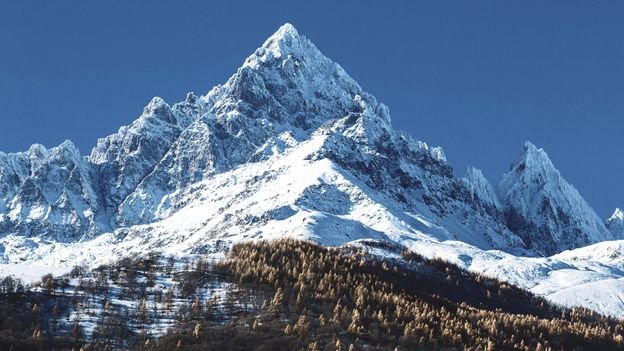
Ivaldo had left alone on a Sunday in September 2024. Unfortunately, he had not shared the details of his destination with his friends or family. The only clue to his whereabouts was the car that rescuers found parked in the village of Castello di Pontechianale, in Valle Varaita. From there, rescuers speculated, Ivaldo had probably gone to climb one of the two most important peaks in the Cottian Alps – the jagged 3,841 m (12,602 ft) Monviso or its neighbor Visolotto, at 3,348 m (10,984 ft). This matched the last signal from his cell phone, traced approximately to this area.
But that left search and rescue teams with a huge area to navigate: Each mountain’s vast rock walls have a number of routes leading to the peaks from different sides. The entire area is crisscrossed by hundreds of kilometers of trails, explains Simone Bobbio, spokesperson for the Piedmont Mountain Rescue and Speleological Service.
On the day Ivaldo disappeared, good weather had drawn crowds to the most popular routes. No one had reported seeing him on the busy trails. This meant that Ivaldo, a well-trained mountaineer, had likely traveled to one of the most remote areas of the mountains.