

Caroline GallWest Midlands

 Coding and AI School
With almost 70,000 people working in the AI sector in the West Midlands and leaders promising more jobs and growth, how are organizations using it to their advantage?
There are more than 140 AI companies in the region, according to the West Midlands Combined Authority (WMCA), which is encouraging more companies to adopt the technology.
It’s recent AI and technology flyer has defined three missions for the region: to be a nationally recognized AI testbed for public service innovation, to boost business productivity, and to implement an AI academy offering free training for adults.
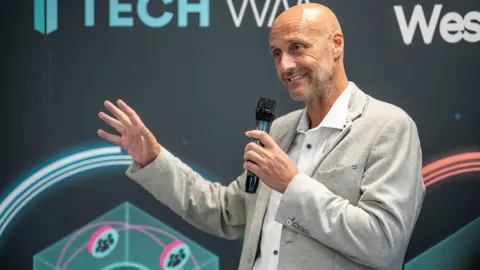
Andy Hague, head of TechWM, who worked on the prospectus, said: “I’m very bored of ‘AI will replace 99% of all jobs in eight years’. This is simply not the case, but it is very easy to panic.
As companies begin to use more AI-related tools, Hague, who became head of TechWM in April, said a fundamental part is increasing people’s overall awareness of what it is and what it can do for them.
“I’m still convinced that a large number, and it’s probably well over 70% of the general population, can’t explain to you in any way what (AI) is, or what it could do or how it can impact their lives,” he said.
 TECHWM
He added: “If you run a small business and you make widgets, you don’t understand the impact that AI or cyber or quantum can have, you just make widgets and (think) ‘this has nothing to do with me’.
“The real priority has to be if you’re a business, and whatever size you are, how can you adopt it… just to get a little bit better – tweak your processes, speed things up, eliminate areas of potential human error, stop duplication.
Working with business, academia and the public sector, Tech WM will provide feedback to WMCA to help achieve missions, Hague said.
The body is partly funded by the local authority to drive the ‘digital technology agenda’, whilst aiming to attract private equity and investment to the area.
For any business looking for advice, the West Midlands Cyber Hub opened at Millennium Point, Birmingham at the end of November. It’s a “place where anyone can go to ask a question or see what’s going on,” he said.
Several AI and cybersecurity faculties have also opened in the region in 2025 in the hope of making the West Midlands a highly competitive and leading region in professional education.
The Center for Cyber Resilience and Artificial Intelligence (CYBRAI) at the University of Wolverhampton opened in early 2025 and the Capgemini AI Center of Excellence at Aston University also recently launched on its London campus.
“I interact a lot with Wolverhampton, Warwick, Aston and Birmingham and they are all doing great things,” Hague said.
 Coding and AI School
Predicting that AI will become an essential skill alongside maths and English, an ambitious £10m strategy was recently announced by Mayor Richard Parker and the WMCA aimed at providing free training, creating jobs and securing investment.
Manny Athwal, chief executive and founder of the recently opened School of Coding & AI in Birmingham and Wolverhampton, said he believed technology education across all subjects was now vital and the region needed to work more together to get ahead of cities like Manchester.
The school opened a city center campus earlier this year in partnership with the University of Wolverhampton, offering courses in computing, business management, health and social care with AI “across the curriculum”.
It aims to equip students with hands-on experience in using AI, how to challenge it, use data and analytics tools and, most importantly, learn how to work alongside AI and not be replaced by it.
Students also learn when to use AI and how to validate what they get from it.
It is crucial to encourage more mature people to learn more, added Athwal, who called on the industry to “not leave it to the next generation”.
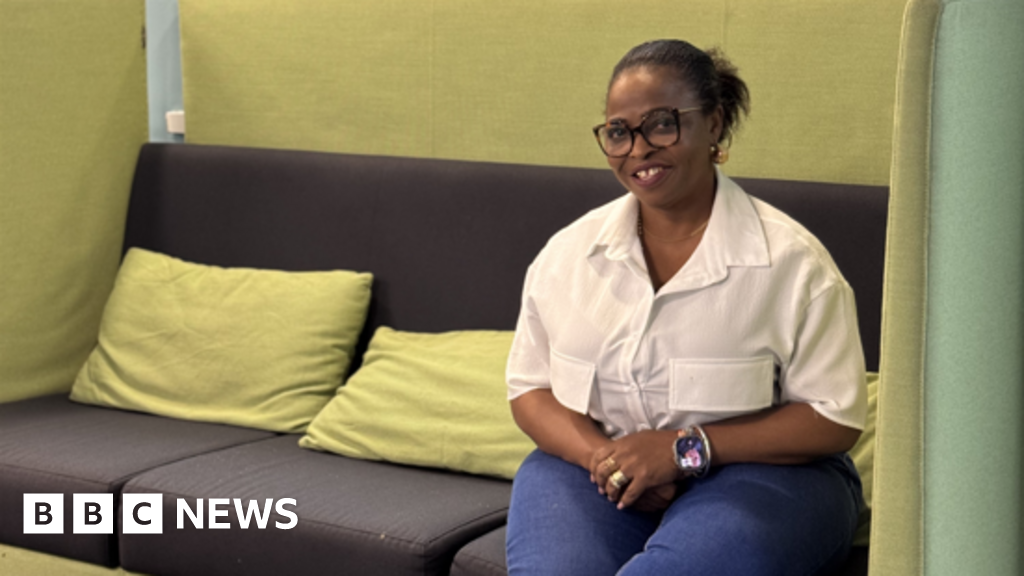
Shakielah Bibi, 41, from Birmingham, who is in her first year of study foundation health and social care course with the University of Wolverhampton at the school, said learning about AI had “opened the doors” for him.
The mother-of-three said she wanted to expand her learning after turning 40 and being a “mother and housewife for so long” after working in education.
She said she learned to use AI in her research, which saved her time, and also used VR headsets for scenario-based simulations.
“As my kids get older…I feel like I could help them more if I’m on the same page with the technology and AI that we have,” she said.
“It’s something I never thought I could do.”
 Coding and AI School
Christianah Abayomi-Daniel, a health and human services student and former nurse, said she enjoyed applying it to her studies and “everyday life,” adding that if it hadn’t been part of her course, she might have dropped out.
“It’s a fascinating time.”
“In 2011, when I was in college… I had to go to the library all day to look up different books, but now that I know about AI, I don’t need to leave my house. I just need to know how to talk to my AI,” she said.
Hague said it was a “fascinating time” for the region, as the sector grew and the “bubble” element around AI calmed.
Although compared to other fields, he believes that “based on pure results” it is “pretty low, but it is very well regarded”, largely because things are still in their infancy.
However, the future is bright, he said, given the WMCA’s goals for jobs and growth.
Atwal said he wanted the region to become less fragmented and more money was needed from the government to change that, which he was confident would happen.
But, he added, if “someone else gets this money before us, they will take the crown.”