

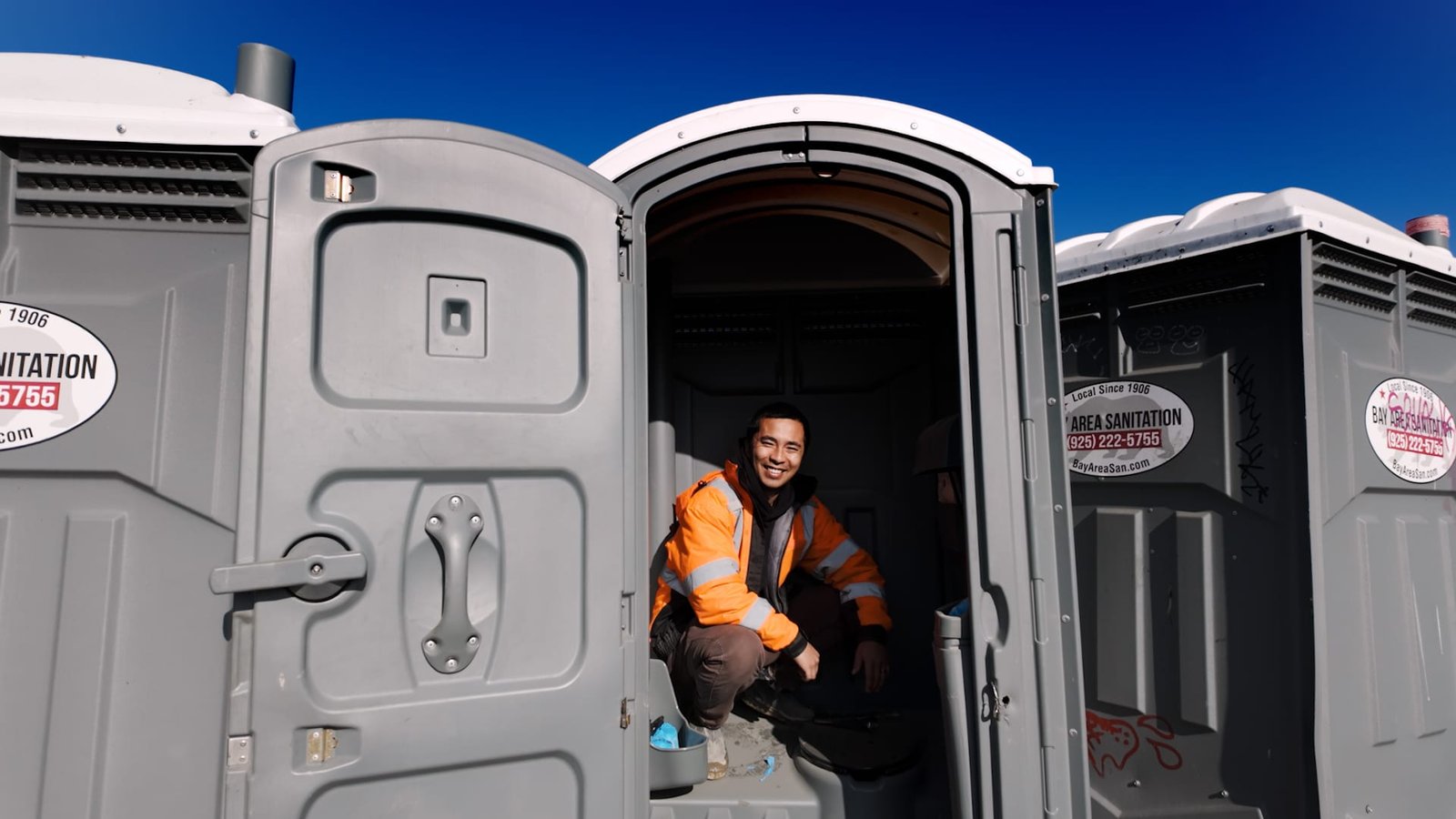
Success doesn’t always smell sweet.
For Daniel Tom, 31-year-old owner and operator of Bay Area Sanitation, success means deploying nearly 2,000 portable toilets at events and job sites across the San Francisco Bay Area. Tom’s company is responsible for renting and maintaining these toilets, including weekly cleanings, restocking supplies, and emptying up to 60 gallons of waste from each unit with one of Bay Area Sanitation’s 12 vacuum pump trucks.
“When I tell people I own a portable toilet business, I get a lot of disgusted looks,” Tom says. “But once I explain the business model and the revenue to them, most of the time they are interested.”
Tom launched Bay Area Sanitation in 2023 with one truck and just 100 toilets for rent. The company became profitable after its first year of operation and its revenues grew along with its fleet of rentable toilets. Bay Area Sanitation reported $3.1 million in total revenue in 2024 and $4.3 million in 2025, according to documents reviewed by CNBC Make It.
DON’T MISS: How to create custom GPTs and use AI agents
Tom’s company operates just about anywhere a person might be looking for a portable toilet, whether it’s short-term outdoor events like concerts or long-term rentals at construction sites or public parks. Bay Area Sanitation’s standard-size portable toilets start at $160 per month for long-term rentals, including weekly cleanings. Short-term pricing ranges from $239 to $399 per event.
Most of the company’s revenue comes from long-term rentals with recurring weekly cleaning fees that add up over weeks, months or years, Tom says. “I like to focus on long-term rentals because it guarantees recurring revenue for my business,” he says, adding that his business has a net profit margin of about 22 percent.
The irony of the fact that he built a successful business collecting human waste “right around the corner from some of the biggest tech companies in the world, like Google, Apple and Nvidia” is certainly not lost on Tom. At a time when many workers are worried With the prospect of being replaced by artificial intelligence, Tom sees an advantage in building his business around solving an unavoidable human problem.
“We’ve managed to build what I consider a low-tech, AI-proof company,” he says.
“I am proud of what I do”
Tom’s start in the industry came during his freshman year of college at San Jose State University, where he studied to become a physical education teacher. He accepted a part-time customer service position at a portable toilet rental company.
“I loved it so much that I decided to give up teaching and go full-time after graduation,” says Tom, who worked for seven years as a sales manager at Hanson & Fitch before deciding to start his own business, according to his LinkedIn profile.
Tom saw the company’s solid profit potential and came to enjoy doing necessary work that might scare others away. He says: “The truth is, I’m proud of what I do. I love coming to work every day and I provide a service that everyone needs. Everyone goes, right?
Daniel Tom is the owner and operator of Bay Area Sanitation.
Source: CNBC, Succeed
Starting a porta-potty rental business usually requires enough upfront cash to purchase equipment, which can cost about $800 per rental toilet and $160,000 per vacuum truck, Tom says. He declined to share details about his own startup funds, but says the average person might need around $250,000 to get started.
Labor costs for Tom’s 19 employees are his biggest expense, he says, equating to about 30 percent of Bay Area Sanitation’s revenue. Other costs include fuel for vacuum trucks and delivery trucks, as well as supplies like toilet paper and paper towels, he said. Tom earns about $120,000 in personal annual salary – a figure that could easily be higher, he says, if he didn’t reinvest most of the profits back into the business.
“We really prioritize reinvesting in the business to continue its growth,” says Tom. His goal is to accumulate 5,000 portable toilets and $10 million in annual revenue over the next five years, he says. In December, Bay Area Sanitation signed a lease for warehouse space that could accommodate “almost twice as many trucks as we have now,” he adds.
The portable toilet rental industry brought in an estimated $3.3 billion in the United States in 2025, an increase of 1.7% from 2024, according to a study. Analysis of September 2025 from the research firm IBISWorld. Tom sees significant market share up for grabs in the Bay Area, he says, with a myriad of local outdoor events and a growing construction sector.
From 4 a.m.
Tom’s stuff probably isn’t for everyone, although he says he’s gotten used to some of the less savory aspects. “I’ve cleaned so many porta-potties that the smell doesn’t really bother me,” he says. “But every once in a while I come across (a unit) after someone has eaten bad burritos or something. And even for me, it’s hard to take.”
His typical day begins with waking up at 4 a.m. He goes to his company’s storage area to meet his employees before they all head out to deliver fresh toilets to customers and clean long-term rentals. On less busy days, Tom stays in the office to perform administrative tasks, make sales calls, or work on the company’s long-term growth strategy.
A Bay Area Sanitation employee cleans the inside of a portable toilet.
Source: CNBC, Succeed
One of the keys to its success, Tom suggests: taking the sanitation side of the business as seriously as possible. Each unit’s weekly cleaning schedule includes completely emptying waste with the vacuum truck’s vacuum wand, adding a deodorizer that breaks down future waste and mitigates bad odors, cleaning and disinfecting every surface inside the unit, and restocking paper items.
Prioritizing customer experience means trying to prevent users from encountering unpleasant situations as much as possible, Tom explains. And that means working with your hands, even when you own the business, he adds: “What sets an owner apart in the porta potty business is how involved they stay in the day-to-day operations.”
Want to progress your work with AI? Sign up for CNBC’s new online course, Beyond the Basics: How to Use AI to Power Your Work. Learn advanced AI skills, such as creating custom GPTs and using AI agents to increase your productivity today.
