

As we work to improve our communication skills with robots, another language has developed.
In January 2025, we talked about the impact of artificial intelligence, the speed at which it was developing, the jobs it was eliminating and the time it was saving businesses. What was missing were instructions on how to communicate with him.
Over the last year, this has become my biggest takeaway when it comes to AI. We need to be very clear, very precise, and very good at knowing our facts so that we can give foolproof instructions to AI and be sure that the robots aren’t making up information on their own or using an unreliable source to please, impress, or distract us while they secretly plot to take over the world.
As we work to improve our communication skills with robots, another language has developed. So here we are in January 2026, struggling to work effectively with robots, and Generation Z has created their own code, used among themselves, which is confusing to Baby Boomers and Generation X and is something that we hope has evolved, which the sinister robots never will!
Recently, I’ve become determined to crack the code, and I’m glad to know that Merriam-Webster Collegiate Dictionary is already dedicated to it. Here are some new vocabulary words that you will likely hear or see in this new year.
“Delulu” is a good one. It’s a variation of “delusional.” Why do we need a variation? No old person can answer this question, but word on the street and on TikTok is that Delulu is an adjective meaning having unrealistic beliefs. Here’s how you use it in a sentence: “Don’t kid yourself by using ridiculous words in Scrabble, an old board game popular among baby boomers.”
“Rizz” is a new word that I really like. It’s short for “charisma,” a noun meaning charm, style, or attractiveness, often used like this: “This Boomer is loaded with rizz!”
““Dumbphone” has a lot of meaning to me. It’s the opposite of a smartphone. Use it like this: “A lot of boomers are nostalgic for their flip phones from the early 2000s, but these are classic dumbphones and if you still have one, it’s definitely time to upgrade because every generation is laughing at you.”
“6-7″ is expressed using hand gestures. When a Gen Z uses it, you may notice that both hands, with palms facing the sky, alternately move up and down as if they weigh something. Some interpret 6-7 as an assessment of something like “so-so”, others, however, think it is a good thing, or even a compliment! Until we can have more clarity on 6-7, I suggest we refrain from using it or we might insult ourselves or others. For example: “Wow, that tennis serve was so 6-7!”
“Hard pass” is a phrase that has infiltrated mainstream conversation. It means to reject something in a meaningful way. Here’s a conversation that I hope will be helpful. Speaker A: “My nieces use a lot of crazy words. Is it really worth hurting my brain trying to follow what they’re saying? Speaker B: “No. Certainly not. Make a difficult pass.
“Skibidi”, I’m convinced, was designed simply to throw off other generations. Apparently, skibidi can mean both “cool” or “bad”, which means its usage should be handled with care, like this: “This made-up word is super confusing and completely skibidi!”
It should be noted that the research for this column was inspired, in part, by an online source called “Word Smarts” and by writer Rachel Gresh. This idea, however, was widely supported by grandparents, aunts and uncles of baby boomers and Gen Xers, who struggled to communicate with their younger relatives during the holidays. FBN
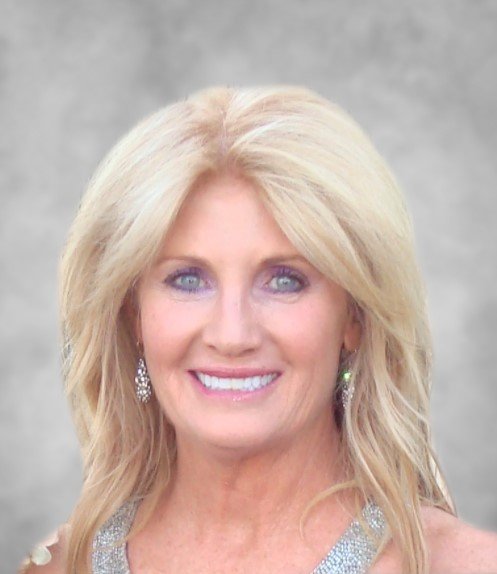
By Bonnie Stevens, FBN
Bonnie Stevens is the editor-in-chief of FBN. She is a career journalist and public relations consultant. She can be contacted at bonnie.stevens@gmail.com.