

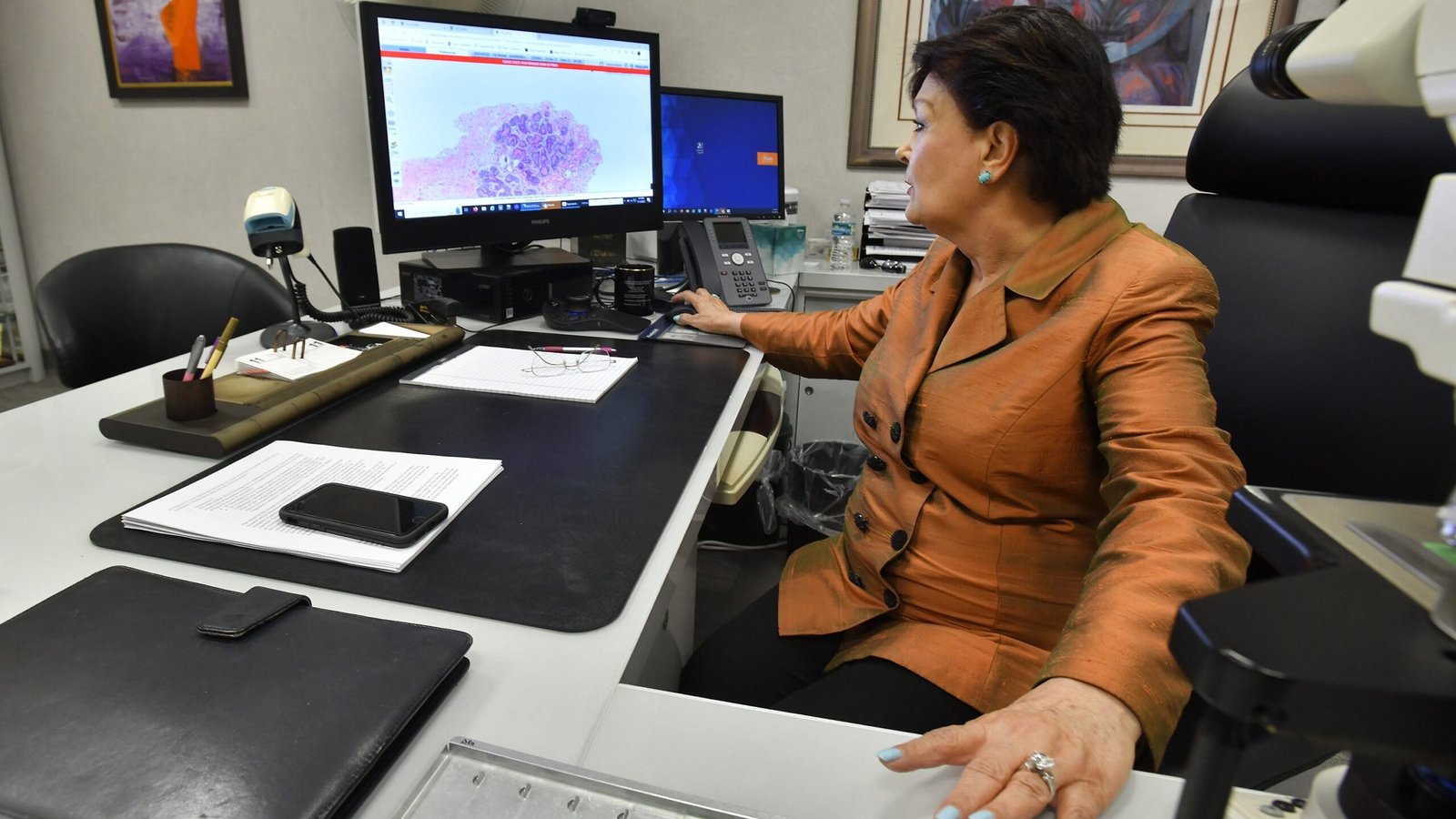
Drs. Mei Zhao and Shyam Paryani
Digital healthencompasses a wide range of technologies and practices aimed at improving health and well-being. These digital programs leverage technology to improve healthcare delivery. Innovations include telemedicine mobile health, health information technology, portable devicesand personalized medicine.
Digital health also aims to make medicine more personalized and precise. Smart devices (like step trackers, blood pressure monitors, and glucose monitors) are useful metrics for digital health. They provide real-time data, allowing users to take control of their health.
Additionally, digital health bridges geographic gaps, making healthcare accessible to remote areas. Streamlined processes, reduced paperwork, and faster communication benefit both patients and providers. Artificial intelligence, or AI, is a more important element of digital health.
AI describes computer models and programs that mimic human intelligence to perform cognitive functionssuch as solving complex problems and gaining experiences. But its use in health care is not a new concept. In the 1970s, AI applications were first used to solve biomedical problems when research produced results. MYCIN, an AI program that helped identify blood infections.
From there, AI-powered applications have grown and adapted to transform the healthcare industry by reducing expenses, improving patient outcomes, and increasing overall efficiency.

In recent years, AI has made significant advances in the diagnosis, treatment and care of patients. For example, AI can identify patterns in mammograms to help in diagnosing breast cancer . It can suggest treatment recommendations based on individual patient data, taking into account factors such as genetics, medical history and lifestyle to optimize care.
Drug discovery is accelerated by AI, which analyzes large data sets and predicts potential drug candidates. AI-powered surgical robots can assist surgeons during proceduresand improve surgical precision, reduce errors, and provide real-time feedback.
There is also the automation of administrative tasks and improved efficiency in appointment scheduling, billing and patient record management. AI even enables remote consultations, monitoring chronic diseases and providing personalized health advice through telehealth.
Mail:Recent US elections showed a ‘pandemic of willful ignorance’, not patriotism
AI is transforming healthcare by improving diagnostic accuracy, personalizing treatments, and improving patient care.
This fall at UNF we are hosting our annual healthcare symposium with the theme “Personalized Medicine Using Digital Health and AI.” More than 70 digital health and AI experts will discuss the potential applications of these new technologies in our community in various areas of healthcare delivery.
The symposium will take place Dec. 2-3 at the UNF Adam Herbert University Center on campus. You can find more details about the program at HealthCareSymposium.unf.edu. UNF also plans to offer specific programs on digital health and AI in the future.
Digital health and AI in healthcare will continue to improve outcomes, reduce costs, and improve the patient experience. Appropriate use of AI will enable a distribution of work that is uniquely suited to automation, leaving time for humans to provide exceptional personalized care.


Dr. Mei Zhao, Ph.D., interim dean of the UNF Brooks College of Health, and Shyam Paryani, MD, MHA, FACHE, director of community engagement, director of the Executive Master of Health Administration program and president/founder of the Annual Health Care Symposium program at UNF. He is also the coordinator of the AI & Digital Health program at UNF and can be reached at s.paryani@unf.edu/.
This guest column is the opinion of the author(s) and does not necessarily represent the views of the Times-Union. We welcome a diversity of opinions.