

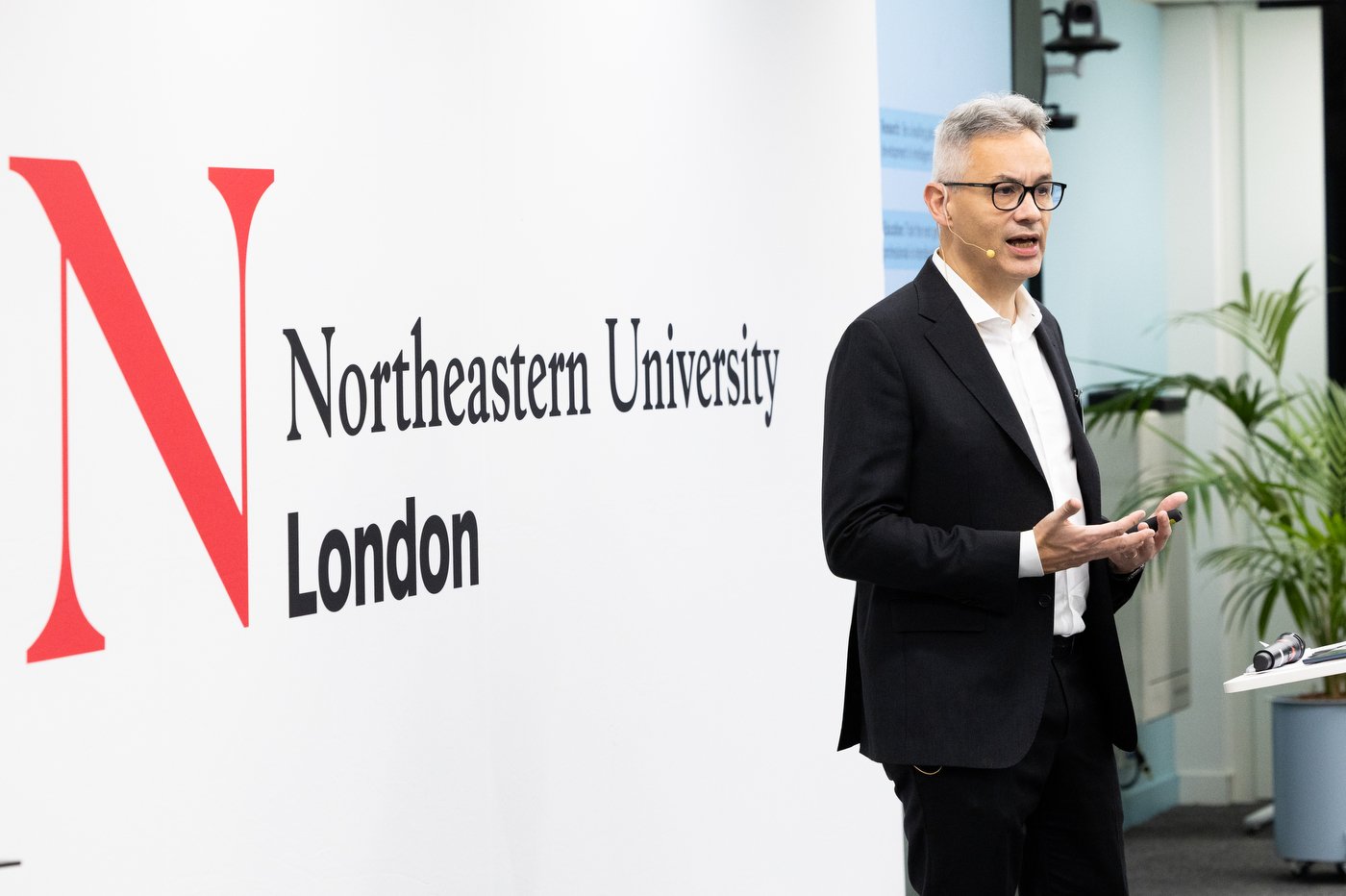
LONDON — The Institute for Intelligent Networked Systems will open the door to more European partnerships and groundbreaking research in artificial intelligence and wireless communications with its new London hub.
After securing 68 patents for new inventions, building more than 30 industry partnerships and conducting advanced wellness research since its founding in 2019 on Northeastern University’s Boston campus, the institute, formerly known as the Institute for the Wireless Internet of Things, has opened its first research office outside the United States. The new hub on Northeastern’s London campus signifies a transatlantic expansion of industry partnerships in AI and wireless communications.
“We are going to work on creating an interface between the world of connectivity and the world of intelligence,” institute director Tommaso Melodia said at a launch event on Friday. “We will have an expanded approach… with new research topics, new areas and new expertise brought in by the London hub. »
“We believe that the creation of the hub in London will create an opportunity to build even more partnerships in Europe and create additional opportunities,” added Melodia.
The institute is dedicated to making wireless communications faster, more energy efficient and more secure, with a focus on AI, machine learning and telecommunications. London becomes its third location, adding to its headquarters in Boston and a satellite office in Burlington, Massachusetts.
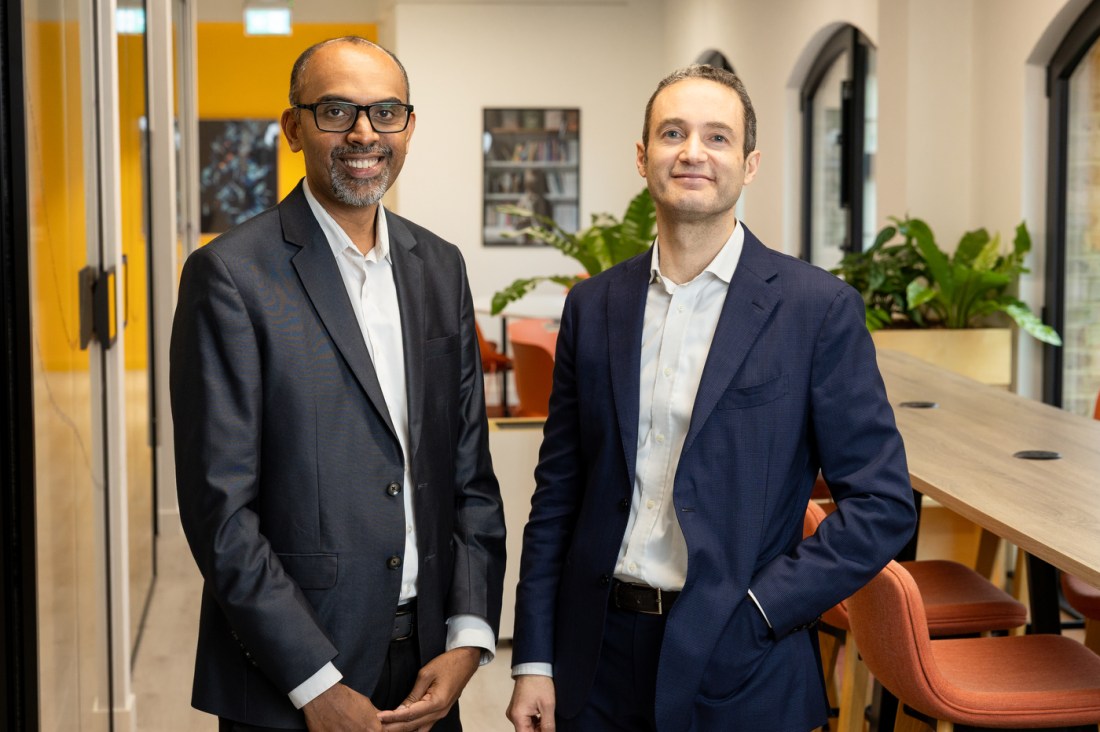
The UK office is led by Bipin Rajendran, professor of intelligent computing systems, and Osvaldo Simeone, professor of information engineering.
The researchers’ plans include working with US tech giant IBM to develop the next generation of AI hardware and investigate the misbehavior of AI technology behind everyday-use applications such as OpenAI’s ChatGPT and Google’s Gemini.
Melodia told Northeastern Global News that the new researchers will help diversify their expertise by focusing on machine learning, neuromorphic computing – computing inspired by the way the human brain can quickly process large amounts of information – and quantum computing.
Simeone said the UK hub’s two missions would be to “develop trustworthy AI” and focus on “emerging computing for our time”. Rajendran and Simeone have only been on the job for two weeks, but they already lead a team of about 20 researchers based in Portsoken One, the technology and engineering-focused building on Northeastern’s London campus.
The two professors have been friends for a decade, first working together in New Jersey before moving as a duo first to King’s College London and now to Northeastern.
Rajendran described himself and Simeone as “complementary” in terms of research expertise. “I completely agree,” Simeone replied. “Bipin is an expert in systems, hardware, software and co-design. And I’m more of a theoretician, an information theorist. So the way it works is that, usually, I come up with some sort of idea or system that can work on paper, and then Bipin makes it work in practice.”
Their joint arrival will significantly strengthen the research portfolio at the London campus. Simeone has secured funding from the European Research Council to study the reliability of AI in telecommunications. It is currently recruiting researchers for the project, which is expected to start in February.
It also receives funding from the American non-profit organization Donation of coefficients – formerly called Open Philanthropy – to detect large, misbehaving language patterns. Known as LLMs, they form the basis of chatbot technology found in applications such as ChatGPT and Microsoft’s Copilot.
“Maybe they’re trying to cheat or jailbreak and behave in a way that you wouldn’t want them to do,” Simeone explained. “We place probes inside the model to determine when the model is reasoning or going in directions it’s not supposed to.”
United Kingdom Advanced Research and Invention Agencya science funding body independent of government, tasked Rajendran, with Simeone also part of the three-year project, to consider building accelerators for large language models. “The aim is to reduce the cost of LLM training or model development by a factor of a hundred compared to (current) graphics processing units,” Rajendran said.
Rajendran is also working with US tech giant IBM – a company he previously worked for as a principal researcher on brain-inspired computing – on a project funded by Horizon Europethe European Union’s research body, which aims to produce the next generation of AI hardware with the aim of moving beyond the silicon-based semiconductors currently in use.
Simeone said he and his colleague were “excited” to “lead” the establishment of the institute in Europe. Praising Melodia’s leadership, Simeone said the institute had become “the most recognized name in the field of telecommunications research.” The institute has attracted $130 million in funding in seven years, has 225 members and works with more than 30 industry partners.
“I had wanted to work with him (Melodia) for a while,” Simeone continued, “so when we heard they were opening a branch in London, I thought it would be a great opportunity.”
Having worked closely with Rajendran for so long, Simeone was keen to keep their partnership intact. “Of course, I contacted Bipin almost immediately when I had the idea,” he said. Rajendran said he too felt the move was a “fantastic opportunity”. He added: “And the opportunity to continue to collaborate with Osvaldo was also a huge attraction for me. »
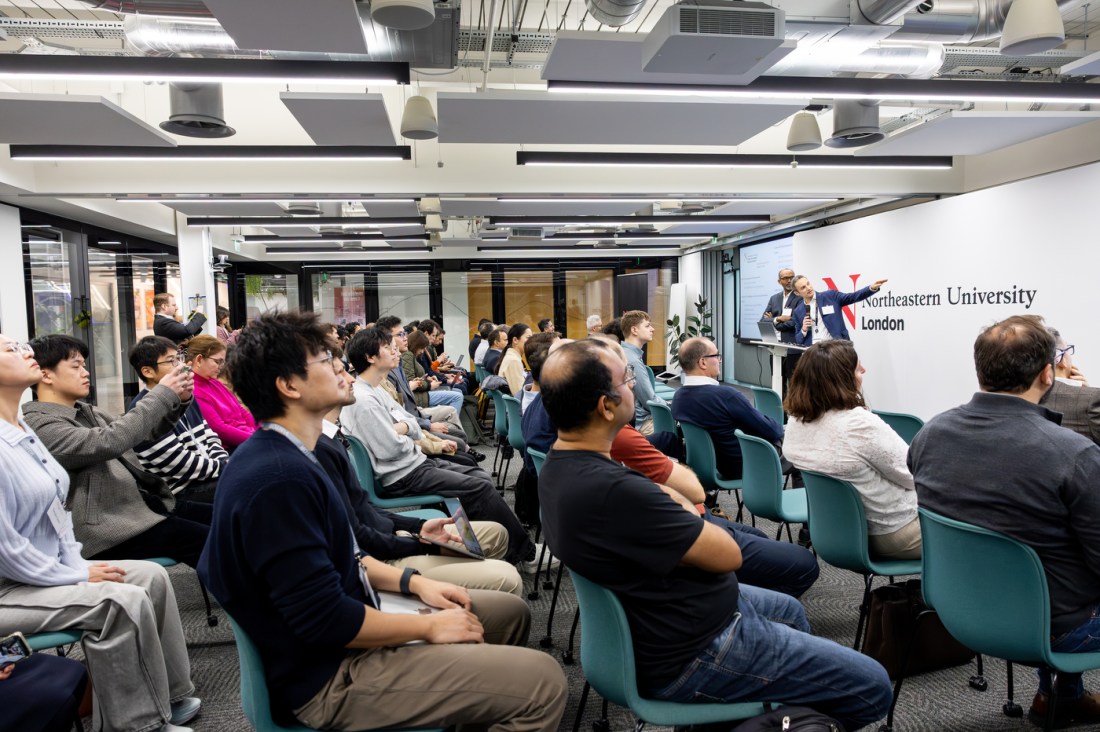
The launch of the London hub was marked by a conference on Friday at Devon House. It brought together an international panel of speakers from academia and industry, including representatives from major US technology companies such as IBM and Nvidia.
The inaugural event was designed to let Europe-based experts know that “we are here and we are open to collaboration,” Simeone said. “It’s to put us on the map and celebrate this new initiative.”