

Local TEDx events bring together thought leaders from the region to spread their knowledge and inspire audiences.
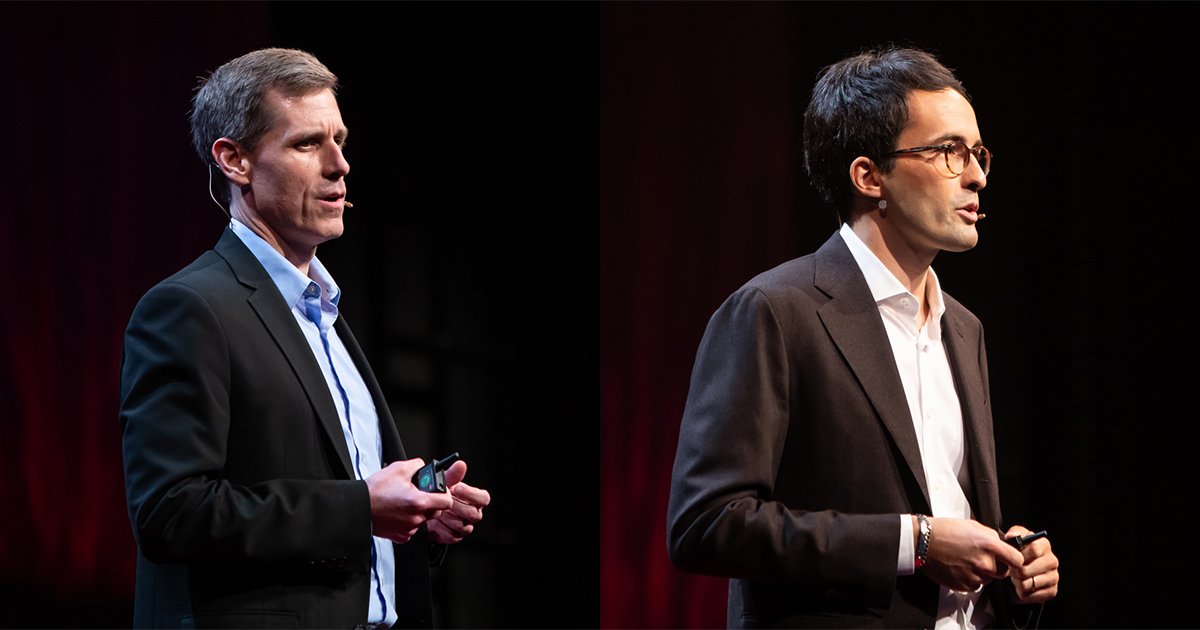
At TEDxChicago 2024, two Northwestern Engineering professors had the chance to showcase their work tackling some of the world’s biggest problems.
Mark C. Hersam And Alessandro RottaLoria featured at this year’s TEDxChicago, an independently curated TED event that promotes “ideas worth spreading.” Organized around the theme “Light the way“, the event took place on September 27 at the Harris Theater for Music and Dance in Chicago.
Other speakers at this year’s TEDxChicago included community food systems developer Erika Allen, architect Carol Ross Barney, healthcare architect Abbie Clary, art engineer Vanessa Harris, accelerator physicist Lia Merminga, supercomputer scientist Michael Papka and artist Scheherazade Tillet.
Hersam, Walter P. Murphy Professor of Materials Science and Engineering, spoke about sustainable artificial intelligence (AI). Rotta Loria, Louis Berger Junior Associate Professor of Civil and Environmental Engineering, presented on urban climate solutions.
A sustainable future for AI
The influence of AI in our daily lives is growing rapidly. The pros and cons of technology are seemingly discussed at the same rate.
Hersam mentioned another AI challenge that might be overlooked but needs to be addressed.
“For me personally, what keeps me up late at night, what keeps my team at Northwestern University working long hours in the lab, is an even greater threat (than others presented by the AI),” Hersam said. “That threat is energy consumption.”
By 2027, Hersam said, AI will consume 100 trillion watt-hours of electricity per year, the equivalent amount of electricity used by a country the size of Argentina. AI’s energy requirements are so great that Microsoft has hired nuclear engineers who are “seriously considering” building dedicated reactors to power each of their AI data centers.
The problem doesn’t end there, as Hersam pointed out. All this expected energy generates immense amounts of heat, which will need to be cooled by about 200 billion gallons of water in a world where 2.7 billion people live in water scarcity.
Hersam and his lab are working to find a solution.
“As a nanotechnologist for 25 years, I firmly believe that by understanding matter at the smallest scales, we can find solutions to the world’s biggest problems,” said Hersam, who leads the Northwestern study. Materials Research Center and chairs the Department of Materials Science and Engineering.
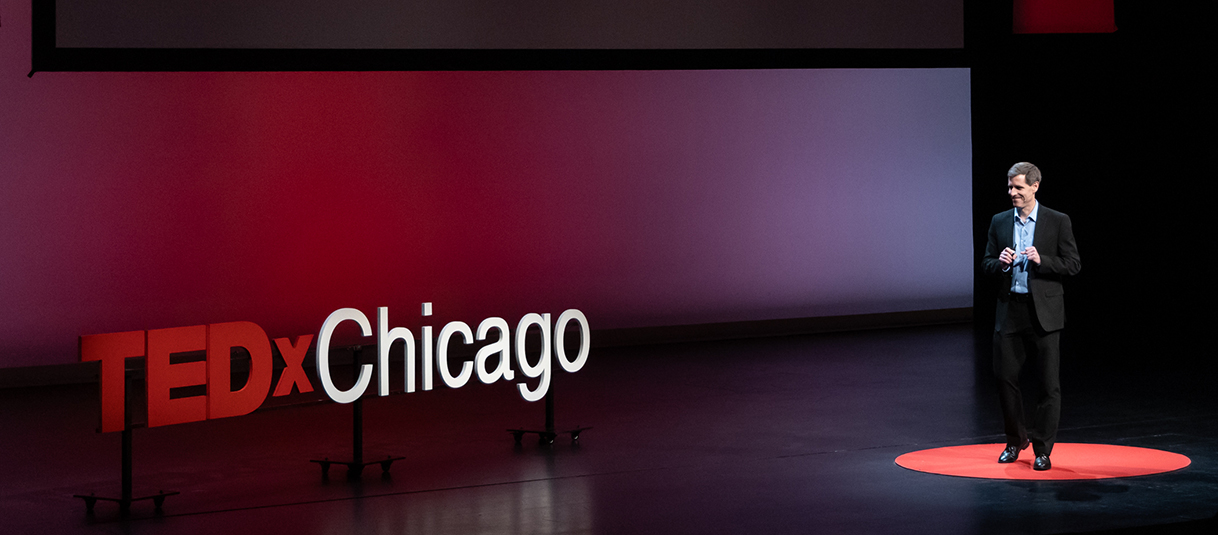
Using nanotechnology, Hersam and his teammates are working to produce an alternative hardware platform for AI that will be more energy efficient than a standard computer. Today, every computer is based on an architecture originally proposed by John von Neumann, which consists of a spatially separated memory unit and central processing unit. Moving the large amounts of data needed for AI between these two units results in significant energy consumption.
To avoid the need for dedicated AI data center power plants, the von Neumann architecture needs to be reconsidered. Hersam’s lab takes inspiration from biology and attempts to mimic the brain for next-generation computing.
This neuromorphic (i.e. brain-like) computing has the potential to replicate the energy efficiency of the brain to make AI less energy dependent. In the brain, memory and information processing are co-located, minimizing the need to move data, thereby avoiding the primary source of power consumption in the von Neumann architecture. The brain is also dynamic, reconfigurable and highly interconnected, which also contributes to its high energy efficiency.
Hersam told the audience why he is turning to nanomaterials to mimic desirable attributes of the brain in next-generation computing hardware. With dimensions approaching atomic length scales, the properties of nanomaterials can be tuned using electric fields, thereby mimicking the dynamic reconfigurability of the brain. Capitalizing on this technology, Hersam’s lab has developed nanoelectronic devices capable of performing AI-based machine learning with 100 times lower power consumption than conventional computing.
Despite this progress, Hersam acknowledged that its current devices are only capable of the “most rudimentary” form of AI. Ultimately, the goal is to achieve “sophisticated AI” capable of emulating cognitive function.
Achieving this requires interdisciplinary collaboration, which is a hallmark of Northwestern and the McCormick School of Engineering. Through his interdisciplinary work with colleagues in neurobiology, Hersam recognized the high degree of heterogeneity in the brain that contrasts sharply with silicon electronics where the same device (the transistor) is replicated billions of times in integrated circuits.
“For biorealistic neuromorphic computing, we don’t want to have billions of the same device. Instead, we want to have many different devices that can be dynamically reconfigured on demand,” Hersam said. “Our nanoelectronic devices are the foundation of this future.”
Hersam did not set a specific timetable for when neuromorphic computing will move from academic prototypes to large-scale deployment in AI data centers, but he was optimistic that that day would come soon.
“Nanotechnology is evolving rapidly and in a way that can be scaled commercially,” Hersam said. “Therefore, I am optimistic that energy-efficient AI can be implemented in time, especially before we face the most harmful consequences of conventional AI. »
Using underground heat to fight climate change
Even though the ground beneath our feet seems still and calm, the opposite is true. This terrain is distorting in many cities around the world, Rotta Loria told the audience.
Inspired by Dante Alighieri’s description of Hell in “The Divine Comedy,” Rotta Loria’s work focuses on the underground. Like Dante, other civilizations considered the underground as a place devoid of good.
Rotta Loria doesn’t see it that way. In prehistoric times, caves were built underground to protect humans from threats. Today, the subsurface is used for complex infrastructure projects that support our society, such as parking lots and tunnels.
These structures produce heat, thus warming the basement. In cities like London, New York and Chicago, underground train stations can experience extreme heat. This heat also spreads and seeps into the ground, creating underground urban heat islands – underground climate change.
Subsurface climate change presents myriad problems. This is a health concern for commuters who may suffer from heat-related illnesses. It also causes infrastructure and machinery – like trains – to age more quickly and break down more quickly. Subsurface climate change may also affect subsurface ecosystems.
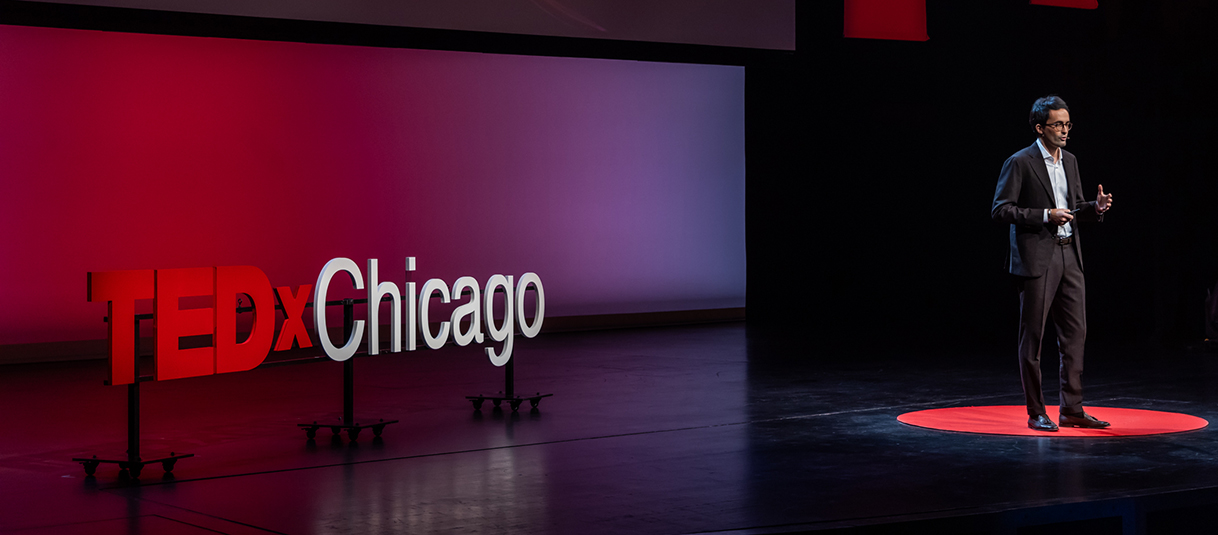
Rotta Loria focuses on another consequence of the phenomenon: deformations of rocks and soils caused by increased heat could jeopardize the sustainability and integrity of the infrastructure that supports our cities. In a study published last yearRotta Loria demonstrated how subterranean climate change has led to ground shifting beneath urban areas, causing building foundations and surrounding soil to move excessively and even crack, ultimately affecting operational performance and long-term durability of structures.
“The problem is that none of our buildings were designed to withstand (deformations). More importantly, these deformations can be large enough to affect the sustainability of the civil infrastructure that supports our cities,” said Rotta Loria. “Cities must act quickly to mitigate underground climate change. »
Rotta Loria shared his idea on how to achieve this.
The urban subsurface contains enormous amounts of waste heat and geothermal heat, the latter being the most abundant renewable resource we have other than solar energy. The urban surface, for its part, presents enormous needs for thermal energy in buildings.
Rotta Loria explained to the audience the potential for heat transfer from underground to the surface. This would alleviate two problems: reducing underground climate change while meeting the energy needs of buildings.
“The exciting thing is that we can do it today, not tomorrow,” said Rotta Loria, who heads the Laboratory of underground opportunities and innovations at Northwestern Engineering.
For decades, geothermal systems have consisted of holes drilled into the ground that embed plastic pipes with heated water intended to circulate heat for applications such as space heating and cooling and the production of electricity. hot water.
While the traditional method provides one option for mitigating subsurface climate change and meeting energy needs, Rotta Loria’s research over the past decade has helped establish an alternative: geothermal structures (also known as energy geostructures). Applicable to both new and existing constructions thanks to the research and inventions carried out by Rotta Loria, these energy geostructures essentially represent any type of underground construction transformed into a source of clean thermal energy.
“By exchanging heat with the ground surrounding these underground spaces and/or with the air circulating through these underground spaces, this technology forms a closed loop circuit operating with heat pumps, with the ultimate goal of providing heating and renewable cooling to any building you desire. that I can think of,” Rotta Loria said. “At the same time, this technology promises to decarbonize entire urban communities. »
McCormick’s Past TedX Talks
Hersam and Rotta Loria are the latest members of the Northwestern Engineering community to give a TEDx talk. In September, Sheila Gujrathi (’92, MD ’96) spoke at TEDxSanDiegoWomen. Shana O. KelleyNeena B. Schwartz Professor of Chemistry and Biomedical Engineering, gave a talk at TedxChicago 2023. At the Chicago 2022 event, a talk was delivered by Manijeh RazeghiWalter P. Murphy Professor of Electrical and Computer Engineering.