

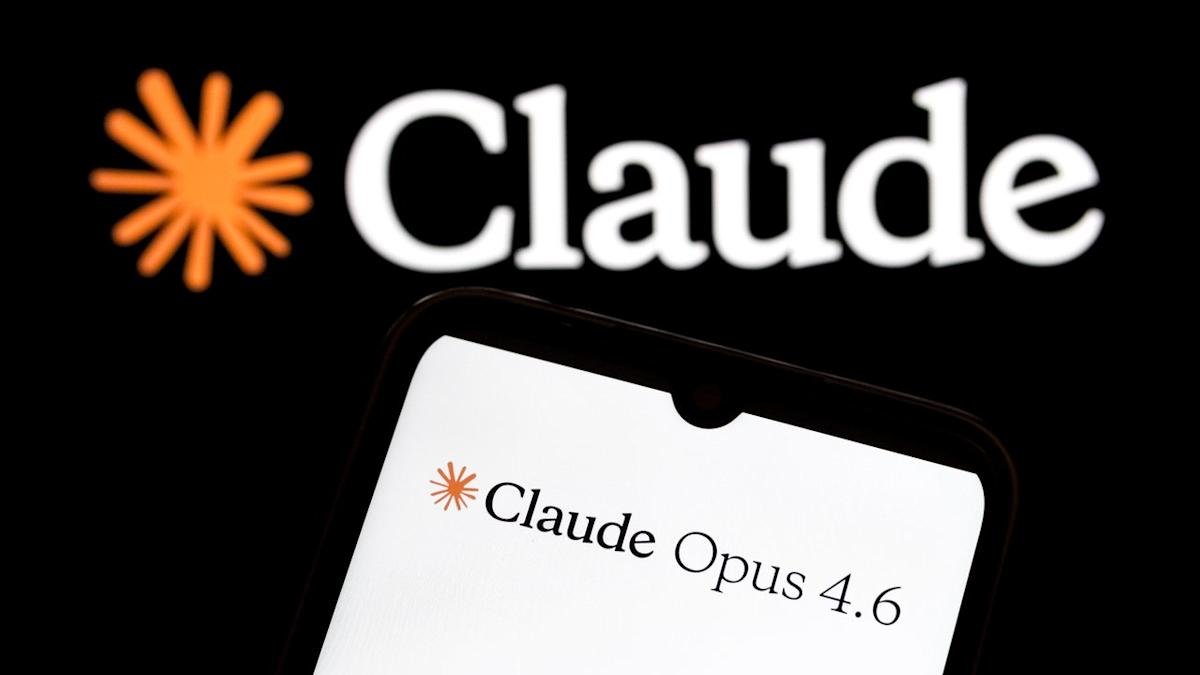
Anthropic, the maker of the Claude artificial intelligence model, closed a record $30 billion funding round, the startup announcement THURSDAY.
The increase, the largest in private tech history, brings its valuation to around $380 billion, underscoring the intense flow of capital into generative AI at a time of increased competition and market anxiety.
The Series G round was led by Singapore sovereign wealth fund GIC and Coatue Management, with participation from major institutional backers including DE Shaw Ventures, ICONIQ, MGX and continued commitments from Microsoft and Nvidia, according to sources familiar with the matter. said THE Financial Times.
Anthropic said the new capital would accelerate its efforts in data center expansion, product engineering and global sales as it prepares for an IPO, possibly later this year. The company has hired law firm Wilson Sonsini to begin preparations for its IPO, a sign of its confidence in its long-term growth trajectory. FT reported.
The startup also reported annualized revenue of $14 billion (a full-year sales estimate based on recent company data), up 1,300% from 2025 and growing more than ten times annually in each of the past three years. Enterprise customers – particularly for its AI coding assistant Claude Code – generated about 80% of the $14 billion in current revenue. The company says more than 500 corporate customers each spend more than $1 million a year on its product line.
This surge was fueled in part by the release of Claude Opus 4.6, a model capable of processing up to 1 million context tokens in a single session – enough to ingest codebases, legal archives, or internal corporate knowledge without slowing down. This means fewer handoffs between humans and machine and longer automated reasoning chains. It also refines Anthropic’s pitch to enterprise customers who want AI embedded deep within their workflows rather than hovering at the chatbot level.
The Opus 4.6 feature has been widely touted as an attempt to compete in the arms race with OpenAI and other startup labs. But the implications go beyond classification rights. If models can absorb entire repositories of institutional memory in one go, they begin to encroach not only on junior coding tasks, but also on higher-margin, knowledge-intensive functions – the core offering of much of the software industry.
However, this encroachment is already manifesting itself in market nervousness. As generative AI companies deploy tools that can automate analytics, legal drafting, and internal productivity systems, investors are beginning to question the sustainability of traditional software revenue models based on per-seat licensing and incremental upgrades. Recent sales The Enterprise Stocks and Analytics segments suggest Wall Street is trying to gauge a future in which AI deepens its enterprise customer base, while also hurting some revenue models.
Yet private capital flowing into the sector has reached near-stratospheric levels, with reports that OpenAI will seek a valuation north of $800 billion in an upcoming round. For now, Anthropic’s latest raise reinforces a prevailing belief on Wall Street and in private markets: that generative AI will be a central driver of enterprise IT budgets in the years to come.