

NC State University researchers will use a grant from Schmidt Sciences to develop an open source AI-based platform that can analyze the potential for converting agricultural scraps – biomass such as misshapen sweet potatoes or their discarded green tops – into biofuels or other bioproducts, creating new business opportunities.
The four-year project, Resource Engineering Framework for Responsible, Augmented Modeling and Engagement (REFRAME), supports the path to a circular bioeconomy, where biomass is reused to create new materials. This approach reduces waste, creates opportunities for entrepreneurs and provides new sources of income for farmers and agribusinesses.
To find the best ways to convert sweet potatoes and green tops into biofuel, for example, a sustainable aviation fuel company could use the new platform to analyze current yield in an area and determine where to locate a collection facility or biorefinery. The platform will be designed to help farmers, processing plants, researchers and policy makers make decisions.
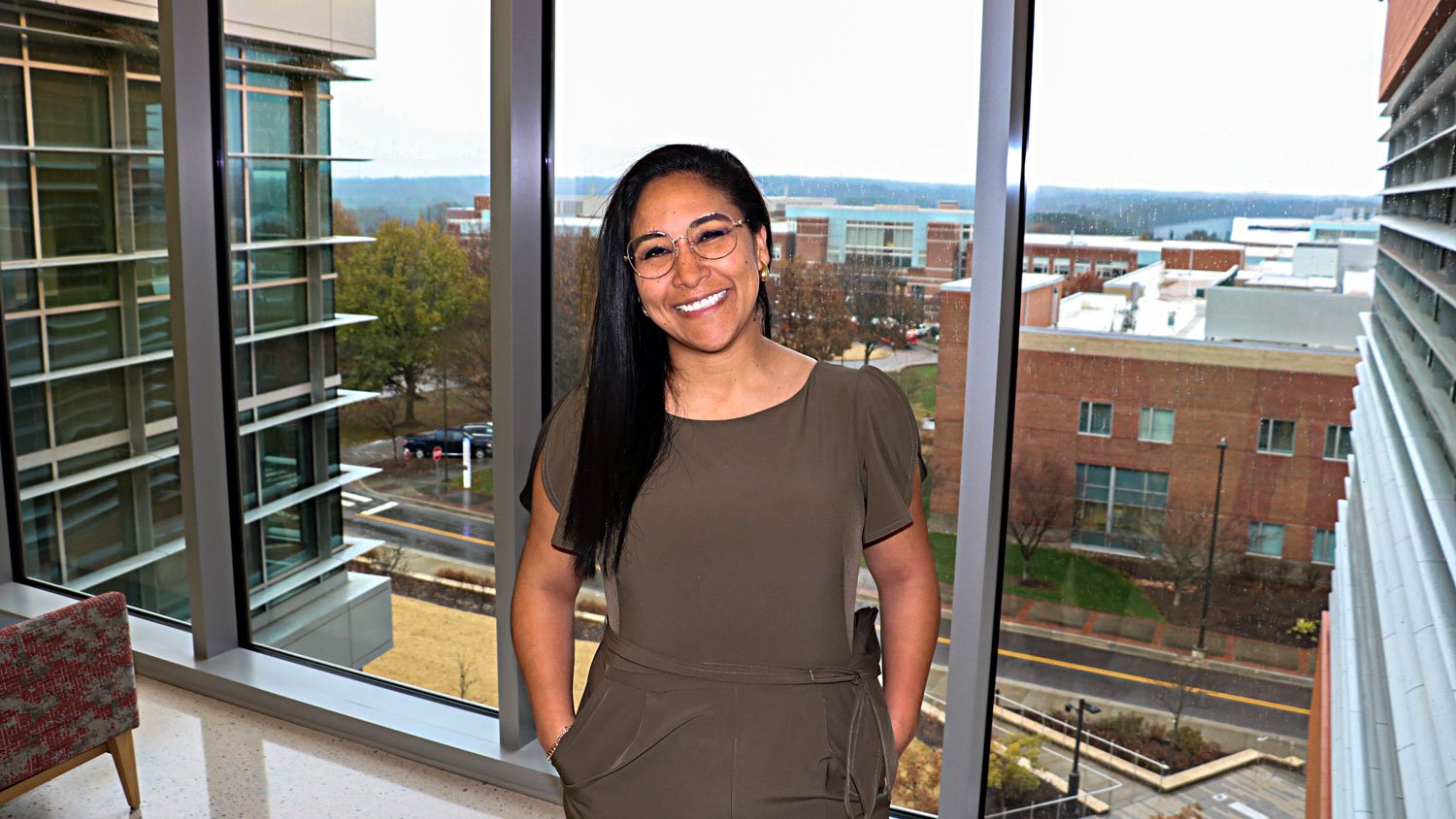
North Carolina State University Daniela Jones will lead the project. She is an assistant professor at Department of Biological and Agricultural Engineeringjointly appointed faculty member with Idaho National Laboratory and Director of the NC Plant Sciences Initiative Training and Workforce Development Platform. REFRAME co-leads are members of NC State University Debjani Sihi of the Department of Plant and Microbial Biology, Joe Sagues of the Department of Biological and Agricultural Engineering, and Cranos Williams from the Department of Electrical and Computer Engineering. Other collaborators are from the Idaho National Laboratory, the University of Illinois Urbana-Champaign, ICF International and McCarl & Associates.
We asked lead researcher Jones to explain the team’s plan for REFRAME.
How will you approach the REFRAME project?
My expertise lies in supply chain analysis, so our efforts span the entire supply chain. So in terms of availability, where is this agricultural biomass? In terms of accessibility, how do you move it from point A to point B? How can we characterize it? What are its qualities? What can he become through conversion? What would the cost be? What would be the impact or shock of introducing a new product to the market? What would be the reaction of farmers? What impact would biomanufacturing have on land use? These are examples of questions that we want to be able to answer much more quickly using an AI-based platform.
Will you integrate existing models or digital tools?
For all of these supply chain components, we have identified some existing models, models developed for years that are open source and that address some aspect of the supply chain – for example, agronomic models that analyze biomass availability. However, these legacy models have always operated in silos. Many people have worked very diligently on a model, but there is currently no strong connection between the models. The pipeline, waiting for results from one model to be delivered so they can be fed into another as input, takes months and years.
How will you apply AI to solve these problems?
What we’re creating is first a digital backbone, a digital environment where we can store and have the computing capacity to run a model multiple times so we can create much faster AI surrogates. By creating simplified versions of these models that run faster, we have the potential to predict things that were not previously possible with existing models. So that’s the main thing. We will create this model pipeline and it will become available to everyone as an AI-enhanced open source platform.
The REFRAME project is part of the Schmidt Sciences project Virtual Institute for Future Raw Materials (VIFF).
About Schmidt Sciences
Schmidt Sciences is a nonprofit organization founded in 2024 by Eric and Wendy Schmidt that strives to accelerate knowledge and scientific breakthroughs with the most promising advanced tools to support a thriving planet. The organization prioritizes research in areas with potential for impact, including AI and advanced computing, astrophysics, biosciences, climate and space, and supports researchers in various disciplines through its Science Systems Program.