

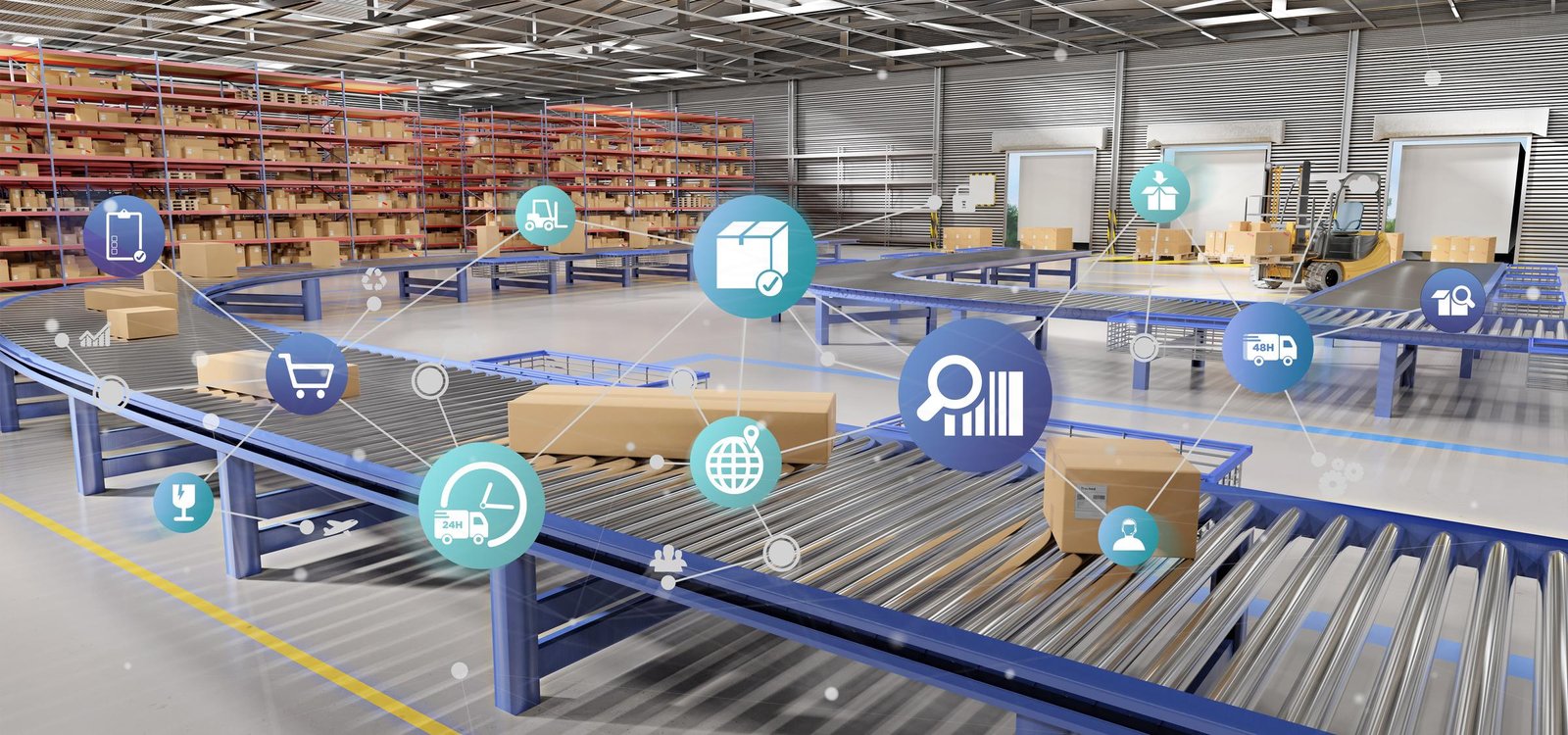
Credit: Production Périg/Shutterstock
GAITHERSBURG, Md. — The U.S. Department of Commerce’s National Institute of Standards and Technology (NIST) has expanded its collaboration with the nonprofit MITER Corporation as part of its efforts to ensure U.S. leadership in artificial intelligence (AI). Through this award, NIST is investing $20 million to establish two centers to advance the delivery of AI-based technology solutions to strengthen American manufacturing and critical infrastructure cybersecurity.
“This investment will help accelerate the application of AI in U.S. manufacturing and contribute to the renaissance of America’s manufacturing sector,” said Deputy Commerce Secretary Paul Dabbar. “We can leverage AI to increase the competitiveness of our manufacturers and attract investment to America. »
This award constitutes an important step in the implementation of Strategy for American Technology Leadership in the 21st Century accelerate the progress of critical and emerging technologies, from development to adoption, in close partnership with U.S. industry.
“Our goal is to remove barriers to American innovation in AI and accelerate the application of our AI technologies around the world,” said Craig Burkhardt, Acting Under Secretary of Commerce for Standards and Technology and Acting Director of NIST. “This new agreement with MITER will focus on improving the ability of U.S. companies to more efficiently manufacture high-value products, meet domestic and international market demands, and catalyze the discovery and commercialization of new technologies and devices. »
The AI Economic Security Center for U.S. Manufacturing Productivity and the AI Economic Security Center for Securing U.S. Critical Infrastructure from Cyber Threats will drive the development and adoption of AI-based tools, or “agents,” in these two national priority areas. The centers will develop the assessments and technological advancements needed to effectively protect U.S. dominance in AI innovation, address threats from adversaries’ use of AI, and reduce risks from reliance on insecure AI.
NIST will leverage existing resources to build on its expertise and implement the recommendations of the July 2025 White House report. America’s AI Action Planincluding Pillar I: Accelerating AI Innovation and Pillar II: Building America’s AI Infrastructure.
These are important first steps in NIST’s programmatic plan to coordinate innovation-based research efforts to accelerate the development and deployment of critical technologies in areas of national priority. Building on its long history of public-private collaboration, NIST plans to use adaptive and flexible partnerships to develop, pilot, and implement new advances to establish U.S. leadership and innovation in critical and emerging technologies such as AI, quantum information science and technology, and biotechnology.
The partnership will leverage MITER’s long-standing mission to operate federally funded research and development centers. NIST hopes that the AI Centers will enable breakthroughs in applied sciences and advanced technologies and provide innovative, disruptive solutions to address the most pressing challenges facing the nation.
This agreement expands NIST’s portfolio of AI-focused programs and builds on public-private partnerships leveraged by the Center for AI Standards and Innovation (CAISI), which leads assessments of U.S. and adversary systems and contributes to NIST’s efforts to develop best practices. CAISI has entered into voluntary agreements with several developers of cutting-edge AI models or “frontiers” to enable collaborative research and voluntary testing of industrial models for priority national security capabilities.
In the coming months, NIST plans to announce its price for the AI Institute for Resilient Manufacturingthrough the Made in the USA program. With up to $70 million in investment over five years from NIST and at least as much in non-federal funding, the institute will bring together expertise in AI, manufacturing, and supply chain networks to promote manufacturing resilience.
Together, these efforts will strengthen NIST’s core research, standards, and technology mission to remove barriers that prevent U.S. innovation and leadership in AI.