

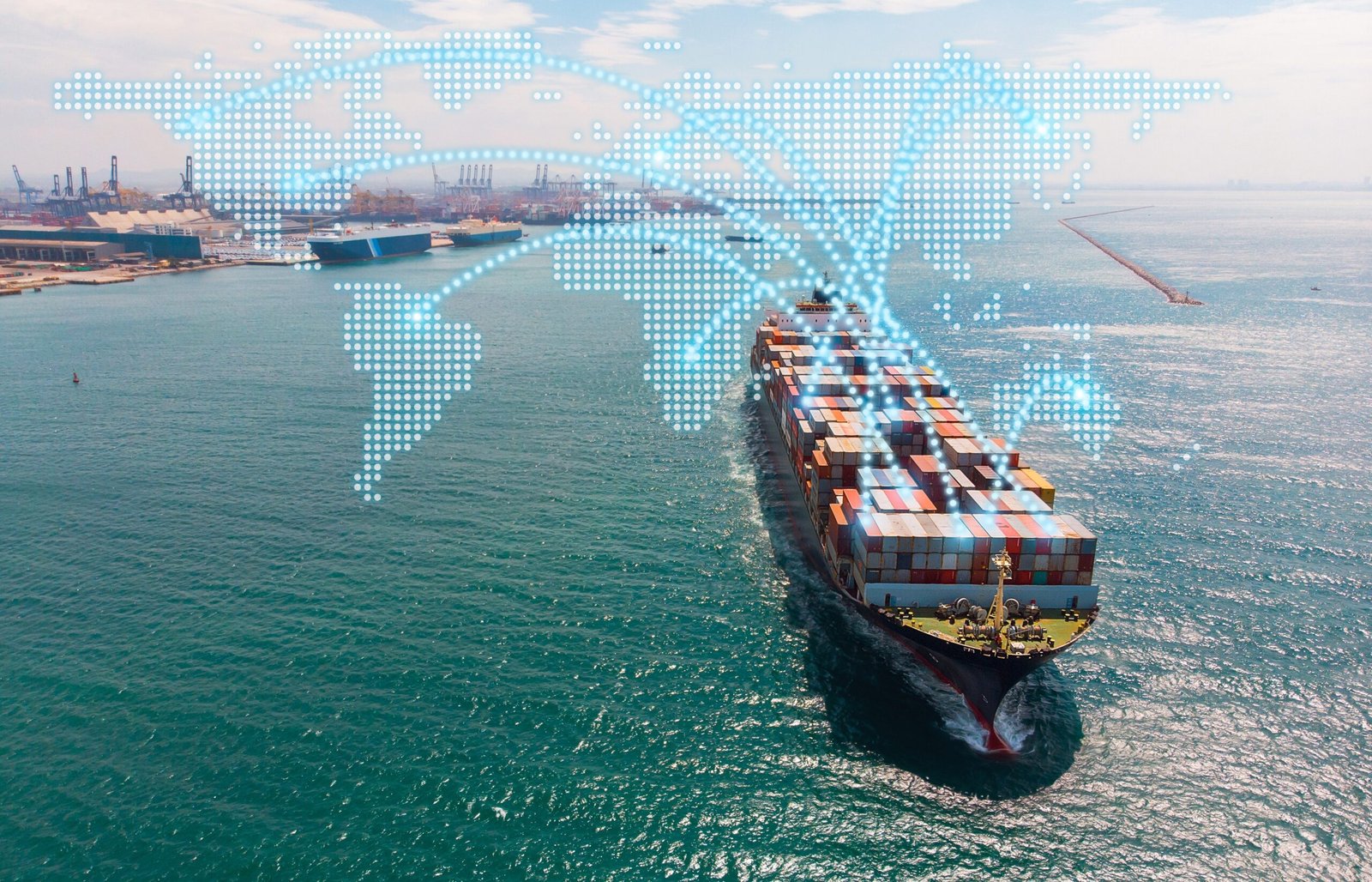
In today’s globalized economy, efficient transportation of goods across oceans is vital for businesses around the world.
However, the industry is facing challenges such as loss of containers, port congestion, shortage of shipping containers, rising freight rates, lack of carrier capacity and shortage of crew. Many shipping carriers transiting the Red Sea are still grappling with attacks from Houthi rebels, forcing carriers to increase delivery times by ten days or more as they are diverted to bypass Africa’s Cape of Good Hope. On the other side of the globe, a severe drought at the Panama Canal is slowing maritime trade due to increased restrictions on ships passing through the canal. Tracking maritime shipments has traditionally been a complex task using manual methods.
Read also: 10 ocean carrier experts for project freight and heavy transportation
With globalization and the rise of containerization, the need for more sophisticated tracking systems has become evident. Thanks to technological advancements, shipping and shipment tracking are more streamlined and transparent. Here is a list of technologies that can revolutionize maritime shipment tracking:
- GPS and satellite tracking: The global positioning system (GPS) and satellite tracking have become essential tools in tracking maritime shipments. GPS-enabled devices installed on ships provide precise location data, allowing stakeholders to track the progress of shipments in real time. Satellite communication ensures seamless connectivity even in remote maritime regions, enabling continuous monitoring and communication with vessels, regardless of their location. This level of connectivity improves operational efficiency and reduces the risk of lost or delayed shipments.
- Artificial Intelligence and Predictive Analytics: Artificial intelligence (AI) and predictive analytics are reshaping shipping tracking by leveraging vast data to predict trends and anticipate disruptions. Machine learning algorithms analyze historical shipping data, weather conditions, port congestion and other factors to predict potential delays or inefficiencies in the supply chain. This foresight allows stakeholders to take proactive steps, such as rerouting shipments or adjusting inventory levels, to mitigate risks and optimize operations. AI-based solutions also improve decision-making by providing actionable insights and recommendations based on real-time data.
- Mobile apps: Mobile apps have democratized access to shipment tracking information, allowing stakeholders to monitor their goods from anywhere and at any time. These apps provide intuitive interfaces to track shipments, receive notifications on status updates, and communicate with logistics partners. Mobile apps improve transparency and responsiveness by putting real-time information at users’ fingertips, enabling faster decision-making and problem-solving.
- Cloud-based platforms: Cloud-based platforms have revolutionized the way stakeholders access and analyze shipping data. These platforms provide a holistic view of the supply chain by centralizing information from various sources, including GPS trackers, IoT devices and customs documentation. Real-time updates and analytics enable decision-makers to identify bottlenecks, optimize routes and proactively mitigate risks. Additionally, cloud-based platforms facilitate collaboration among stakeholders, driving transparency and accountability across the entire supply chain ecosystem.
What is needed in cloud-based TMS
A cloud-based TMS is the platform of choice for maritime shippers, especially if it can integrate different data sources from tracking devices, along with tracking, booking and fulfillment, to become the integrated command center for a shipper’s transportation logistics needs. This all-in-one platform is expected to provide visibility into more modes than just ocean transportation, as some shippers use a combination of modes: truck, barge and rail.
Necessary functionalities in a TMS for ocean monitoring:
- Connections to hundreds of ocean carriers, NVOCCs and freight forwarders, eliminating the need for shippers to contact each carrier by email, phone or on the carrier’s website. Knowing the schedules of these carriers allows shippers to choose the exact time needed to cover the load.
- The ability to submit reservation requests and receive reservation confirmations electronically would make reservations faster, easier to track and more automated. Orders must be able to ship via full container or less container, with tracking data and shipment execution exchanged between carriers and shippers in the same portal.
- The electronic bill of lading (BOL) and online shipping instructions comply with industry standard data points. Shippers can view historical shipping instructions and compare them to current instructions to generate insightful dashboards with KPIs.
- Booking and shipping instruction templates with pre-populated forms make completing a shipment faster and easier, allowing staff to focus on higher value tasks.
- Transparent in-transit shipment tracking for ocean vessels and domestic movements ensures shippers always know where their shipments are. Shipments should be visualized on maps, regardless of mode, so that maritime, rail and road transport appear on the same map for a holistic view of transportation operations. Cards can be used internally or securely shared with customers for a better experience for a shipper’s customers.
- The platform is expected to provide a dynamic ETA calculated using multiple data points, providing shippers with a more accurate estimated time of arrival for better operational planning.
- Offers industry standard value codes, UN location codes and HS codes for approximately 38,000 products, preventing transmission outages to shipping carriers. The benefit would be that when a user enters a transaction into the system, the location and product fields have pre-set values, preventing incorrect data entry.
- This includes ocean timetables that allow planners to determine the best route option, with available transit dates, estimated arrival times, voyage information and terminals so planners can confidently choose the best route.
- Container tracking captures future critical events when importing containers, allowing shippers to quickly assign a truck and pick up the shipment on time.
- Must be able to connect virtually to any TMS, ERP and third party vendor system, allowing shippers to have visibility from a PO number and other critical reference numbers or information.
Technology integration has transformed maritime shipment tracking from a tedious process to a streamlined and transparent operation. From RFID to IoT to AI, innovative solutions are revolutionizing the way businesses manage their supply chains. By leveraging these technologies, stakeholders can gain unprecedented visibility and control over their shipments, improving efficiency, reducing costs and mitigating risks. As the pace of technological innovation accelerates, the future of maritime shipment tracking promises even greater connectivity, efficiency and resilience in global commerce.
Author: Bernard Cohen, Group Product Manager, IntelliTrans