

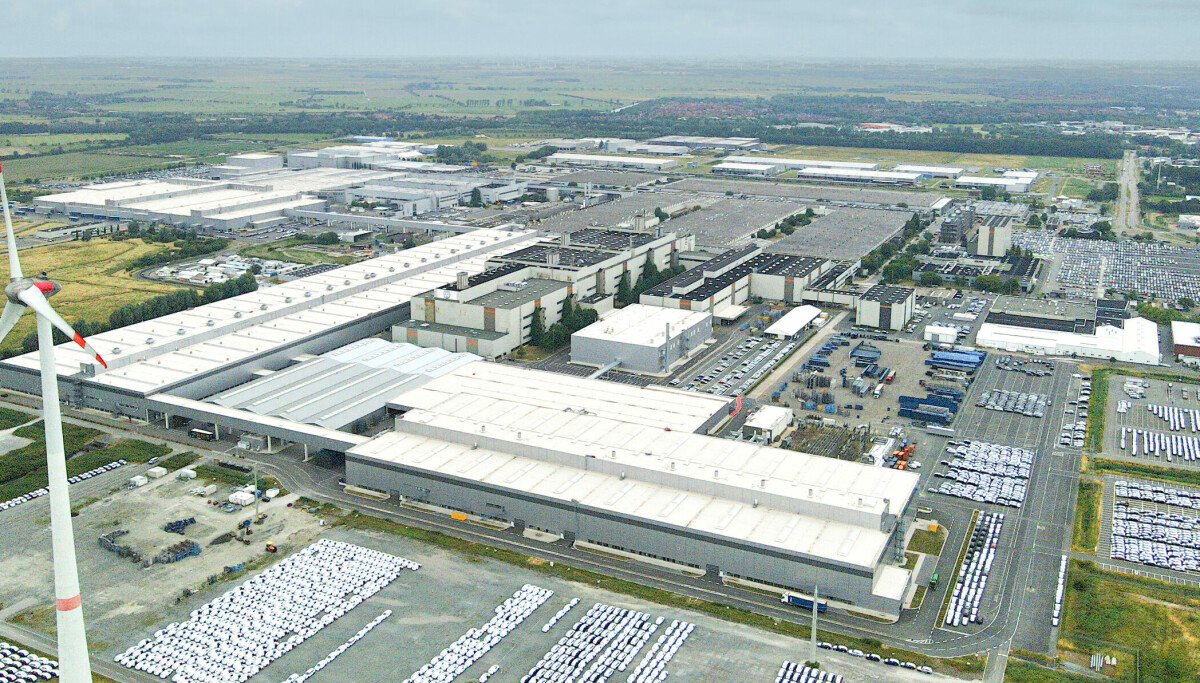
Driverless vehicles are being tested at the Port of Emden in Germany with the aim of using automation to automate and make workflows at automotive terminals more efficient. The AutoLog project, a publicly funded initiative supported by partners VW Group Logistics, BIBA, Deutsche Telekom and Unikie, aims to deliver efficiency, safety and environmental benefits.
VW Group Logistics ships around 2.4 million cars from around 40 ports, with the largest port in this network being the port of Emden, where more than a million vehicles are handled every year. But handling vehicles at its automotive terminal can require a large number of specialists to move vehicles and shuttle drivers to the next vehicle with a driving order.
This project aims to address a number of challenges facing terminal operators in Emden, including a lack of experts to handle increased shipments, limited space and increasing expectations for flexibility and efficiency.
The AutoLog project will last three years and is funded by the German Federal Ministry of Digital and Transport (BMDV) through its program for innovative port technologies (IHATEC II).
In addition to VW Group Logistics, partners include the Bremen Institute for Production and Logistics Systems (BIBA) at the University of Bremen, telecommunications company Deutsche Telekom – which is contributing to the project with a 5G network and a state-of-the-art data center – and software company Unikie, which provided its Unikie Marshalling (UMS) solution in the AutoLog project to enable fully automated vehicle movements without human intervention.
Deutsche Telekom explained that “tests are currently underway to validate how automated driving can help make vehicle logistics processes better, safer and more environmentally friendly, as well as counter the growing shortage of skilled workers.”
“We are proud to operate UMS technology on a larger scale in Emden, marking a new era in automotive logistics,” commented Vesa Kiviranta, Business Director Technology Solutions at Unikie. “Together with key partners, we are addressing critical industry challenges such as driver shortages, increasing handling volumes, limited space, sustainability and increasing demand for reduced operational costs, and enabling completely new types of logistics processes.
In a recent social media post, VW Group’s Managing Director of Vehicle Logistics Peter Hörndlein described the project as “a big step towards the future of vehicle logistics”, while Simon Motter, Head of Group Logistics at the VW Group, highlighted that automated driving opens up “enormous potential” for the group, not only for vehicle logistics, but also throughout the entire process chain.
From succeeding Oliver Bronder As part of his role within the VW Group, Hörndlein has strategically redesigned its European vehicle logistics network, with a focus on improving resilience through the use of multi-modal transport networks.
As part of this strategy, the group announced the opening of a new strategic automobile terminal in Venice earlier this year, to service several of its factories in southern Germany and central Europe. Hörndlein discussed this strategy in more detail as part of
Automotive logistics Livestream on finished vehicle logistics in July, which is available on demand now.