

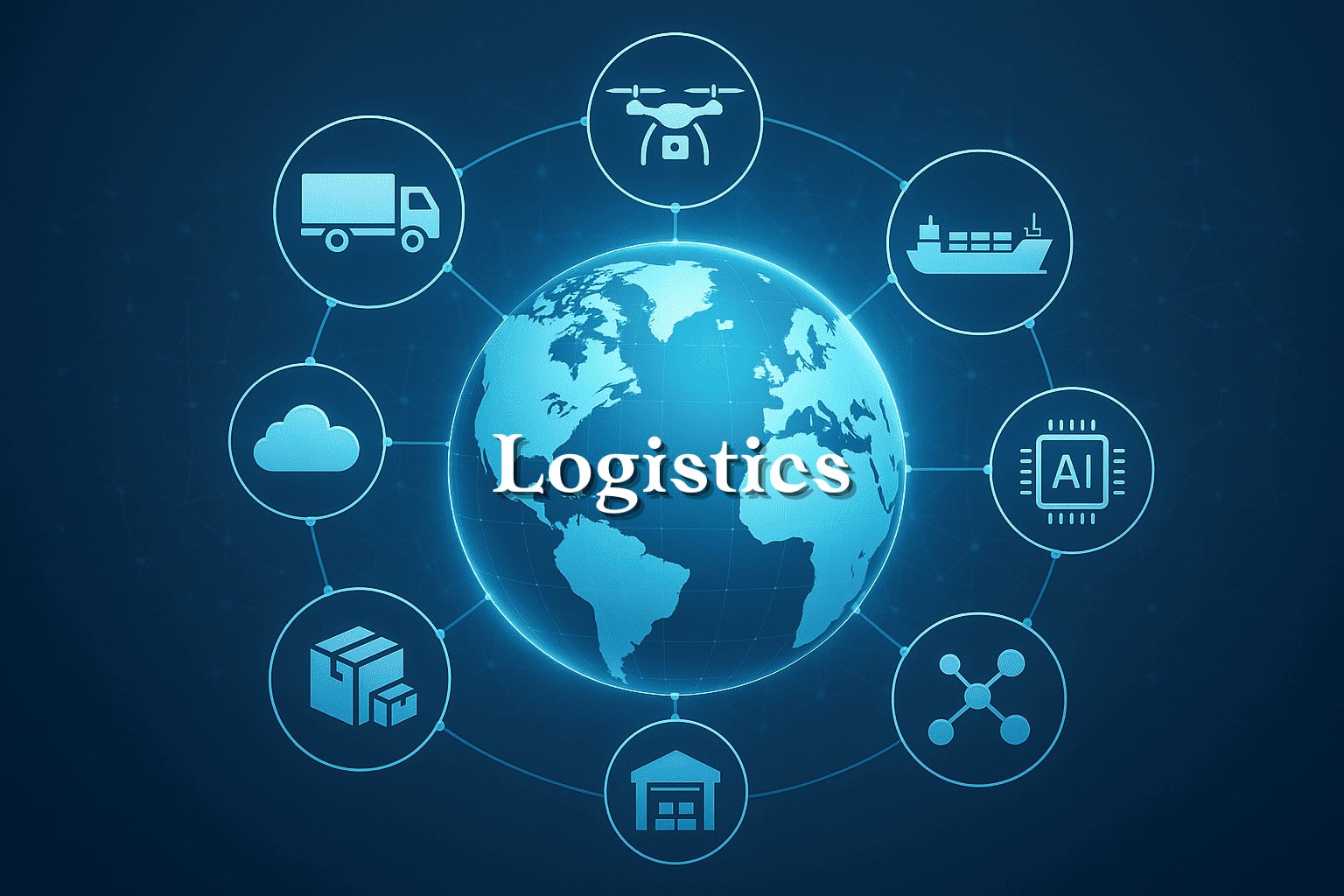
If you’ve been watching how quickly the logistics industry is evolving, you’ll notice something pretty exciting: we’re in the middle of a technological revolution! From self-learning machines to transparent digital ledgers, the backbone of global delivery systems is transforming. So what is driving this change? Let’s take a look at the top five technologies that are shaking things up and transforming traditional logistics management into a sleek and efficient powerhouse.
Top 5 technologies impacting logistics efficiency
Welcome to the technological frontier of logistics! 🛠️ These five technologies are no longer just buzzwords: they’re having real impact, improving the way businesses manage shipping, inventory, delivery, and everything in between. Whether optimizing a delivery route or automating warehouse tasks, these tools save time, reduce costs, and improve decision-making accuracy. Let’s break them down.
1. Artificial Intelligence (AI)
AI is like having a brilliant analyst on your logistics team: an analyst who never sleeps. It powers advanced decision-making by analyzing the numbers from every angle: traffic patterns, weather forecasts, vehicle performance and even customer behavior.
AI algorithms are now used to:
- Predict delivery delays
- Optimize delivery routes in real time
- Automate customer communication
- Forecast inventory needs
A good example? FedEx uses AI to analyze delivery routes and make live adjustments. This saves them millions of dollars per year in fuel costs and significantly improves delivery times. In logistics management software, AI functionalities are now essential and not add-ons.
2. Machine Learning (ML)
Now, AI’s best friend, Machine Learning, goes even further. While AI makes intelligent decisions, ML learns from experience. Imagine a system that remembers every delivery incident and improves next time. This is ML in action.
ML helps to:
- Predict customer demand
- Reduce stock-outs and overstocks
- Adjusting inventory based on real-time data
- Improve shipping fraud detection
By 2024, more than 45% of logistics companies reported increased accuracy in their demand forecasts after integrating ML into their logistics software. 📈 This is a big step towards simpler, smarter inventory systems.
3. Robotics
Let’s talk about the logistical workhorses of the future: robots! 🤖 Warehouses, once filled with forklifts and manual workers, are now full of autonomous robots doing the heavy lifting. These are not science fiction robots: they are the new normal.
The robots manage:
- Preparing and packing orders
- Inventory analysis
- Loading and unloading goods
Amazon’s robotic fleet reportedly reduced warehouse operating costs by 20%, while increasing order accuracy. For any company looking for the best logistics management software solution, the integration of robotics is now a benchmark for efficiency.
Blockchain is like a digital ledger with superpowers: it records transactions across multiple systems in a way that is almost impossible to change. In logistics, this means no more shady transfers or shipping mysteries.
He suggests:
- Transparency in international shipping
- Secure verification of contracts (smart contracts)
- Real-time asset tracking
- Tamper-proof documentation
The impact of blockchain is a game-changer, especially for global supply chains, where delays and fraud cost billions each year. Walmart, for example, uses blockchain to track food shipments, reducing tracking time from 7 days to just 2.2 seconds!
5. Internet of Things (IoT)
IoT is the eyes and ears of your logistics system. Sensors, GPS, RFID: they all come together to monitor assets in real time and send data continuously.
IoT helps:
- Vehicle Performance Monitoring
- Real-time location tracking
- Predictive maintenance
- Cold chain monitoring for perishable goods
By 2025, there will be more than 50 billion IoT-connected devices. For logistics, this means full visibility, better maintenance schedules and fewer unexpected delays. This is what an intelligent logistics management system should offer today.
How these technologies improve logistics efficiency
Here’s the interesting part: while each technology is powerful on its own, the magic really happens when they come together. Think of it like a rock band 🎸: each member is great solo, but together? They are legendary.
When AI analyzes delivery traffic, ML predicts demand, and robots fulfill orders, everything goes faster. Add blockchain to keep every step transparent and secure, and IoT to power live updates, and you have a next-generation logistics operation humming in perfect sync.
How does AI improve route optimization and reduce costs?
AI algorithms process multiple data sources such as traffic, weather, and delivery schedules to calculate the most efficient delivery routes. This not only reduces travel time, but also fuel consumption, vehicle wear and tear and labor costs – a big win for any logistics team.
How do machine learning algorithms predict demand and improve inventory management?
ML analyzes years of sales, shipping, and seasonal data to accurately forecast demand. This reduces the chance of overstocking or item shortages, leading to better inventory turnover and happier customers. This helps businesses avoid costly uncertainties.
How does robotics increase warehouse efficiency?
Robots can perform repetitive tasks such as picking, sorting and packaging with greater speed and precision than humans. This reduces human errors, shortens lead times and frees up employees for more strategic roles, all contributing to smoother warehouse management.
The future of logistics: combining technologies for maximum impact
My friends, the future is not only bright: it is automated, intelligent, and ridiculously efficient. The combined power of AI, ML, robotics, blockchain and IoT is fundamentally redefining how the logistics industry operates.
From predictive logistics (where shipments plan themselves) to drones and autonomous delivery trucks, the roadmap ahead is wild and wonderful. The logistics management software platforms of the future will not only respond to problems, they will prevent them before they arise.
How will AI and IoT work together for smarter logistics?
AI processes data collected by IoT sensors (from truck engine performance to packaging temperature) and makes proactive decisions. For example, it can reroute a truck if a sensor predicts a mechanical problem or delay. It’s logistics that becomes smarter in real time.
What potential does blockchain have to improve logistics transparency?
Blockchain provides an incorruptible digital record of every transfer, transaction and shipping movement. This visibility can prevent fraud, ensure customs compliance and speed up cross-border logistics, making every shipment more accountable and traceable.
How can robotics and AI support autonomous logistics?
Together, AI and robotics can create systems in which robots not only perform tasks, but also make decisions. Autonomous vehicles and drones could soon deliver from warehouse to home, turning science fiction into logistical reality.
Conclusion: the impact of these technologies on logistics
So what does all this mean for logistics professionals? This means that the days of mountains of paperwork and endless manual coordination are quickly disappearing. 🚚 Technology is reshaping logistics into something faster, smarter and more transparent.
Companies that invest in a modern logistics management system today are building a future-proof supply chain. And as these tools become more accessible, even small businesses will benefit from world-class efficiency.
Key takeaways
- AI and machine learning optimize routes and predict demand
- Robotics Streamlines Warehouse Operations
- Blockchain increases transparency and security
- IoT enables real-time monitoring and predictive maintenance
- The integration of these technologies is driving the future of logistics
Frequently Asked Questions (FAQ)
1. How does AI improve logistics management?
AI improves logistics management by analyzing huge amounts of data to make smarter decisions. It can optimize delivery routes, predict delays, automate customer communication and improve forecasting, helping businesses reduce costs and increase delivery speed.
2. What is the role of machine learning in logistics?
Machine learning allows logistics systems to learn from past data and improve over time. It helps predict customer demand, optimize inventory levels and reduce forecasting errors, which contributes to greater efficiency and cost savings in supply chains.
3. How do robots help in warehouse management?
Robots automate tasks such as picking, packing and sorting, increasing the speed and accuracy of warehouse operations. They also reduce the need for human labor for repetitive work, minimize errors and help fulfill orders faster, especially during peak seasons.
4. How does blockchain improve logistics operations?
Blockchain provides a secure and transparent way to track shipments and verify transactions. It eliminates tampering and fraud, ensures data accuracy and builds trust between all parties involved in a logistics operation, especially in international trade.
5. What is the role of IoT in logistics management?
IoT devices provide real-time data on vehicle status, shipping location, and environmental conditions. This allows logistics teams to closely monitor operations, perform predictive maintenance, and take rapid action on issues, improving overall supply chain performance.
I hope this has helped you understand how the gears of modern logistics turn faster and smarter than ever. If you’re in the logistics game, keep an eye on these tools: they’re not the future, they’re the present!