

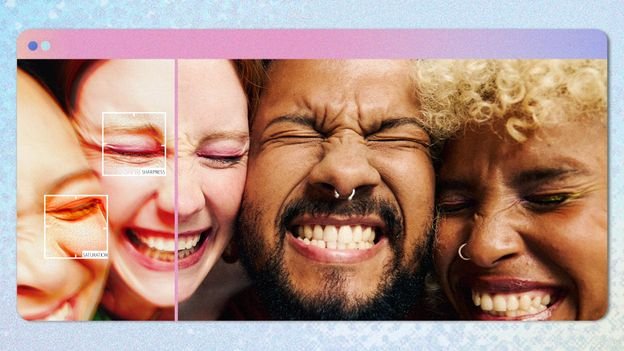
There is a positive way of looking at things. You could do most of these modifications by hand if you were skilled and patient. Today, “instead of playing with all these different parameters, we have automation,” says Lev Manovich, professor of digital culture and media at the Graduate Center of the City University of New York. “Certain abilities that were previously only available to professionals are now available to amateurs.”
But at the same time, your phone often makes creative, even artistic, decisions about the memories you capture. Users may have no idea what’s going on – and on some phones, AI does much more than change settings.
“I think smartphone makers really want photographs to replicate what people capture. They’re not trying to create fake images,” says Rafał Mantiuk, professor of graphics and display design at the University of Cambridge in the UK. “But there’s a lot of creative control over how you render an image. Every phone has a style, you know. Pixel phones have a style. Apple phones have a style. It’s almost like different photographers.”
“It’s a pure hallucination”
Of course, there’s an implicit norm lurking in this debate: the idea that a “real” photo should look like it comes from the era of cinema. This comparison is probably not fair. Every camera, from the very beginning, has always involved integrated processing decisions. It’s easy to hear the word “AI” and assume it means something horrible. In many cases, the algorithms correct inherent flaws in the tiny lenses and sensors used in phone cameras.
However, some features push the limits further.