

Days after revising its research collaboration with OpenAI, Microsoft Corp. shared an update on its artificial intelligence development efforts.
Mustafa Suleyman, general manager of the company’s Microsoft AI group, detailed the engineering efforts in a blog post released today. The tech giant has formed a unit called the MAI Superintelligence Team to lead its AI research efforts. The unit will seek to develop superintelligence, a hypothetical future AI capable of outperforming humans in a wide range of tasks.
Suleyman wrote that Microsoft intended to develop a superintelligence equipped with security guardrails. Additionally, the company plans to provide humans with a way to supervise the AI’s work. “We want to both explore and prioritize how the most advanced forms of AI can keep humanity in check while accelerating our path to solving our most pressing global challenges,” Suleyman explained.
The executive then listed three of the research priorities of the new MAI superintelligence team.
Microsoft’s first goal is to develop better AI assistants for consumers. The company will work to make AI assistants more affordable and personalized. Microsoft believes that the personalization features available to consumers will include, among other things, the ability to generate highly personalized learning materials.
The second research priority cited by Suleyman is “medical superintelligence.” According to the executive, it is a form of AI capable of delivering “expert-level performance across the full diagnostic spectrum, as well as high-performance planning and forecasting in operational clinical environments.” He expects the technology to arrive within a few years.
Microsoft has already started investing in AI-based medical software. In June, the company launched an AI system called MAI-DxO, optimized to address case challenges from the New England Journal of Medicine. These are lists of symptoms that readers are asked to diagnose. Human doctors correctly identify the root cause of symptoms about 20% of the time, while MAI-DxO scored 85% in a benchmark test.
The third area of research cited by Suleyman is renewable energy. In today’s blog post, he predicts that AI will improve the way scientists study energy production and storage technologies. The executive believes AI could accelerate breakthroughs such as new carbon-negative materials.
Suleyman added that Microsoft’s AI research efforts encompass “many more” areas. He said the company plans to share more information about the use cases it prioritizes in the near future.
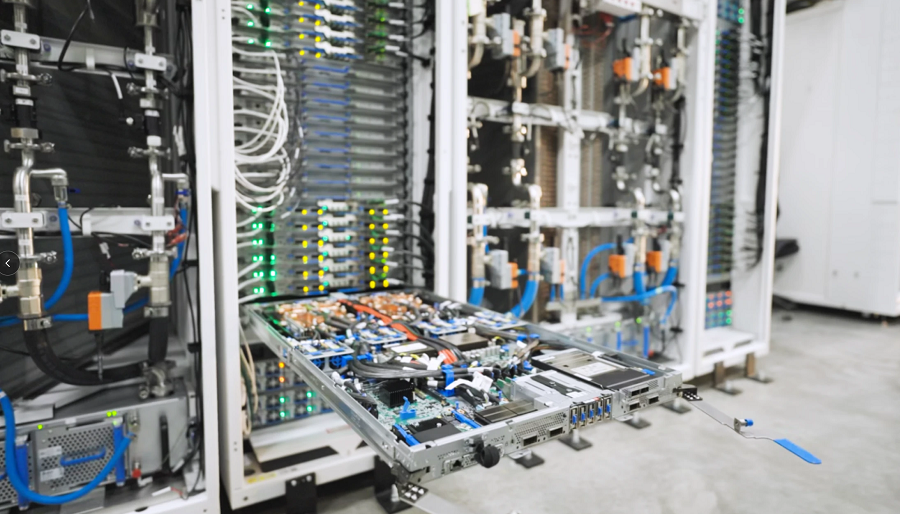
According to Suleyman, Microsoft’s AI research work is supported by a new GB200 chip cluster from Nvidia Corp. Each chip includes two Blackwell graphics processing units and a central processing unit. Microsoft is also building AI clusters based on Nvidia’s new GB300 accelerator, which includes two high-end Blackwell Ultra GPUs.
Microsoft’s update on its AI efforts comes less than two weeks later revised its partnership agreement with OpenAI. Under the new deal, Microsoft can continue its research into artificial general intelligence independently of developer ChatGPT. Additionally, he can use OpenAI’s AI models to speed up his research.
Photo: Microsoft
Support our mission of keeping content open and free by engaging with the CUBE community. Join the trusted network of CUBE alumniwhere technology leaders connect, share information and create opportunities.
- Over 15 million viewers of theCUBE videosfueling conversations about AI, cloud, cybersecurity and more
- More than 11.4,000 CUBE alumni — Connect with 11,400+ technology and business leaders shaping the future through a unique network of trust.
About SiliconANGLE media
Founded by technology visionaries John Furrier and Dave Vellante, SiliconANGLE Media has built a vibrant ecosystem of industry-leading digital media brands that reach more than 15 million elite technology professionals. Our new proprietary theCUBE AI Video Cloud innovates audience engagement, leveraging the CUBEai.com neural network to help technology companies make data-driven decisions and stay at the forefront of industry conversations.