

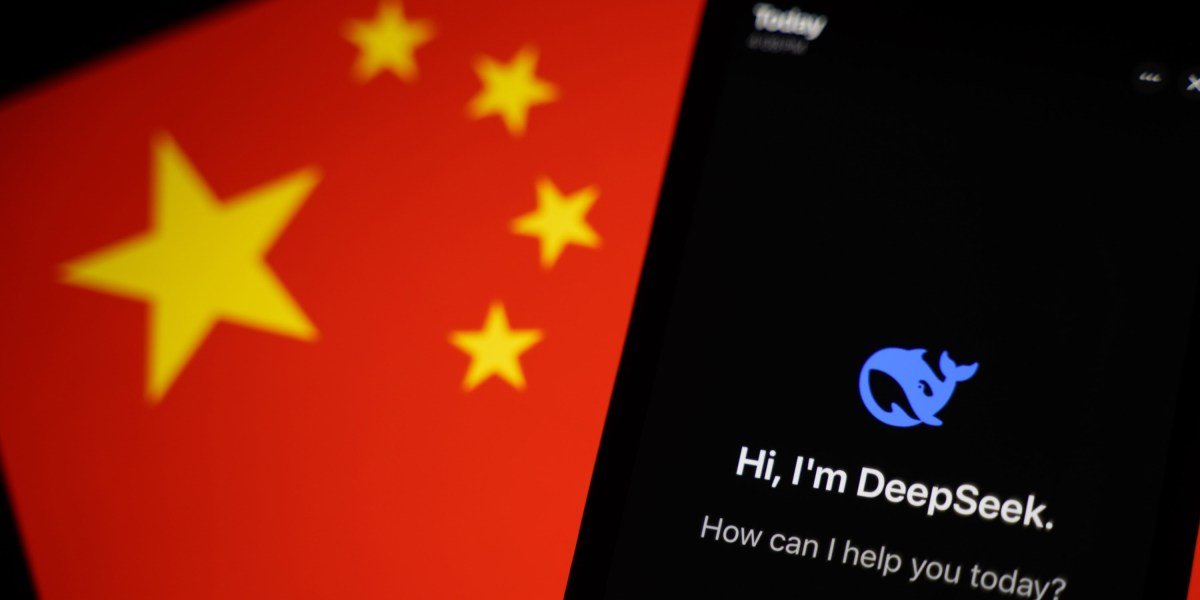
DeepSeek’s success has instilled confidence in an industry long accustomed to following global standards rather than setting them. “Thirty years ago, no Chinese would believe they could be at the center of global innovation,” says Alex Chenglin Wu, CEO and founder of Atoms, an AI agent company and a major contributor to China’s open source ecosystem. “DeepSeek shows that with strong technical talent, a supportive environment and the right organizational culture, it is possible to produce truly world-class work. »
DeepSeek’s watershed moment isn’t China’s first open source success. Alibaba’s Qwen Lab has been releasing open-weight models for years. In September 2024, well before the launch of DeepSeek V3, Alibaba claimed that global downloads had exceeded 600 million. On Hugging Face, Qwen accounted for more than 30% of all model downloads in 2024. Other institutions, including the Beijing Academy of Artificial Intelligence and AI company Baichuan, were also releasing open models as early as 2023.
But since the success of DeepSeek, the field has expanded rapidly. Companies such as Z.ai (formerly Zhipu), MiniMax, Tencent, and a growing number of smaller labs have released competitive models in reasoning, coding, and agent-like tasks. The growing number of high-performance models has accelerated progress. Features that once took months to arrive in the open source world now emerge in weeks or even days.
“Chinese AI companies have seen real gains from the open source manual,” says Liu Zhiyuan, professor of computer science at Tsinghua University and chief scientist of AI startup ModelBest. “By publishing solid research, they build a reputation and benefit from free publicity. »
Beyond commercial incentives, Liu says, open source has gained cultural and strategic weight. “In the Chinese programming community, open source has become politically correct,” he says, presenting it as a response to American dominance in proprietary AI systems.
This change is also reflected at the institutional level. Universities, including Tsinghua, have begun to encourage AI development and open source contributions, while policymakers have taken steps to formalize these incentives. In August, China’s State Council released a draft policy encouraging universities to reward open source work, proposing that student contributions on platforms such as GitHub or Gitee could eventually be taken into account when calculating academic credits.
With growing momentum and a strengthening feedback loop, China’s push toward open source models is likely to continue in the near term, although its long-term sustainability still depends on financial results, says Tiezhen Wang, who helps lead work on global AI at Hugging Face. In January, Model Labs Z.ai and MiniMax went public in Hong Kong. “Right now, the focus is on increasing the size of the pie,” Wang says. “The next challenge is how each company gets its share. »
The next wave of models will be narrower and better
Chinese open source models lead not only in download volume, but also in variety. Alibaba’s Qwen has become one of the most diverse open model families in circulation, offering a wide range of variants optimized for different uses. The range ranges from lightweight models that can run on a single laptop to large systems with several hundred billion parameters designed for deployment in data centers. Qwen offers many variants optimized for community-created tasks: the “instruct” templates are good at following orders and the “code” variants specialize in coding.