

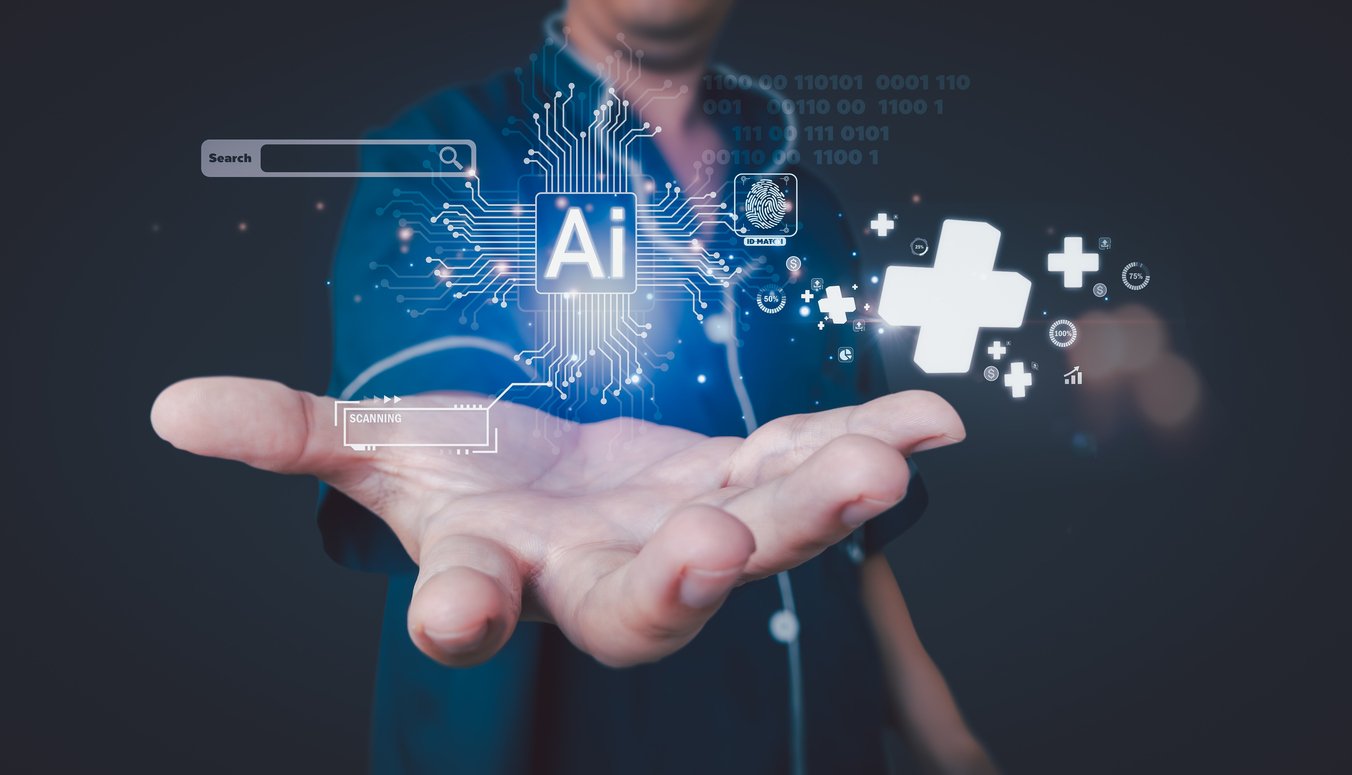
Dr. Ignatius Luke Chan of London School of Business and Finance Singapore examines the role of artificial intelligence in healthcare, asking whether it represents valuable innovation and collaboration or just another technological tool
The question that often arises is: “What is artificial intelligence (AI)“? Sure, we know a lot about AI, but what exactly is it? For the purposes of this article, let’s define AI as the ability of a machine to communicate, reason, and function independently, similar to a human. That being said, how can it impact healthcare?
There is still much to discuss regarding the use of AI to diagnose, treat and even operate on humans. Yet even in this context, researchers are using AI to reduce the work that a human could otherwise do. This refers to the use of big data and machine learning to support various processes, including administration and monitoring.
While it is clear that AI can offer many benefits to medicine, it is also crucial to consider the growing importance of AI applications in this field, which cannot be entirely ignored. From the protection of fundamental rights to the protection of personal data, these are considerations that must be taken into account. The ethical considerations and challenges are very real, and since AI deals with Big Data, there must be governance over what can and cannot be used.
In this way, we can then progress towards integrating AI into healthcare, thereby taking healthcare to the next level. Many deliberations have been discussed and proposed regarding what AI can do. Yet, like all findings, they all point to better outcomes, better access and personalized care, as well as reductions in operating costs and improvements in efficiency.
AI and healthcare examined
So how did this happen? The COVID-19 pandemic has likely accelerated the digital health landscape globally, particularly in the Asia region. We have seen increased attendance at clinics, as well as overworked doctors and nurses, due to the large number of patients seeking to be vaccinated against the virus.
However, we have also seen a change in the healthcare landscape. There has been an increase in home doctor visits through a reservation system, as well as teleconsultations for non-COVID-19-related illnesses, and other systems have been put in place to reduce interactions between infected people and health care providers.
As this occurred in Asia, a dynamic shift in the global healthcare landscape would follow, as different needs emerged in various regions of the world, particularly in developing countries. That being said, sharing data and knowledge between countries to mitigate the spread of the COVID-19 virus was crucial. Perhaps this is where the use and sharing of data comes in. This is how AI emerged, attracting worldwide attention and interest and perhaps even presenting itself as a potential game-changer for the healthcare sector.
Many are familiar with the DIKA model, where everything starts with data. Filter the data and you will find the information you need. Filter the information, and there is knowledge, with which this knowledge, a decision can be made to perform the correct action based on the data.
This is precisely how AI has helped turn numbers (data) into action. From organizing complex medical data, to providing real-time updates during surgeries and recoveries, to assessing each patient’s critical and vital signs. What AI is able to do is transform this data into clear insights that practitioners can act on.
Without a doubt, AI has dramatically changed how healthcare worksand it has also accelerated much medical research, helping researchers with data management and providing diagnostic assistance. AI can be seen as a catalyst for the new transformation of digital health systems that we are currently witnessing and continuing to evolve.
Through innovation, research and collaboration, we are now seeing AI helping to transform the landscape and continuing to improve industry operations. From automation to decision support, AI has now learned to support practitioners in their role, helping patients while significantly reducing time, giving practitioners the ability to solve problems, rather than worry about administrative tasks.
Conclusion on AI and healthcare
AI is much more than just a technological tool for the healthcare sector. Taking the definition given above in the introduction, “as the ability of a machine to communicate, reason, and function independently, similar to that of a human,” AI is most certainly capable of this. The success and future of AI in healthcare depends on collaborative work between humans and technology. While it is clear that AI can serve as a catalyst for a better and more efficient system, there is still much fine-tuning to be done before it reaches its full operational capacity.