

New market projections released at 11 p.m. ET on February 10, 2026 signal a steep growth curve for AI in healthcare, led by telehealth and telemedicine. The segment is expected to grow from an estimated $5.20 billion in 2025 to $119.34 billion by 2035, reflecting a compound annual growth rate of 36.85% fueled by demand for remote care, AI-based clinical decision support, and scaling of virtual services.
Market Outlook: Telehealth AI Accelerates
AI is increasingly integrated into virtual care pathways, from faster triage and automated symptom assessment to remote monitoring and personalized treatment plans. Adoption is increasing as providers seek to expand their reach, ease clinician workload, and maintain continuity of care. Software currently anchors the value stack with a 68% share, supporting virtual tour orchestration, analytics and decision support. Services is the fastest growing component as health systems seek implementation, personalization, training, and managed AI solutions to operationalize large-scale deployments.
American trajectory and main use cases
The US market is poised to grow from $1.61 billion in 2025 to $36.10 billion by 2035, representing a CAGR of 36.54% over the forecast period. Virtual consultations and clinical decision support are the foundation of adoption, now accounting for 34% of uses. Remote patient monitoring is the fastest growing application as care models shift toward continuous, at-home chronic disease monitoring, post-acute recovery and preventive care.
AI-powered tools help fill provider gaps, streamline documentation, and increase patient engagement. In practice, this covers conversation intake and routing, risk stratification, image and waveform interpretation, and proactive awareness anchored in real-time data.
Technological mix: NLP in the lead, Deep Learning on the rise
Natural language processing currently represents 32% of enabling technologies, reflecting the central role of conversational AI, ambient writing and patient-facing virtual assistants. Deep learning is the fastest growing technology as models mature for pattern recognition across imaging, video, and multi-modal physiological signals. This progression catalyzes more robust decision support, earlier detection and adaptive care pathways that respond to changing patient conditions.
Where care happens: Hospitals lead, home care increases
Hospitals and clinics remain the top users with a 44% share, leveraging AI to scale virtual clinics, support specialty consultations and optimize throughput. Home health care settings are the fastest growing end-user segment, reflecting a broader shift toward decentralized, patient-centered care. Smart scheduling, remote diagnostics and escalation pathways are becoming standard components as systems combine in-person, virtual and in-home services.
Regional dynamics: North America in the lead, Asia-Pacific in the lead
North America led the telehealth AI landscape with a 37.50% share in 2025, supported by advanced digital infrastructure, robust virtual care platforms, and favorable reimbursement. Asia Pacific is poised for the fastest expansion through 2035, with an expected CAGR of around 38.33%, propelled by rapid digitalization, greater telehealth penetration in emerging economies, and widespread access to smartphones and the internet. These dynamics suggest a two-speed market: established systems favoring scalability and integration, and fast-growing regions outpacing mobile-first models.
Imaging AI Powers Continuum of Care
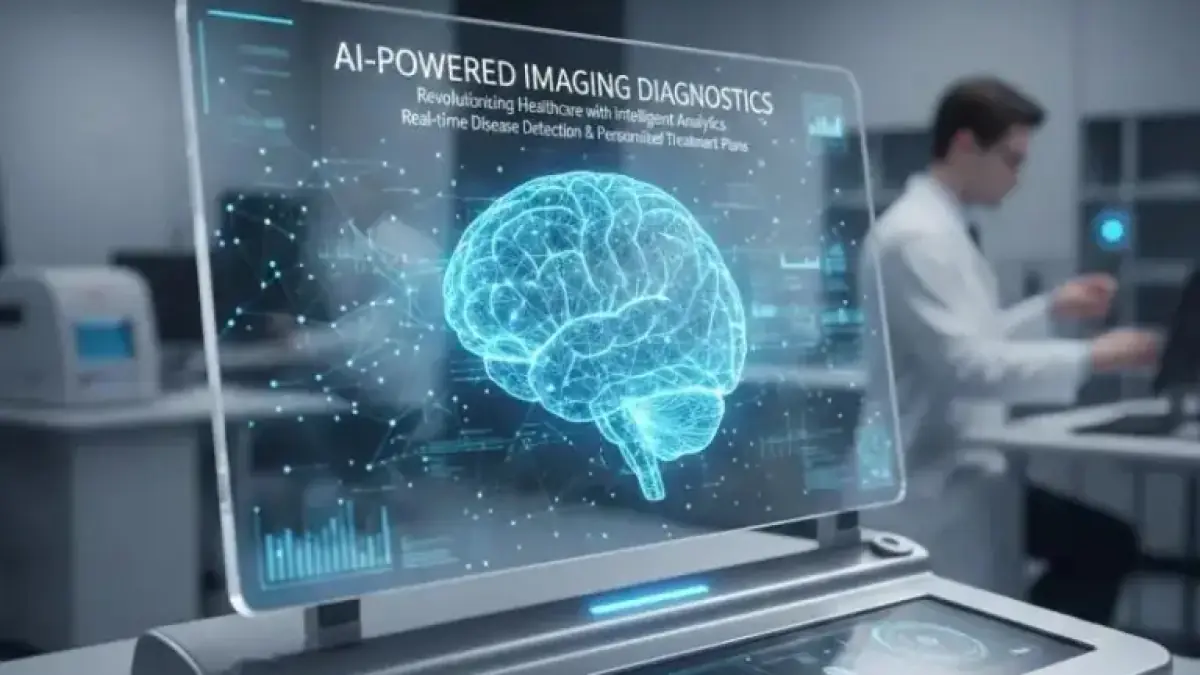
The parallel growth of AI-based imaging diagnostics reinforces the broader story of AI in healthcare. This market is expected to reach $9.73 billion by 2033, with a CAGR of 22.3%, with software holding a 55% share and North America accounting for 40% of the segment. Innovations in AI-driven CT, MRI, and radiology workflows, driven by key modality players, are improving throughput, consistency, and triage, and increasingly linking information to telehealth platforms for faster, more coordinated interventions.
Overall, the rise of telehealth AI and imaging AI underscores a clear trajectory: more proactive, data-driven, and distributed care. With software at its core, services evolving rapidly, and advanced algorithms gaining traction, the next decade of AI in healthcare will redefine how and where patients are treated, as well as how quickly decisions can be made.