

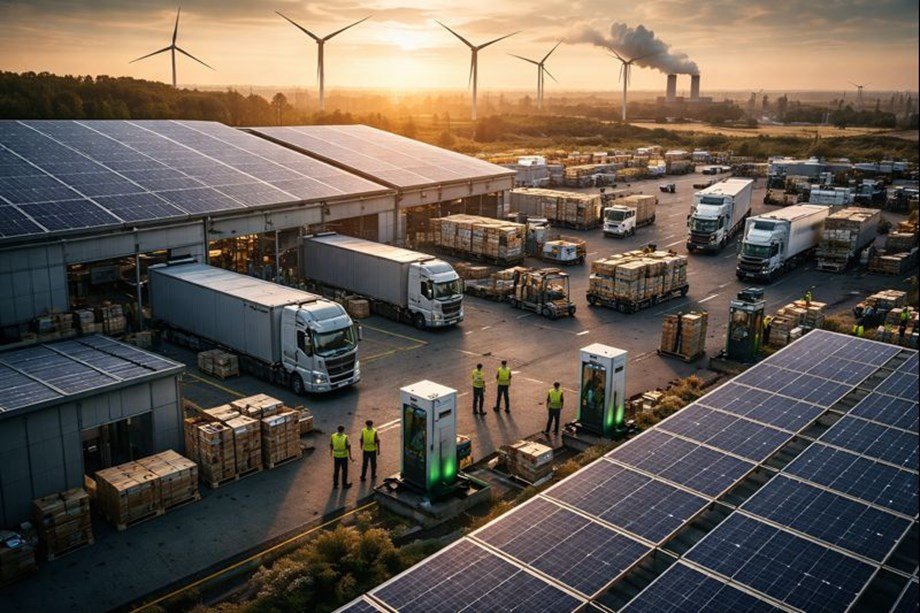
AI-based systems promise major gains in efficiency, cost control and resilience in global logistics and supply chain management. But a new academic study published in the journal Energies notes that these benefits come with a growing energy cost that could compromise sustainable development goals if not managed.
The study, entitled Who wins the energy race? Artificial Intelligence for Smarter Energy Use in Logistics and Supply Chain Managementexamines the dual role of artificial intelligence as an energy-saving tool and an emerging source of significant energy demand in logistics and supply chains.
The study challenges the assumption that AI-driven logistics is inherently sustainable. Instead, he argues that AI’s net impact on climate depends on how digital transformation is aligned with clean energy deployment, efficient hardware, and strategic energy management.
AI drives efficiencies in logistics and supply chains
The study shows how AI is already transforming logistics operations on several levels. In the transportation sector, machine learning models analyze traffic patterns, weather conditions, fuel prices and delivery schedules to optimize routes and fleet utilization. These systems reduce empty runs, fuel consumption and delivery times, providing immediate energy and emissions benefits.
In warehousing, AI-powered demand forecasting and inventory management systems reduce overstocking and unnecessary movement of goods. Automated AI-powered storage and retrieval systems minimize energy consumption per unit handled, while predictive maintenance tools reduce downtime and prevent breakdowns of energy-intensive equipment. Ports and intermodal hubs are using AI to coordinate ship arrivals, crane operations and cargo flows, reducing congestion and idle time that traditionally waste fuel and electricity.
The authors highlight digital twins as a particularly powerful application. By creating virtual replicas of logistics systems, companies can simulate energy consumption under different scenarios and identify efficiency improvements before making physical changes. This allows companies to test alternative routing strategies, warehouse layouts and scheduling models with minimal risk and cost.
AI also builds supply chain resilience, which has indirect energy benefits. More accurate demand forecasting and real-time risk detection reduce emergency shipments, last-minute reroutings and redundant inventory, all of which result in high energy penalties. In this sense, AI-based stability can reduce the overall energy intensity of the system, even if volumes increase.
The study notes that these benefits are most visible in advanced logistics networks offering access to high-quality data, reliable digital infrastructure and skilled personnel. In such environments, AI has become a key competitive tool, enabling businesses to reduce operating costs while responding more quickly to market shocks.
Growing demand for digital energy threatens sustainability gains
The study identifies a less visible but increasingly important counter-trend: the rapid growth in energy consumption driven by AI itself. Training large machine learning models, running continuous inference, storing large data sets, and operating AI-based platforms all require significant computing power. Data centers, which form the backbone of AI-driven logistics, are among the fastest growing sources of electricity demand in the world.
AI power consumption is not limited to centralized data centers. Edge computing devices, sensors, automated vehicles and robotics embedded in logistics networks contribute to cumulative energy consumption. As AI systems become more complex and ubiquitous, their energy footprint extends across the entire supply chain.
This creates a paradox. At the operational level, AI reduces fuel consumption and emissions related to transportation and warehousing. In terms of digital infrastructure, this increases the demand for electricity, often in regions still dependent on fossil fuels. Without careful coordination, the study warns, the second effect can offset or even exceed the first.
The paper highlights semiconductor manufacturing as another energy-intensive element of AI development. Producing advanced chips needed for AI workloads involves significant consumption of electricity and water, adding upstream environmental costs rarely considered in logistics sustainability assessments.
Regional disparities further complicate the situation. Advanced economies with access to renewable energy, efficient grids, and strong environmental regulation are better positioned to balance AI-driven efficiency and clean energy. Developing economies, where logistics growth is fastest, often rely on carbon-intensive electricity and lack the infrastructure to integrate renewable energy at scale. In these contexts, AI adoption can improve logistics performance while increasing absolute emissions.
The authors argue that treating AI as a neutral or automatically green technology is a strategic mistake. Energy demand should be considered an integral part of AI deployment decisions, not a secondary concern addressed once systems are scaled.
Winning the energy race requires coordination, not just automation
The role of AI in sustainable logistics is conditional rather than guaranteed. AI only becomes positive for energy and climate goals when deployed alongside coordinated energy strategies, organizational change and supportive policy frameworks.
One of the key requirements is the integration of AI systems with renewable energy sources. Data centers and logistics centers powered by solar, wind or other low-carbon energy can significantly reduce emissions associated with digital operations. The study highlights growing interest in co-locating data centers with renewable energy generation and using AI itself to balance energy loads based on supply availability.
Designing energy-efficient hardware and algorithms also plays a vital role. Optimizing models to reduce computational complexity, using specialized low-power chips, and prioritizing energy-aware software development can significantly reduce AI’s electrical footprint. The authors emphasize that efficiency at the algorithmic level is just as important as the efficiency of physical logistics operations.
Organizational factors also matter. Companies that view AI as a strategic capability rather than a standalone tool are more likely to align their digital investments with energy and sustainability goals. This includes reskilling workers to manage AI-based systems, redesigning processes to avoid rebound effects, and integrating energy metrics into performance evaluation.
Carbon pricing, energy efficiency standards, and incentives for renewable energy adoption determine whether AI-based logistics contributes to decarbonization or locks in higher emissions. The study suggests that fragmented policy approaches risk encouraging efficiency gains in one part of the system while allowing uncontrolled energy growth in another.
Transparency and measurement are equally important. Many companies track fuel savings from AI-powered transportation, but don’t account for the electricity consumed by the supporting digital infrastructure. Without a full life cycle assessment, sustainability claims remain incomplete and potentially misleading.