

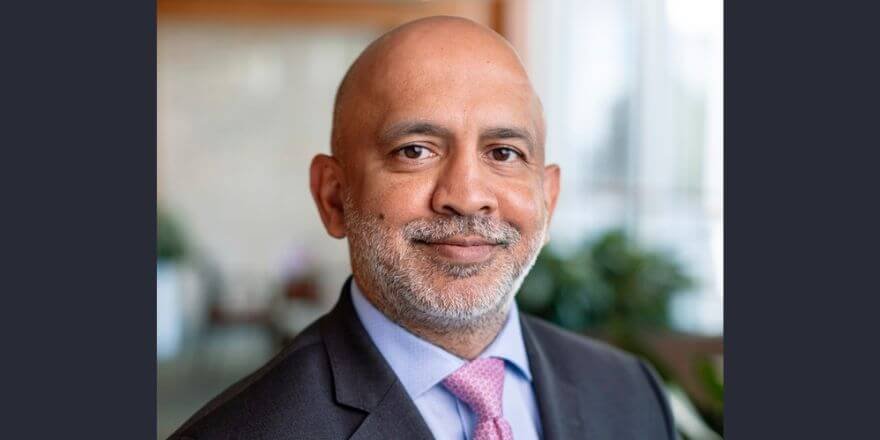

From early diagnosis to faster clinical integration, Maneesh Goyal discusses creating a continuous learning ecosystem that improves outcomes around the world.
Artificial intelligence has moved beyond the experimental stage in healthcare, but sustainable ROI remains elusive for many organizations. Success depends less on algorithms alone and more on how health systems rethink clinical and operational processes to integrate intelligence into everyday care.
Maneesh Goyal, Chief Operating Officer of Mayo Clinic Platform, explains why process reengineering, disciplined measurement and global collaboration are essential to unlocking measurable value.
Goyal explains how federated data networks, independent clinical validation, and pre-integrated solutions reduce risk while accelerating deployment in diverse healthcare environments.
From redefining ROI metrics and overcoming adoption barriers to protecting patient privacy and supporting digital-first strategies in markets like the UAE, Goyal explains how a collaborative and continuous learning ecosystem can transform clinical decision-making worldwide.
Excerpts from interviews:
From your point of view, what differentiates AI pilot projects that generate real clinical and operational ROI from those that fail to move beyond experimentation?
AI pilots succeed when organizations rethink how care is delivered rather than simply layering technology on top of existing processes. If you place AI on top of a manual or outdated workflow, it typically increases costs instead of creating value. What is needed is re-engineering of clinical or business processes. For example, if AI can predict surgical complexity in advance, the planning process needs to be redesigned to allocate the right time in the operating room. If this change is made, throughput improves and wasted time is reduced, creating a measurable ROI. At Mayo Clinic, we focus on two outcomes. Either the technology fundamentally changes a clinical or operational process or it becomes part of the standard mode of care delivery, like an MRI machine or a stethoscope. Many AI projects fail because organizations expect the technology to be a magic bullet without transforming the underlying processes. We currently run over 320 algorithms that continuously diagnose or predict conditions. Some of them help identify diseases in patients who do not yet have symptoms.
“Moving from symptom-based care to early intervention changes outcomes and creates real value. »
How do leading health systems define and measure impact when evaluating AI in digital health?
Each solution must be evaluated against a clearly defined objective. This objective may relate to clinical outcomes, financial performance, operational efficiency or patient access. Healthcare organizations must decide which lever they are trying to leverage and then measure their success against that specific metric. There is no single universal metric for AI. The key is clarity of the desired outcome and disciplined monitoring of results.
What are the biggest adoption barriers healthcare providers face when developing AI, and how can platforms like Mayo Clinic Platform reduce risk and build trust?
One of the biggest risks is repeating mistakes made in other sectors, such as pharmaceuticals, where solutions are tested on small patient populations before being rolled out globally. Many AI tools are developed using limited data sets, often from a single geographic area. When applied to diverse populations, they may not work as intended. Our approach is to build a global, federated data network from the start. Today, the Mayo Clinic platform serves more than 55 million patients across multiple continents. Solutions developed on this broader data set are more likely to work with different populations and models of care. We also conduct a qualification process during which our clinical teams evaluate the claims of each solution. We compare what suppliers promise with what the data actually shows and produce a clinical report. This independent validation reduces risks for healthcare providers. Finally, we pre-integrate validated solutions into the platform. This allows hospitals, whether small or large, to deploy tools quickly without high integration costs, enabling faster and safer adoption.
How does the Mayo Clinic Platform operationalize data and AI to deliver measurable results for global hospital partners?
The Mayo Clinic invests more than $1 billion in research each year. Within the platform ecosystem, more than 150 companies are also building solutions, representing a combined investment likely to exceed $10 billion. By running these solutions on a global dataset, we have reduced the time from idea to clinical integration from approximately three years to nine months. Once a solution is validated, it can be deployed to partner hospitals around the world. For example, we have developed cardiology algorithms that enable earlier diagnosis and made them available to partners in countries like Nigeria. This approach allows patients to benefit from high-quality clinical information, regardless of where they receive care. Instead of waiting a decade for research to translate into clinical practice, validated information can be integrated directly into clinical workflows, improving outcomes much more quickly.
How will data-driven clinical intelligence reshape decision-making and benchmarking in global healthcare systems?
The transition will be towards collaborative and continuous learning systems. The Mayo Clinic platform is not designed as a technology product, but as a shared learning environment. A hypothesis can start at the Mayo Clinic and be validated locally. It is then tested with global partner institutions. As the model is rolled out across different geographies, it continues to learn and improve. This feedback loop benefits all participants. This is not a top-down model in which one institution dictates best practices. It is a collaborative ecosystem in which each partner contributes data, insights and improvements, creating collective intelligence that improves the quality of care globally.
What are your views on the UAE’s digital-first healthcare strategy?
The UAE is starting from a strong position because it is not limited by existing infrastructure, as many other countries are. The country’s focus on large-scale genomic sequencing and digital health records is creating the foundational data sets required for AI-driven healthcare. These components enable knowledge generation, better understanding of diseases and more efficient service delivery. Globally, health systems face an imbalance between supply and demand as populations age and require more care. Digital-first strategies, such as those implemented in the UAE, can help distribute knowledge and services more equitably, improving access and outcomes.
How does the Mayo Clinic platform address patient data privacy in global collaborations?
Our approach is based on the principle of “data behind glass”. Patient data never leaves the institution that owns it. Each partner maintains its data in its own environment and under its own regulatory controls. Instead of moving data, we send questions to the data. The returned results are aggregated and anonymized, ensuring compliance with regulations such as GDPR (General Data Protection Regulation). Patients are allowed to enter the template and if they withdraw their consent, their data can be immediately deleted. This approach minimizes risk and ensures that institutions, regulators and patients maintain full control over their data. It is a collaborative model designed to enable global learning without compromising privacy or regulatory compliance.